Showing posts with label Communication. Show all posts

Monday, August 20, 2012

"The Whedonverse: Ten Years After Buffy"


Call for Panel Submissions
Central States Communication Association 2013 
Popular Culture Interest Group.

"The Whedonverse: Ten Years After Buffy"

2012 has been a successful year for Joss Whedon, including The Avengers, The Cabin in the Woods, and the soon to be released Much Ado About Nothing.

CSCA13, however, corresponds with the ten-year anniversary of the cancellation of Whedon’s first successful television show, Buffy the Vampire Slayer.  This panel will explore various aspects of the Whedonverse, the fictional universe encompassing the worlds of Whedon’s television and film projects, including BtVS, Angel, Firefly, Dollhouse, Dr. Horrible's Sing-Along Blog, Serenity, as well as the associated novels and graphic novels including, BtVS Seasons 8 & 9, Angel: After the Fall, Fray, Spike: After the Fall, etc.

Submissions may include Whedonverse topics as varied as the use of language, character identity, growth and development, philosophical undercurrents, utilization and problematization of gender, narrative inquiries, various philosophical approaches, and related topics.

If you are interested in participating in this panel, please email a 100-word abstract with the title and your contact information, by Friday, September 21, to herrmanna@mail.etsu.edu.  Presenters/pieces that best form a coherent panel will be chosen from these submissions.

Sincerely,
Andrew Herrmann (East Tennessee State University)

Wednesday, July 25, 2012

Why The MBA Is Relatively Useless


I realize that I am about to review a book that is a few years old, and one that has come under a lot of criticism by others in what I call the “academic business profession” and in business circles. The reason for this is likely because Henry Mintzberg – the books author – says that a paradigm shift is needed in the way we educate managers. Paradigm shifts, weather in science, philosophy, or communication are always controversial and always attacked, because they challenge the status quo and entrenched interests. Since there has been so little change in the way MBAs are taught over the decades, it is no surprise that some people suggest Mintzberg lost his marbles.
Mintzberg’s basic problem with management education is that it is completely separate from the actual running of a business. Students are generally given a case study to analyze and come up with a solution to the case study’s company’s problem. What should an organization do with a factory that is no longer productive? What should a company do with a particular asset class?  How does a company deal with shrinking profit margins? What does a manager do with such and such employee? These case studies are about 25 pages long – and from the reading the student is supposed to come up with some solution and make a decision. That’s it. That’s what most management professors think management is – and hence what most MBA students think being a manager is.
"The trouble with “management” education is that it is business education, and leaves a distorted impression of management. Management is a practice that has to blend a good deal of craft (experience) with a certain amount of art (insight) and some science (analysis)" (p. 1)
Of course the problem is that this way of teaching management is sterile and void of any actual context. Organizations are – depending on how you want to look at them – intricate systems wherein sensemaking must happen ala Weick, or continuing cultures created and sustained by communication, practices, and performances, or places where power is both sought, fought, and transgressed. (Most organizational communication scholars will tell you it’s a combination of all these.) 

From a cultural perspective – all organizations are different cultures. Think of the differences between Apple and Microsoft. Or Starbucks and McDonalds. Or Coke and Pepsi. Or a Pentecostal church and a Southern Bapitst church. There are, in fact, as many different organizational cultures as there are organizations. As organizational communication scholars have been arguing for thirty or so years, you cannot understand an organizational culture, without studying that culture in-depth: generally through one of he many varieties of ethnographic research. 
Think about this for a moment. MBA students sit in a classroom and ‘study’ an organization on paper and are supposed to come up with a solution to some sort of organizational dilemma. This type of teaching is well-adapted to get students to do only one thing: do case studies in a classroom. Much like k-12 standardized testing, there’s no ‘there’ there. What they learn by analyzing a case study is about a useful in the real world of managing as filling in the little dots on a standardized test are to successfully going on a date. They are supposed to make a contextless decision. This is Mintsberg’s basic critique.
"An education that overemphasizes the science encourages a style of managing I call “calculating” or, if the graduates believe themselves to be artists, as in- creasing numbers now do, a related style I call “heroic.” Enough of them, enough of that. We don’t need heroes in positions of influence any more than technocrats" (p. 1).
However, businesses aren’t like that. Not at all. They are not static, but constantly on the move. They have different systems, different cultures, different values, different employees, etc., etc. etc. Hence the MBA as taught looks nothing like – and doesn’t prepare people – to actually be managers. Supposedly these MBAs with no experience can walk into an organization and just start making major decisions and taking over.
That’s somewhat crazy if you think about it. You would never let a medical student who’s only done ‘the book learnin’ perform open-heart surgery on you. However, this is exactly what MBA students are taught to think and how business teacher teach them to think. Someone without experience is not going to be trusted to make big decisions: like closing a factory or dismantling a department.
"Put differently, trying to teach management to someone who has never managed is like trying to teach psychology to someone who has never met another human being" (p. 9)
A real manager spends copious amount of time on the floor of the factory, talking with the many people that work in various departments – having conversations with both internal and external clients and customers. He might even check out other factories in his own organization to find out why those particular ones run well, while this one does not. He may check out competitor’s businesses to see how they are run differently. In other words, a real manager gets a deep cultural and organizationally significant education and understanding of the business before he makes any decision.
This is the opposite of what MBA programs teach. No ‘book learnin’ via case study is going to help. It’s like teaching. I may have an idea of how I want to teach a class – maybe a technique that’s dialogical – but the demands of, the size of, and the culture of a particular class may determine that this technique does not work. If that technique is the only one I have in my toolbox, my class is going to be a complete disaster. Embedded adaptation is key.
"In the larger organizations especially, success depends not on what the managers themselves do, as allocators of resources and makers of decisions, so much as on what they help others to do" (p. 9)
Mintzberg correctly points out that making decisions is a really small part of a manager’s job. What he doesn’t mention enough for my taste – and this is my communication bias talking here – is, well, communication. Communication takes up the better part of any manager’s job. Getting to know people, watching their performances (not performance appraisals, mind you, but the way in which people work), the stories and narratives people tell and listen too, the people who are considered heroes in the organization, as well as those considered outcasts. Managing, at its heart is all communication, and learning-on-the job, and then using what one has learned to make decisions than must be made.
To develop a reflective turn of mind, the participants focus on them- selves, their work, and their world, to appreciate how they think, act, and manage; how they cope with the stresses of being a manager; and how they learn from experience to become more discerning—more “critical” in the constructive sense of this word” (p. 300).

So what does Mintzberg suggest? Well, here’s where he gets a lot of push back. Management education should be restricted to practicing managers. The classroom should leverage the managers’ experience. Managers have to be exposed to theories so they can learn to be thoughtful and express themselves. Thoughtful reflection is necessary. Learning is not doing. Learning is reflecting on doing. Move beyond reflection in the classroom to learning from the impact on the organization.    

However, if you consider the art and practice of managing, Mintzberg is on the right track. Which is why I think this would be a great read for #commnerds studying organizational communication. After all, culture and power and performance is what we actually study.


Friday, May 11, 2012

Reflections on the First Year of the Tenure Track


It’s been one hell of a year at East Tennessee State University. Lots of highs. Some interesting lows. Overall, though I have to say, I’m pretty pleased with myself. Not pleased – in that cocky “I can do no wrong, don’t I kick ass” sort of way. Pleased with the fact that I made it through the first year. Why would I say that? I’ll tell you.

I say that because in my years in academe, I’ve seen any number of people fall off the tenure track. Some brilliant, hard-working people in fact. That’s one of the dilemmas I have regarding my dissertation. I was thinking about doing a longitudinal piece and re-interviewing those people who would be now getting tenure. Trouble is – out of my small sample – half of them didn’t make tenure. A couple of them are not in academe anymore at all. So surviving the tenure-track isn’t as easy as, say, baking a cake. Not sure why I used that analogy, because I can’t bake for crap…but whatever.

I have to say straight out that there’s no way I would have survived this first year without my comrades in Communication Studies at East Tennessee State. So a shout out to Drs. B., D, O, & K.  First off, they took a chance by hiring someone who at the time was not in academe at all, but only tangentially – going to conferences, applying for jobs – trying to get back into academe while not employed. Hiring in academe is a risky business anyway, and they certainly took a risk. Second, as collegues, they made me feel welcome. 

They let me ask my “stupid” questions and answered them, without rolling their eyes at the silliness of "The Noob." While I know at times I got on their nerves with all the questions, interruptions the - “Hey what’s with the….?” –questions, they were all gracious. I cannot emphasize how important they were to my making the most out of this first year. 

On the home front, I arrived here in Johnson City, TN with nothing, and it took me a while to get set up. For the first month, I didn’t even have a bed. When that first paycheck rolled in, I spent all of it on furniture. The following month all my money went to pay off past due bills. Nice to be getting on track that way after a year of living on unemployment. Acclimating to JC wasn’t as difficult as I thought it would be, given that I’d lived in Tennessee once before, down in “The Noog.” I’ve made some friends. Found some like-minded compatriots to shoot the breeze with. I haven’t done much exploring. That will come this summer.

Not everything went as smoothly as I would have liked though. In my own opinion – and later confirmed by the student evals – my Organizational Communication class in the fall was a mess. Some of that had to do with learning the students: their expectations, their readiness, their culture. Some of that had to do with teaching a class that I hadn’t taught since 2007. So I learned some things as I went along: give four tests instead of three, drop a project that didn’t work as planned, rearrange the classroom to make it more interactive, don’t assume that everyone has (or even wants) a Twitter account, kill the two extra texts. 

What I learned from the disaster of my Org class, I incorporated into my Group Communication class. That class, I feel – though I don’t yet have the student evals to check my thoughts – went a whole lot smoother. I’m looing forward to teaching Org Com again this fall, incorporating everything I learned from the first go-round. It should be much improved. Adjust, readjust, and readjust more. 

As Dr. D explained way back last year when I was on my interview, while the university will talk a great deal about service and will talk a great deal about teaching, they will not stress publishing. “But don’t let that fool you.”  So I took that to heart immediately. So in my first year I’ve published three pieces, which I think is good, but not great. I also have two things that are in press that will come out sometime next fall. Although I post a lot of my successes on Facebook, I have an overwhelming number of rejection letters as well!!! That’s the game though, right? Just keep plugging away on the writing and the submitting. My goal is to have three per year. So far I’m on track and happy about it. If you are interested, you can find my pieces here, here, and here.

One of the things I’ve learned is not to ask “Why?” so much. Why? (Yes, irony.) Because – and I should have realized this – it’s beause when you ask, you also assume responsibility. So when I asked “Why don’t we have an Honors-in-Discipline Program in Communication Studies?” the resounding answer was “Because you haven’t started it yet.” So I did! It took a year to get the program proposed, set-up, and initiated. So in autumn, we’ll have our first honors students. I’m pretty stoked about that. Shout outs to both Dr. Harker and Professor C - both from our Theatre and Dance Division - for helping me with all the intricacies of getting the program situated and walking me though all the necessary steps. (See what I mean about good colleagues!?) Adjust, readjust, and readjust more.


There are some frustrating things as well. I’ll spare you all the details, but just list some. A committee that didn’t get its job done. Students that "checked out" mid-semester. The strange way the hiring process went for our lecturer positions. The meetings as we attempt to reinvigorate our M.A. program. Oh. And the never-ending stack of paperwork. Nothing major, just frustrating. A LOT less frustrating than working in information technology, that’s for sure!!!


Despite those frustrations, there were many things that gratified my soul. Our undergrads presenting at the Boland Research Symposium. Presenting at the Spring Mixer with Andrew, aka Classic Andrew, aka Dr. Dunn. Representing ETSU and the Communication Department at NCA and CSCA, while seeing great mentors, peers, friends, bar buddies, former academic outcasts, more friends (that's you Herbig), and #commnerds (all wrapped in one, usually).

Finding out that certain colleagues - the previously mentioned Dr. Dunn and the yet as unmentioned Dr. M. - and I can collaborate on a very cool internet–based research project. Having interesting, intelligent conversations with graduate students. Watching my undergraduates present at local non-profits. The ability to proffer up two new classes: “Technology, Communication, and Culture” and “Communication and Leadership.”

And so, rather than some “dark night of the soul” as some of the participants from my dissertation research experienced, I find myself thriving, I find myself engaged, I find myself mostly in awe that a kid – who almost never made it out of RCNJ in the first place – is in the position of having finished up his first year on the tenure track. And I couldn’t have done it without the great colleagues that I do. So with all that is in my soul, I thank you my colleagues. Here's to a great year two!

Go Bucs!


Wednesday, April 18, 2012

Write your story. It is important.

To all you qualitative researchers out there: keep writing.

I don't generally get personal on this blog, but I've been overwhelmed lately by the good people in academe. Here at the end of my first year on the tenure-track seems a good time to say thank you.

Many of you know my story about trying to find a full-time tenure-track academic position, which started in 2007 when I was ABD and ended in 2011 when I got hired at ETSU. I offer my thanks, my gratitude, my heartfelt love for those of you you sent me good karma, happy vibes and thoughts, as well as prayers.

What I was most astounded by, however, wasn't the support from people that know me. No. Once I published the piece about my experience "I Know I'm Unlovable": Desperation, Dislocation, Despair, and Discourse on the Academic Job Hunt" in Qualitative Inquiry (an excellent journal in its own right) I was overwhelmed by the response.

Hundreds of people contacted me about it. Hundreds! I had no idea that was going to happen. After all, it's "merely" a personal narrative piece.

Total strangers started emailing me about how the piece spoke to them. People started Tweeting me about it to say "Thanks - this needed to be written." They tweeted about it to other people...and they too Tweeted me. People started FaceBook messaging me about how they are going to have all their graduate students read it. People told me it spoke to them, that I was brave to tell one of the stories that is often silenced and whispered in academia, but rarely spoken about out loud.

Brave? It wasn't brave. While I won't say that writing that piece saved my life, it did help preserve my sanity. For those of you who doubt my sanity, well, I guess it preserved my functional insanity. Brave? No. Necessary? Yes.

The point is that I was overcome by the response to the piece. So many people reached out to say how it touched them. A few said they cried when they read it, because it matched their own experience. For some it was the confusion and the anger that resonated with them. For some it provided a catharsis - by simply knowing there are other people out here suffering through the same things they are.

Here's the lesson, if a lesson can be taken from this. To all you qualitative researchers out there: keep writing. Keep on writing. See, your stories are important.  You don't know how important your stories are unless you tell them. You don't know what an impact your story can have on someone, unless you actually write it. You don't know how big your personal community is - or your particular experience is - unless you write about it. Write your story. It is important.

I had no idea that my little piece would create the stir it did. I'm glad it did.

So I just wanted to say thank you.

Andrew

Thursday, March 8, 2012

Counter-Narrative: An Important, Much Needed Book


Bud Goodall starts out with this truth: 

We on the left suck at narratives. 

We do – at least compared to the right - be that right the economic libertarians, the religious conservatives, the neo-cons, or the conspiracy theorists like the Birthers.  Slowly but surely those on the right have spun their tales so well, that what they say is too often taken for granted, as given, as the way things are and the way things ought to be. All these ‘givens’ aren’t givens at all. They are stories told over and over and over until we believe them to be true. For instance:

“Free markets should be unfettered!” (Hello financial crisis.)
“Democrats are weak on defense!” (Goodbye Osama Bin Laden!)
“Jesus was not interested in justice!” (Hello? Have you read the New Testament?)
“Obama is a Kenyan born Muslim!” (Hello long-form birth certificate!)
“Rush Limbaugh is a Big Fat Idiot!” (Yes, ridicule is helpful but not constructive in the long term.)

Sure, we have facts on our side.
Yes, the deficit was caused by the Bush tax cuts and the wars.
Yes, Jesus was interested in justice.
Yes, the founding fathers were human with human foibles.
Yes, Teabaggers gave themselves that name without knowing what “Teabagging” is.

Here’s the thing: facts only matter if they are embedded in a good story. To quote Reagan’s 1988 slip up: “Facts are stupid things.” Narratives drive information, not the other way around.

Have you ever wondered how Al Queda can recruit people into killing themselves? Have you ever wondered why Glenn Beck’s conspiracies were accepted by so many? Have you ever wondered why the Birther issue will not die? Have you ever wondered why people who say they follow Jesus only follow the free-market Jesus? Have you ever wondered why academics are losing the battle over who academics are and what we do? Have you ever wondered what ever happened to the concept of the common good (clean air and water, state and national forests, public education, etc.)? Here you will find the stories conservatives tell dismantled, examined, and critiqued.

Finally Goodall doesn’t let us off the hook. He delivers to us an ultimatum.  If we don’t start actively writing our narratives to counter the conservative narratives, we will no longer have the words by which to tell our narrative.

Read it. Practice it.

Saturday, February 18, 2012

My New Course: Technology, Communication, and Culture


A new class that I've prepped for the summer. It is the first new class I've proposed and with the help of my chair, Dr. Amber Kinser (who I cannot thank enough for making sure this new faculty member knows what he's doing) this has been a pretty darn smooth process.

Now the only question will be if it 'makes.' If it makes, that would be the first step into getting into the Communication Department rotation. Here's hoping!

Saturday, January 14, 2012

On Teaching Group Communication Well, Pt 2

Serendipity? Coincidence? A link into the divine? Whatever the case, I’ll take it. 

In my last post I began talking about my Group Communication class. I included some of the dilemmas all teachers face when dealing with group work and engaging students in both theory and practice. Well, then a friend and mentor of mine – Bud Goodall – posted something on Facebook. 

It is a New York Times article called “The Rise of the New Groupthink” that plainly states,

Research strongly suggests that people are more creative when they enjoy privacy and freedom from interruption.”

I agree with some of the assessment – that group work for group work’s sake is a pointless exercise. Anyone who has been sitting in a meeting to ‘brainstorm’ some totally nonsensical idea knows what I mean. (Especially if the boss isn’t going to take those ideas seriously anyway – but that’s another story of faux participation and paradoxes in organizations.)

However, the point of my Group Communication class is to bring communication theory to life and allow students to learn experientially. The author of the Times’ piece writes:

"But it’s one thing to associate with a group in which each member works autonomously on his piece of the puzzle."

And this is my thought process when I teach group communication. Sure students work in groups, but each person must come to the group with something of value to put on the table. Nor are the class group projects 'useless,' but vary in degrees of length, from the short to the large, and in complexity. Which brings me to what this post was supposed to be about: The assignments from my Group Communication class.

The first is an individual project: Strengthsfinder Paper: A one page paper that explains your strength based on the Strengthsfinder assessment, including a self-reflection on where you have seen this particular strength active in your own life.

Rationale: Most students haven’t spent a lot of time with Socrates’ dictum “Know thyself.” What can they bring to the table? What do they need to know about themselves and the way they relate to other people? This is an exploration of their talent. It’s what they bring to the table.

“Quad-Group” Discussion (QGD): Each initial smaller group of approximately 4 people (hence the term “Quad”) will lead a discussion (for about 30 minutes) on some section of the Rothwell text, between Chapters 4 through 5 to be negotiated in class with other groups and me. Please note that this is NOT a presentation, but a discussion. It consists of four parts:
One week prior to your presentation you must find and send a related academic article to everyone in the class.
Lead a discussion for 25 minutes on your topic.
A one-page handout for your classmates.
An activity to go along with your discussion.

Rationale: A short project to start. Something within the safe confine of the classroom experience. Think of this as the ‘getting to know each other’ part of this group experience. This is not a presentation (no PowerPoints) but a discussion of the topic they have negotiated with the other groups and myself.

"The Edge” Assignment: Each “Quad Group” will set up a time with ETSU’s “The Edge” radio station and lend their voices for a drop, a legal, a promo, a sting, or an ad.

Rationale: Stepping out into the world, even if it still the ETSU world. The groups have to make the contacts, set up the appointments with the General Manager, and then go into the studio and create what the GM determines needs to be made. This gives them practical experience in those areas, as well as lending their voices to the Broadcast Division of the Communication Department.


Dinner and the FSNP Paper: Two “Quad-Groups” will combine to become a “Double-Quad.” This larger group will have to plan a meal from scratch, eat that meal together, and produce one co-written paper. I will be looking for evidence of your group's development and its accomplishments, and of the various contributions to the dinner and the writing process. This five-page co-constructed paper is your group response to how your “Double-Quad” worked together, concentrating on the forming, storming, norming, and performing (FSNP) aspects of group development. You will present to the class you dinner menu, and a brief discussion of the group project. 

Rationale: Leaders and other roles are generally in place within the “Quads” by the time this project rolls around. This stirs things up. Power struggles often raise their heads as groups come together. Negotiating is more difficult and the number of persons in the group makes every thing more chaotic and complex. HOWEVER, the actual project of making dinner together provides students with a pretty relaxing, fun, enjoyable atmosphere – plus they get to eat well.

The “Double-Quad” Volunteer Project & Paper: Each “Double-Quad” will volunteer with a nonprofit organization in the greater Johnson City area to complete a project of some significance both to the agency you're working for and to yourselves and your group. Group members must work together on location for at least 7 hours during the semester--some might involve much more than this, depending on how much off-site preparation is required. The objective here is, as best you can, to do something for an organization that involves your group as a group and that utilizes your group's unique abilities. Documentation is essential. The grade for this project consists of two components on which you will be graded: A professional presentation to the organization for which you volunteered, which I also attend. A co-constructed paper of 12 pages (not including references) on how the team worked while doing your volunteer project, what theoretical concepts you found informative as you worked through the process of becoming a group, the accomplishment of the necessary tasks, as well as the struggles and dilemmas you encountered.

Rationale: The big Kahuna!: serving the Johnson City community. Getting students involved with individuals they don’t necessarily run into in their daily lives. For example when I did this at USF, one group worked at the Moffett Cancer Center. At Mizzou one group worked with a home for abused children. Another for a literacy program. Another for the local animal shelter. Another for undernourished kids. A LOT of planning and collaborating and negotiating goes into, not only the project, but the co-written paper. Students found these projects not only useful, but self-fulfilling.


So that’s it. Taking theory and making it practical. Going from small groups and small projects to larger groups and larger projects. While Organizational communication is my passion, this is –by far – my favorite class to teach.


On Teaching Group Communication Well

Anyone who’s spent any time teaching eventually runs into the dilemma of making theory come alive for students. That’s why I love teaching Group Communication. It is one of my most successful courses. Students come away with a real understanding of how theory works in practice.  How? I give students the requisite liberty to form autonomous groups – and then send them out into the world. As my syllabus states:

"A significant portion of the class time will be allotted to allowing you to meet with your fellow students in your groups. We will form groups by choosing class members - and being chosen - through a process to be described later in the semester. Groups will be challenged with a goal for the semester, as well as two ongoing tasks, and also will be provided activities every week that are related to the course content and designed to further both the development of your group and your ability to link the conceptual and experiential modes of learning. But most of what goes on in the group is up to you - and to your fellow group members. The groups will meet during class every week throughout the semester, and no doubt, will meet outside of class as well. The challenge is how to make the most of this unusual opportunity.”


This makes today's student nervous. Students have been trained in the banking system version of education, where the teacher deposits information into the student’s brain and then the student withdraws that information and puts it on a test. I feed you. You vomit it up. That training is not useful in this kind of class. I give my students forewarning on this aspect of what the class is going to be like:


“Some of you may find this form of active "learning-by-doing" a disturbing experience. I can't tell you "what to accomplish" or "what we should be doing in the group." It isn't that I won't. I can't. You have to work it out, individually and together. Learning about groups comes from struggling with the process of trying to become a group. For some, working together and learning to manage those differences will be one of the most rewarding educational tasks you'll ever face. For them, the opportunity to examine one's own needs for authority and the chance to learn openly about communication and human relationships in such a relatively unstructured and safe situation is a welcome one, even though some frustration necessarily will part of this process, too.”

Similarly, in contrast to the banking system of education, I don’t lecture in this class. No lectures. No PowerPoint presentations. No monologues. Rather I frame debates or situations and then let students do in-class team projects and lead discussions about how a particular theory fits within their everyday lives. Given that this is a relatively new way of ‘doing class’ for many students I put an important warning in my syllabus as well:

“Warning!! Please note that this is not a lecture class in any sense of the word, as lecturing in front of the room is the anti-thesis of what this class designed to do. Class time is going to be used for various group-building activities. Therefore, you must keep up with the readings on your own. Please, do not remain in this course unless you are willing to commit yourself to the challenge of learning about communicative processes in groups and about your own communication in groups through the active and student-directed process described above. This warning includes anyone participating on a team sport or who has a job. If you are dedicated to this class, you must be here. If you are dedicated to your athletic endeavors or your employment more than to this class, please be considerate and drop this class. If you remain in this class you are promising yourself to your group, your classmates, and me. Be aware that as a last resort groups can fire a member for nonparticipation – and if you are that member, you will fail the class, because you cannot do an individual project to make up for a group project.”

In my next post, I’ll provide some of the assignments students do during the semester. In in the meantime, here are links to the three texts I use in the class.

Strengthsfinder 2.0


Stay tuned...

Saturday, November 12, 2011

10 Philosophy Books 4 Your Perusal (Pt 10): Heidegger's Being and Time

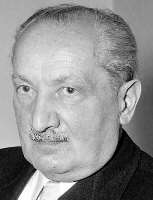
Martin Heidegger: Being and Time


M.H.
People have problems with Martin Heidegger. And with good reason. Of course he was a member of the Nazi Party, which is the culmination of his ass-headedness. Martin had proven himself to be an asshole however, long before this. 


Hanna Arendt
For example, after praising his mentor Edmund Husserl's work, he completely contradicted it and abused it, turning Husserl's phenomenological project on its head. Of course for someone so smart, Husserl wasn't too bright. He's the one who published Being and Time without realizing Heidegger was lambasting his ideas. He had a number of affairs including with Hanna Arendt, a Jew...yeah...like I said...he was a real jerk. Not for sexing it up with a Jewess, but doing so while becoming a Nazi. 
Hitler und M. H.
He was elected the Rector of the University of Freiburg and his first act as Rector was to eliminate all democratic structures, including those that had elected him Rector. (Sounds like a good Nazi, yes?) 


And yet, very few philosophers have influenced  so many branches of philosophy: existentialism, hermeneutics, deconstructionism, postmodernism, phenomenology. And there is little doubt that of the 20th century philosophical tomes, none is as deep and as rich (or as difficult) as Heidegger's Being and Time. (Sartre & Foucault not withstanding.) So lets look at some of Being and Time


While I am not going to explicitly examine the following, it is important to recognize that for Heidegger (1962) as he elucidated in Being and Time, Dasein (the human being) is always in the world. Dasein exists in, along with and is a natural part of it and cannot be separated from it. Dasein is always there, thrown into an existing in the world. Dasein always exists in this context of ‘worldliness.’ This is important, because Dasein therefore cannot get behind, or go beyond his temporal existence in the world and this placement in the world means that Dasein must determine how to exist in, alongside and with it. Dasein relates to the world through care (Sorge), through a defining relation, through the realization that this Being is its own Being, as therefore it has direct concern and responsibility for this Being. This is one of the major breaks between Heidegger and Husserl, the latter wanting to bracket the existence of the world (and hence care) through the epoché.


In Being and Time, there is a tension set up almost from the start between two possible, mutually exclusive modes of Being in which Dasein might exist. These modes are authenticity (eigentlich sein) and inauthenticity (uneigentlich sein). In the ontology of Being and Time, these two possible modes of existence belong to the essential constitution of Dasein. Dasein must choose these modes of existence. In choosing to be authentic, Dasein chooses itself and wins itself. In inauthenticity, Dasein chooses the public interpretations of the self, takes on the conceptions of the ‘they’ and hence loses itself. It is important to note, however, that these two modes of existence are not directly dichotomous, nor oppositional (p. 67-69). They are not an either/or. Dasein does not choose to be authentic once, and then will forever be authentic. Rather, Dasein must choose again and again whether to be authentic or inauthentic, because these possibilities belong to its essential constitution. The need to choose is constant.


Kierkegaard
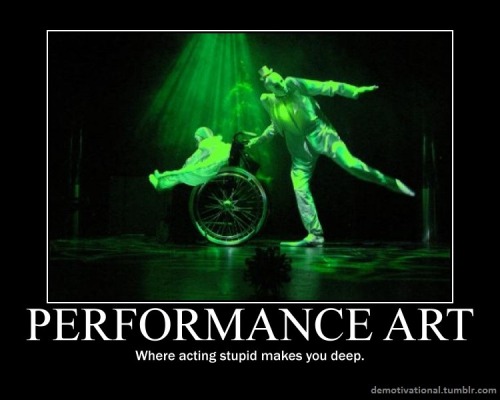
{Let me clarify with an example from Christianity. Strict Calvinists believe in the doctrine of “once saved, always saved,” that is, once you have made the decision for Christ, you are sealed and cannot ever not be saved. On the other hand, the Armenians conception of salvation is that salvation is worked out through ‘fear and trembling,’ and in order to be saved, one must make the choice to ‘be’ a Christian at each instant. Of course Heidegger was not discussing salvation in Being and Time, but the allegory helps to illuminate Dasein’s need to choose the authentic or inauthentic constantly. By the way, in case you did not notice - Fear and Trembling - is the title of one of Kierkegaard's books. Heidegger stole a lot of ideas from Kierkegaard, btw.}

It is important to recognize the constant need to choose because the possibility of authenticity and inauthenticity are constitutions of Dasein, living inauthentically in no way makes Dasein less Dasein. There is no lower degree of being. However, there are distinctions between living the authentic life and living inauthentically, and like Kierkegaard, Heidegger’s conception includes the ‘they.’ What is the ‘they?’ As Heidegger notes, “The ‘they’ is an existentiale; and as a primordial phenomenon, it belongs to Dasein’s positive consititution…” (p. 167). The ‘they’ and ‘they-self’ comprise Dasein in its everydayness. Because Dasein is always in the world, this being-in necessarily signifies being-with others. This being-with is a necessary component of Dasein’s existential everydayness. While Dasein cannot escape this everydayness, it is in this being-with-others where the possibility of inauthenticity lies.


In this being-with-others, Dasein can live in fallenness (Verfallen), which connotes deterioration or a crumbling (Golumb, 1995). Rather than existing on our own terms, with our own defining relation, we accept and incorporate the meanings, which are given to us from the outside. “The Self of everyday Dasein is the they-self, which we distinguish from the authentic Self – that is from the self which has been taken hold of in its own way” (p. 167). We accept the definitions and the responsibilities of the ‘they.’ From this description of the they-self, Dasein has the possibility of laying aside its care, its defining relation and accepting conventional wisdom as its own.


To Dasein’s state of being belongs falling. Proximally and for the most part Dasein is lost in its “world.” Its understanding, as a projection of possibilities of Being, has diverted itself thither. Its absorption in the “they” signifies that it is dominated by the way things are publicly interpreted (p. 264).


Dasein comes to believe given unexamined meanings as important and significant to it, when they in actuality are not. This acceptance of the inauthenticity of the “they-self,” and the laying aside of Dasein’s care is to live in falleness.


In Being and Time, Heidegger examines communication as it relates to inauthenticity and fallenness. In particular, he examines idle talk. Futher in the same passage where he describes falleness, Heidegger continues, “That which has been uncovered and disclosed stands in a mode in which it is disguised and closed off by idle talk, curiosity, and ambiguity” (p. 264). No longer is Dasein concerned with care, its own-most being, nor its defining relation. Rather, in fallenness those are to some extent hidden, as the face of a friend at a masquerade ball – you know who it is, even if you cannot see his face.


In everydayness, Dasein is confronted with the possibility of maintaining authenticity or losing it through discourse, because,


this discoursing has lost its primary relationship-of-Being towards the entity talked about, or has never achieved such a relationship, it does not communicate in such a way as to let this entity be appropriated in a primordial manner, but communicates rather by following the route of gossiping and passing the word along. What is said-in-the-talk as such, spreads in wider circles and takes on an authoritative character (p. 212).


In everydayness the pre-conceived and uncritically accepted conventional wisdom, Dasein loses itself. Dasien, by accepting the rules and roles of society’s conventionality, is a leveling down of one’s defining relation. “Every kind of priority gets noiselessly suppressed. Overnight, everything that is primordial gets glossed over as something that has been well known” (p. 165).


The “they” however, as an existentiale, is not some amorphous third person, the herd, or the crowd. In fact, despite the term’s third-person implication, the “they” is in fact intricate to being Dasein. Rather, the “they-self” is an act, a way of being Dasein, accomplished by Dasein’s accommodation of the interpretations of the self and the world, through idle talk, curiosity, novelty and ambiguity. “If Dasein is familiar with itself as they-self, this means that at the same time the “they” itself prescribes that way of interpreting the world and Being-in-the-world which lies closest” (p. 167). Living in the “they” then, is not the fault of some third party, but is Dasein’s responsibility. If Dasein projects itself into the future based upon the internalized categories supplied by the “they,” it is by default self-limiting – Verfallen. 
The trick is for Dasein to live as an individual and in the everydayness of Verfallen (Guignon, 1984).  


Of course given all this great thinking...how was he able to join the most malevolent political party ever? Perhaps Martin had the most pronounced version of cognitive dissonance ever.  


And since this is the last of the philosophy books series, here are the links to the previous nine for your perusal.


Number 9: Ion by Aristotle
Number 8: Care of the Self by Foucault
Number 7: The Ethics of Authenticity by Charles Taylor
Number 6: I & Thou by Martin Buber
Number 5: The Communist Manifesto by Marx & Engels
Number 4: The Reasons of Love by Henry Frankfurt
Number 3: Purity of Heart Is to Will One Thing by Soren Kierkegaard
Number 2: The Rebel - Albert Camus
Number 1: The Theory of Moral Sentiments - Adam Smith


Sunday, October 30, 2011

10 Philosophy Books 4 Your Perusal (Pt 9): Ion

“Socrates Is an Ass!”
As Represented by Plato (ARP) in Ion

Yeah. We are going old school this time. Very old school. While most people choose things like The Republic, or Artistotle's Ethics when talking about the ancient Greeks, I chose Ion. Why? Because its funny, rude, obnoxious, and delightful. 

This little dialogue seems a simple conversation between Socrates (ARP) the philosopher and Ion the rhapsodic performer. As usual, Socrates (ARP) uses lots of sarcasm and irony in this dialogue, which he quickly expresses. Although this may seem a rather insipid conversation, to the initiated it is chock full of interesting little tidbits.

What’s the General Gist?

Ion suggests not only is he a good reciter of poetry but is also an exegete who can interpret and explain what a poem is about. The central question in the Ion is one of privilege and qualification. Who is qualified to be an interpreter of the privileged language of the past? Who can correctly interpret Homer or any of the other poets? For example, when the performer recites Homer’s description of being a general, how is it that Ion can know what it is to be a good or bad general. Can he judge good “doctoring?”

Ion is denied this role, because he relies on inspiration, rather than knowledge (episteme) and practical skill (tekhne). If one possesses a particular skill, one can judge and critique it, because, one understands and can explain all aspects of that skill, including good and/or bad manifestation of it. Doctors can critique doctors. Generals can critique generals. Socrates (ARP) says that Ion cannot even judge poetry, for he has no poetic skill himself.

Dear God,
Go Get an Exorcist


Socrates (ARP) proposes that since Ion’s rhapsodic performances are not based on knowledge or skill, then he must be possessed or inspired. Then Socrates (ARP) goes off on the magnetic ring example. Despite its silliness, the magnetic ring example helps sharpen how audiences are affected by poetry/performance. As the last link on this chain of inspiration, we are capable of being deeply affected by poetry. We “spectators” at the recital also lose our minds, to some degree, weeping or laughing as we enter into the narrated scene, seemingly forgetting our real selves and lives. Socrates (ARP) has a divide in mind between reason and inspiration. This philosopher v. artist fight has been going on ever since.
Oh, yes!
“Let’s Get Ready to Rumble!!!”

“Go to Your Respective Corners…and Come Out Swinging"


Reason
Nous - sound mind/faculty of reason
Phren - wit
Episteme - knowledge
Tekne - skill (including communicative)


Inspiration
Ho nous meketi en autoi - out of one's mind
Ekphron - witless
Entheos - possessed/inspired
Theia dunamis - divine power


Associated with reason are philosophers, doctors, generals, painters, and those who can show critical communicative abilities of explanation, examination and judgment. Associated with inspiration are poets, rhapsodes, and anyone else who cannot give an account of how they do what they do. Reason, skill, intellect and understanding are pitted against “unreflective,” inspired activity. These are mutually exclusive territories.

“Making Your Republic Safe”

Erase the Word

Persecute the Performers

Banish the Poets


A couple of interesting connections for fodder:
As laid out in Phaedrus,
Socrates (ARP) regards the written word as inferior to the spoken 
– so why is he so anti-performer?

Poets are banished from The Republic.
In Protagoras poets are considered the original sophists.
In Phaedrus poets are “sacred, but mad.”
Remember, Socrates (ARP) likely wanted some “divine” Ionic nookie too.
He was always on a booty call.