Showing posts with label postmodernism. Show all posts

Saturday, November 12, 2011

10 Philosophy Books 4 Your Perusal (Pt 10): Heidegger's Being and Time

Martin Heidegger: Being and Time
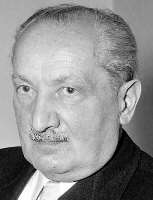

M.H.
People have problems with Martin Heidegger. And with good reason. Of course he was a member of the Nazi Party, which is the culmination of his ass-headedness. Martin had proven himself to be an asshole however, long before this. 


Hanna Arendt
For example, after praising his mentor Edmund Husserl's work, he completely contradicted it and abused it, turning Husserl's phenomenological project on its head. Of course for someone so smart, Husserl wasn't too bright. He's the one who published Being and Time without realizing Heidegger was lambasting his ideas. He had a number of affairs including with Hanna Arendt, a Jew...yeah...like I said...he was a real jerk. Not for sexing it up with a Jewess, but doing so while becoming a Nazi. 
Hitler und M. H.
He was elected the Rector of the University of Freiburg and his first act as Rector was to eliminate all democratic structures, including those that had elected him Rector. (Sounds like a good Nazi, yes?) 


And yet, very few philosophers have influenced  so many branches of philosophy: existentialism, hermeneutics, deconstructionism, postmodernism, phenomenology. And there is little doubt that of the 20th century philosophical tomes, none is as deep and as rich (or as difficult) as Heidegger's Being and Time. (Sartre & Foucault not withstanding.) So lets look at some of Being and Time


While I am not going to explicitly examine the following, it is important to recognize that for Heidegger (1962) as he elucidated in Being and Time, Dasein (the human being) is always in the world. Dasein exists in, along with and is a natural part of it and cannot be separated from it. Dasein is always there, thrown into an existing in the world. Dasein always exists in this context of ‘worldliness.’ This is important, because Dasein therefore cannot get behind, or go beyond his temporal existence in the world and this placement in the world means that Dasein must determine how to exist in, alongside and with it. Dasein relates to the world through care (Sorge), through a defining relation, through the realization that this Being is its own Being, as therefore it has direct concern and responsibility for this Being. This is one of the major breaks between Heidegger and Husserl, the latter wanting to bracket the existence of the world (and hence care) through the epoché.


In Being and Time, there is a tension set up almost from the start between two possible, mutually exclusive modes of Being in which Dasein might exist. These modes are authenticity (eigentlich sein) and inauthenticity (uneigentlich sein). In the ontology of Being and Time, these two possible modes of existence belong to the essential constitution of Dasein. Dasein must choose these modes of existence. In choosing to be authentic, Dasein chooses itself and wins itself. In inauthenticity, Dasein chooses the public interpretations of the self, takes on the conceptions of the ‘they’ and hence loses itself. It is important to note, however, that these two modes of existence are not directly dichotomous, nor oppositional (p. 67-69). They are not an either/or. Dasein does not choose to be authentic once, and then will forever be authentic. Rather, Dasein must choose again and again whether to be authentic or inauthentic, because these possibilities belong to its essential constitution. The need to choose is constant.


Kierkegaard
{Let me clarify with an example from Christianity. Strict Calvinists believe in the doctrine of “once saved, always saved,” that is, once you have made the decision for Christ, you are sealed and cannot ever not be saved. On the other hand, the Armenians conception of salvation is that salvation is worked out through ‘fear and trembling,’ and in order to be saved, one must make the choice to ‘be’ a Christian at each instant. Of course Heidegger was not discussing salvation in Being and Time, but the allegory helps to illuminate Dasein’s need to choose the authentic or inauthentic constantly. By the way, in case you did not notice - Fear and Trembling - is the title of one of Kierkegaard's books. Heidegger stole a lot of ideas from Kierkegaard, btw.}

It is important to recognize the constant need to choose because the possibility of authenticity and inauthenticity are constitutions of Dasein, living inauthentically in no way makes Dasein less Dasein. There is no lower degree of being. However, there are distinctions between living the authentic life and living inauthentically, and like Kierkegaard, Heidegger’s conception includes the ‘they.’ What is the ‘they?’ As Heidegger notes, “The ‘they’ is an existentiale; and as a primordial phenomenon, it belongs to Dasein’s positive consititution…” (p. 167). The ‘they’ and ‘they-self’ comprise Dasein in its everydayness. Because Dasein is always in the world, this being-in necessarily signifies being-with others. This being-with is a necessary component of Dasein’s existential everydayness. While Dasein cannot escape this everydayness, it is in this being-with-others where the possibility of inauthenticity lies.
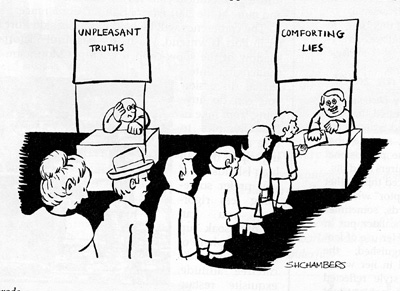

In this being-with-others, Dasein can live in fallenness (Verfallen), which connotes deterioration or a crumbling (Golumb, 1995). Rather than existing on our own terms, with our own defining relation, we accept and incorporate the meanings, which are given to us from the outside. “The Self of everyday Dasein is the they-self, which we distinguish from the authentic Self – that is from the self which has been taken hold of in its own way” (p. 167). We accept the definitions and the responsibilities of the ‘they.’ From this description of the they-self, Dasein has the possibility of laying aside its care, its defining relation and accepting conventional wisdom as its own.


To Dasein’s state of being belongs falling. Proximally and for the most part Dasein is lost in its “world.” Its understanding, as a projection of possibilities of Being, has diverted itself thither. Its absorption in the “they” signifies that it is dominated by the way things are publicly interpreted (p. 264).


Dasein comes to believe given unexamined meanings as important and significant to it, when they in actuality are not. This acceptance of the inauthenticity of the “they-self,” and the laying aside of Dasein’s care is to live in falleness.


In Being and Time, Heidegger examines communication as it relates to inauthenticity and fallenness. In particular, he examines idle talk. Futher in the same passage where he describes falleness, Heidegger continues, “That which has been uncovered and disclosed stands in a mode in which it is disguised and closed off by idle talk, curiosity, and ambiguity” (p. 264). No longer is Dasein concerned with care, its own-most being, nor its defining relation. Rather, in fallenness those are to some extent hidden, as the face of a friend at a masquerade ball – you know who it is, even if you cannot see his face.


In everydayness, Dasein is confronted with the possibility of maintaining authenticity or losing it through discourse, because,


this discoursing has lost its primary relationship-of-Being towards the entity talked about, or has never achieved such a relationship, it does not communicate in such a way as to let this entity be appropriated in a primordial manner, but communicates rather by following the route of gossiping and passing the word along. What is said-in-the-talk as such, spreads in wider circles and takes on an authoritative character (p. 212).


In everydayness the pre-conceived and uncritically accepted conventional wisdom, Dasein loses itself. Dasien, by accepting the rules and roles of society’s conventionality, is a leveling down of one’s defining relation. “Every kind of priority gets noiselessly suppressed. Overnight, everything that is primordial gets glossed over as something that has been well known” (p. 165).


The “they” however, as an existentiale, is not some amorphous third person, the herd, or the crowd. In fact, despite the term’s third-person implication, the “they” is in fact intricate to being Dasein. Rather, the “they-self” is an act, a way of being Dasein, accomplished by Dasein’s accommodation of the interpretations of the self and the world, through idle talk, curiosity, novelty and ambiguity. “If Dasein is familiar with itself as they-self, this means that at the same time the “they” itself prescribes that way of interpreting the world and Being-in-the-world which lies closest” (p. 167). Living in the “they” then, is not the fault of some third party, but is Dasein’s responsibility. If Dasein projects itself into the future based upon the internalized categories supplied by the “they,” it is by default self-limiting – Verfallen. 
The trick is for Dasein to live as an individual and in the everydayness of Verfallen (Guignon, 1984).  


Of course given all this great thinking...how was he able to join the most malevolent political party ever? Perhaps Martin had the most pronounced version of cognitive dissonance ever.  


And since this is the last of the philosophy books series, here are the links to the previous nine for your perusal.


Number 9: Ion by Aristotle
Number 8: Care of the Self by Foucault
Number 7: The Ethics of Authenticity by Charles Taylor
Number 6: I & Thou by Martin Buber
Number 5: The Communist Manifesto by Marx & Engels
Number 4: The Reasons of Love by Henry Frankfurt
Number 3: Purity of Heart Is to Will One Thing by Soren Kierkegaard
Number 2: The Rebel - Albert Camus
Number 1: The Theory of Moral Sentiments - Adam Smith






Sunday, October 2, 2011

10 Philosophy Books 4 Your Perusal (Pt 8): The Care of the Self


Michelle Foucault


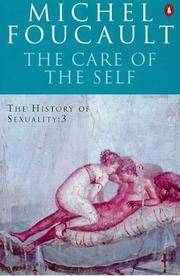
The History of Sexuality, Vol. 3: The Care of the Self 

Ethics. Identity. Selfhood. Self-Discipline. Discourse. That’s how you could sum up the latter part of Foucault’s project, if of course you could sum up Foucault's opus. However, like any good philosopher's works, you just can't sum it up. It is always being put to new and different uses. (Which reminds me of the old quote: "The history of philosophy is just one long footnote to Plato.")

Plus, reading Foucault can sometimes make your head do this.

Anyway, once interested in the genealogy of society, madness, and order, Foucault moved on to the development of the subject, a.k.a. the person, a.k.a. the human individual. It is in The History of Sexuality, Vol. 3: The Care of the Self that Foucault seriously delves into how discourses make us and how we use discourses to make our “selves.” 

Foucault contended that technologies of the self must be comprehended as inextricably connected to his notion of governmentality: the guiding rationales individuals and social structures use to regulate and police norms of thought and behavior. Foucault endeavored to show how the modern sovereign state and the modern autonomous individual co-determine each other’s emergence.

While Foucault was particularly interested in sexuality and the discourses surrounding sexuality and sexual identity his work has been influential in psychology, theology, gender studies, organizational communication. We will talk about some of those later. First, however, some of Michel.

“As a context, we must understand that there are four major types of these "technologies," each a matrix of practical reason: (1) technologies of production, which permit us to produce, transform, or manipulate things; (2) technologies of sign systems, which permit us to use signs, meanings, symbols, or signification; (3) technologies of power, which determine the conduct of individuals and submit them to certain ends or domination, an objectivizing of the subject; (4) technologies of the self, which permit individuals to effect by their own means or with the help of others a certain number of operations on their own bodies and souls, thoughts, conduct, and way of being, so as to transform I themselves in order to attain a certain state of happiness, purity, wisdom, perfection, or immortality.” (1988)

Foucault’s opus indicates the importance of, and interrelationships between, identity, power and knowledge. For Foucault power does not reside is a particular person or institution, but is engendered instead in discourses, practices, and procedures of everyday life and becomes apparent when it is exercised. Power is everywhere in social relations, and is exercised at all levels of an organization and society through various discourses and processes. Human beings are made subjects – or socially constructed – through various disciplinary discourses. The control of the self is a form of control through the discourses of power/knowledge.

As Foucault (1993) noted, in order to study power and the individual one must examine governmentality, the contact points of the “techniques of domination and techniques of the self” (p. 203). Governing people…is not a way to force people to do what the governor wants; it is always a versatile equilibrium, with complementarity and conflicts between techniques which assure coercion and processes through which the self is constructed or modified by himself (p. 203-204). Discipline therefore is not simply imposed from the outside, nor is it always complete, otherwise there would be no place for reflexivity. For Foucault, governmentality is not negative, but productive. It socially constructs subjects, reality, objects and rituals of truth.

While subjects are constructed through discursive processes, they are never powerless, but are active participants in creating the identities they desire by relying on various discourses. They can rebel and resist. (Remember Camus?) Individuals have the ability through these technologies of the self to reflect upon, shape, govern, and be responsible for their selves within these discourses and resources of power, to transfigure themselves to achieve a condition “of happiness, purity, wisdom, perfection, or immortality."

I am an organizational communication scholar and I've been heartily influenced by Foucault. Given the dynamic complexity of interrelated power relations, organizational scholars turned to the concept of struggle, an ongoing, interactive, unpredictable, definition-creating activity that moves beyond the static power/resistance model of domination. Similarly, because power resides in networks of relationships, subjects freely call upon differing discourses in order to enact strategic games, and therefore, play games of identity. In organizations these issues of identity transcend personal, organizational and occupational lines. 

Here are some of my favorite Foucault works and those who have made use of Foucault: 


Michel Foucault's "History of Madness" in English, is the complete version of the English translation called "Madness and Civilization", which since it was abridged, produced some serious misinterpretations. Foucault shows how the idea of "madness" from the Middle Ages through the Renaissance and the Enlightenment to the present, has undergone several transformations of meaning.  It is excellent...

....and it might make your head do this.


Friday, September 16, 2011

10 Philosophy Books For Your Perusal (Part 3)


The third book was something of a challenge for me because picking one text by this author is a hell of a challenge. There is literally NO field that he has not impacted in some manner. Psychology: The Sickness Unto Death. Sociology: Two Ages. Philosophy: Either/Or. Literature: Prefaces. Theology: Works of Love. Critical Theory: Attack Upon Christendom. However, given my predilection for critical theory and the workplace and employees and organizational communication, my choice came down to:

Soren Kierkegaard


“Alas, it is horrible to see a man rush toward his own destruction.”

Keeping up with the Joneses. Abusing employees. Fear. Getting things done. Accomplishments. Stress. Pressure. Life. In an age of popular books on self-improvement that list habits and prescriptions of do's and dont's, (7 Habits; First Things First; Getting Things Done: The Art of Stress-Free Productivity) or pithy nonsensical tomes that are nihilistically oriented (Eat, Pray, Love; The New Mood Therapy; The Secret) here is a work that questions human motivation and will. 

In one whole section with a relentless persistence SK makes refrain of the question:

"Do you live as an individual?"

SK believed the crowd, the public, to be a hiding-place in which the individual may abdicate his true quest for inward authenticity and responsibility. The crowd is a sink of cowardice in which individuals are relieved of individual responsibility and will commit acts they would never dare to do alone. This recalibration of man from the public is a central theme of Purity of Heart Is to Will One Thing.

What is the good and how do we do the good? In a sustained argument, Kierkegaard takes on the philosophy of utilitarianism, which says the best choice is the one that least to be best outcomes for the most people.  Can people be used as a means to an end (even a supposed good end)? If you are doing good merely for self-aggrandizement, are you really doing the good? If you do good only half-heartedly, are you really doing the good? Are you doing the good if you are acting out of fear or to avoid punishment?


SK left us a challenging examination of the heart and mind, from which ensue all of the popular habits and prescriptions. What is single-mindedness? How is it formed, and what does it look like? How are our motivations and ambitions conflicted? How do we throw off the things the public wants to be our own? Do you know what is your calling, what is your vocation, and have you accepted it? This book is not only one of the easiest of SK's tomes to read, but one that will - if you take it seriously - change your life.

Wednesday, February 2, 2011

Modernism, Postmodernism, and the Christian Church


There have been many attacks on what is perceived as the infiltration of postmodernity (pomo) into the Christian church, particularly the Emergent church. Here are some of them:

The Postmodern Crackup

Knowing Right From Wrong, A Christian Response To Postmodern “Tolerance”

Pomo and the Emergent Church


As is usual, I look at things just a tad bit differently. I believe the failure is not so much with pomo thinking, but with modernism. Modernism was a huge failure. The rationalists like Descartes and Spinoza left us with nothing but skepticism.  The Empiracists: thinkers like Hume and Berkeley left us with nothing but our senses: with no thing human but a summation of our experiences. Idealism - like Hegel's - led to the false promises of Fascism and Marxism, and their terrible impositions, communism and Nazism. Existentialism led to more questions about the nature of the self (which is both being and nothing). Absurdism made questions irrelevant, because there are no answers. The more we learn through science, the more speculative it becomes: dark matter, quarks, string theory. And industrialism led to the wonderful efficiency of the Holocaust, Vietnam, slavery, etc. Individualism itself is a product of modernism, and therefore the philosophy of relativism – what’s good and true and beautiful for me is what I say it is – is also a product of the modern outlook.

The main idea of modernity was progress, which was tripped up when so much 'progress' turned out to be no progress at all. This is not to say that modernism was all wrong, or that there were no successes. There's Kierkegaard, computers, the American Republic, etc., but over all the modernist project failed.

Even Christianity got caught up in the idea of ‘progress.’ Searching for the ultimate answer through state churches, and the rationality of apologetics. Also, looking for the ultimate truth of God through rationalistic and empirical methods. On one side of the equation, the religious ideas of this time are not about the ‘mystery’ of God or the ‘ineffable’ of the spiritual. More often than not they are about putting God in a box: “This is God. This is what He wants. This is what you do.” What else are all these damn (yes damn) Christian self-help books, but the application of the rational to our own selves in regard to God? Nihilism anyone? On the other side of the equation is the rationalistic interpretation of the gospel for justice, change and liberation: all summed up nicely in the phrase ‘social gospel.’ Nothing wrong with justice, change and liberation, but getting "heaven here on Earth" is a bit preposterous. Both of these attempts and modern Christianity were a failure as well. 

These authors are wrongs about a number of items (beyond the fact that they do not understand the differences between modernism and pomo). The self-centeredness and individualism and narcissism are part of the modern age, not pomo. In fact, they are arguing from a modernist perspective. Yes, there are certain things that we need to believe to be Christians, but there is a lot more to Christianity than “Hell Insurance,” as suggested.

There is much more to being a Christian than “being saved and going to heaven.” If not would we have to work our salvation with fear and trembling? Would we have to run the race? Would we have to put on the armor of God? Imagine if you or I believed only the things we believed when we first got saved. We’d always remain what Paul called babes.  God makes us hunger for more, because to be a Christian is to be in a relationship – with Him and with others. God uses His absence (ok, it isn’t REALLY His absence, bit sometimes it feels like it) and doubt to prick us to press deeper into His kind of life. Does this sound like a life preoccupied with merely the destination? Was your marriage a destination…or a beginning? Is parenthood a destination or a continued relationship?

Does the Emergent Church have it all right? No more than the modern church did. Pomo and Christianity are more compatible than Christianity and modernism. In fact Pomo is more akin to ancient and medieval biblical thought (Aquinas, St. Benedict, Anselm, Francis of Assisi, Eckhart) than most of the religious tomes written in the modern period. (Exceptions of course include Kierkegaard, CS Lewis, Bonhoffer, etc.) Like Premodern Christianity, Pomo allows the mystery, the questioning, the ineffable, the things that cannot be answered here on Earth to go unanswered. That is part of the journey. That is part of relationships.  That is what makes living the Christian life worth living.  Just saying.