Showing posts with label dialogue. Show all posts

Sunday, October 30, 2011

10 Philosophy Books 4 Your Perusal (Pt 9): Ion

“Socrates Is an Ass!”
As Represented by Plato (ARP) in Ion

Yeah. We are going old school this time. Very old school. While most people choose things like The Republic, or Artistotle's Ethics when talking about the ancient Greeks, I chose Ion. Why? Because its funny, rude, obnoxious, and delightful. 

This little dialogue seems a simple conversation between Socrates (ARP) the philosopher and Ion the rhapsodic performer. As usual, Socrates (ARP) uses lots of sarcasm and irony in this dialogue, which he quickly expresses. Although this may seem a rather insipid conversation, to the initiated it is chock full of interesting little tidbits.

What’s the General Gist?

Ion suggests not only is he a good reciter of poetry but is also an exegete who can interpret and explain what a poem is about. The central question in the Ion is one of privilege and qualification. Who is qualified to be an interpreter of the privileged language of the past? Who can correctly interpret Homer or any of the other poets? For example, when the performer recites Homer’s description of being a general, how is it that Ion can know what it is to be a good or bad general. Can he judge good “doctoring?”

Ion is denied this role, because he relies on inspiration, rather than knowledge (episteme) and practical skill (tekhne). If one possesses a particular skill, one can judge and critique it, because, one understands and can explain all aspects of that skill, including good and/or bad manifestation of it. Doctors can critique doctors. Generals can critique generals. Socrates (ARP) says that Ion cannot even judge poetry, for he has no poetic skill himself.

Dear God,
Go Get an Exorcist


Socrates (ARP) proposes that since Ion’s rhapsodic performances are not based on knowledge or skill, then he must be possessed or inspired. Then Socrates (ARP) goes off on the magnetic ring example. Despite its silliness, the magnetic ring example helps sharpen how audiences are affected by poetry/performance. As the last link on this chain of inspiration, we are capable of being deeply affected by poetry. We “spectators” at the recital also lose our minds, to some degree, weeping or laughing as we enter into the narrated scene, seemingly forgetting our real selves and lives. Socrates (ARP) has a divide in mind between reason and inspiration. This philosopher v. artist fight has been going on ever since.
Oh, yes!
“Let’s Get Ready to Rumble!!!”

“Go to Your Respective Corners…and Come Out Swinging"


Reason
Nous - sound mind/faculty of reason
Phren - wit
Episteme - knowledge
Tekne - skill (including communicative)



Inspiration
Ho nous meketi en autoi - out of one's mind
Ekphron - witless
Entheos - possessed/inspired
Theia dunamis - divine power


Associated with reason are philosophers, doctors, generals, painters, and those who can show critical communicative abilities of explanation, examination and judgment. Associated with inspiration are poets, rhapsodes, and anyone else who cannot give an account of how they do what they do. Reason, skill, intellect and understanding are pitted against “unreflective,” inspired activity. These are mutually exclusive territories.

“Making Your Republic Safe”

Erase the Word

Persecute the Performers
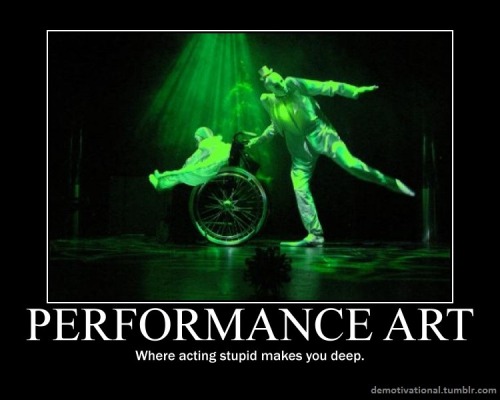
Banish the Poets


A couple of interesting connections for fodder:
As laid out in Phaedrus,
Socrates (ARP) regards the written word as inferior to the spoken 
– so why is he so anti-performer?

Poets are banished from The Republic.
In Protagoras poets are considered the original sophists.
In Phaedrus poets are “sacred, but mad.”
Remember, Socrates (ARP) likely wanted some “divine” Ionic nookie too.
He was always on a booty call.

Friday, September 23, 2011

10 Philosophy Books or Your Perusal (Part 6): I and Thou


Martin Buber
I-Thou

Traditional Western philosophy concerns itself with overcoming the subject-object dichotomy. According to this Western tradition there are two primary focuses. There is the subject, the “I” which perceives, and there is everything else, objects “out there in the world” which are perceived. Western philosophy as a whole is a centuries long attempt to answer the epistemological question, “How do we really know about things out there?” There have been many different answers attempted, but the basic conclusion of philosophers like Locke, Descartes & Kant is that we cannot really ever know “things in themselves.”

As in all cases, there have been exceptions to the rule. There have been undercurrents in the Western philosophical tradition that don’t attempt to primarily answer the epistemological questions. This lineage of philosophers have been called existentialists, but a better and more defining term would be to call the ‘philosophers of being.’ Rather than the concern about how we know things, these philosophers are primarily concerned with our being-in-the-world. The way in which we live our lives and what gives our lives meaning. This tradition includes Kierkegaard, Nietzche, Dostoevsky, Heidegger, and Jaspers among others. These philosophers questioned what we are rather than merely what we know. Buber in particular stressed the “what we are” position via relationships in his concept of I-Thou.

"The primary words are not isolated words, but combined words. 
The one primary word is the combination I-Thou 
The other primary word is the combination I-It."

If that sounds poetic, it is, but here's a brief idea of what he means by the I-It. The primary word I-It orients the relationship of the speaker to the world in particular ways. The world is perceives as the object in the standard subject-object mode as it has throughout most of Western philosophy. I-It orients the world as something to be experienced. I perceive some thing, sense some thing, feel some thing. The world is seen as experience. The I in I-it sees the world full of utility, useful to me. 

Remember we relate to people in I-it relations most of the time. The check-out guy at the grocery store, the Honda mechanic, the fellow who fixes your computer. We live in I-it most of the time. Buber calls this the social realm of human relationship. He appreciates that we must live in the social realm to accomplish our day to day activities. He also stresses however, that there is a second orientation of the I, the I of the I-Thou. Pure objectivity is the most perfectly developed I-It relation.

Compared to the I-It relationship, the I-Thou has no object, but is relationship. It is spoken only with one’s full being. I-Thou is not subject-object oriented, but is experiential. It is characterized by a turning toward the other in mutuality, directness, being fully present to one another, partner to partner. Dialogue is both the creation and the manifestation of the I-Thou. Dialogue emerges between individuals when they are simultaneously and mutually willing to be oriented toward each other in fullness and openness. There is therefore a direct correlation between the quality of human communication and the quality of human life. How we communicate affects who we are and who we are to become.

Meeting one another in openness does not mean being a wimp or losing one’s sense of self. While collaboration and co-construction are certainly a priori parts of the I-Thou relation, mutuality not only allows, but respects and accepts difference. Notice that Buber’s concept here is not about psychological traits or states, but is about relationship. Meaning is found in the relationship in what Buber called the ‘in-between,’ and the interhuman as we live together. The between is more than each of us individually, but it is also more than two of us put together. This is Buber’s ‘narrow ridge,’ which is based on the dual concern for the self and the other, which rejects either-or, all or nothing positions. A ‘narrow ridge’ philosophy assumes a genuine responsibility for not only me, but you as well, despite our differences. 

One of the reasons that I personally like I and Thou is because it says a lot about communication. In that there are a a number of communicative distinctions of in I-Thou relationships. For one, communication is ‘existential.’ Communication happens in the here and now, and the communicative partners speak and listen from a common space, the ‘in between,’ the ‘narrow ridge.’ The first task of communication is to create this space for the relationship. (There are connections here, to Walter Ong's theory of orality.) Dialogic communication is emergent, spontaneous and improvisational. It is not seeming, nor strategic. Dialogic partners are open to surprise, with each other and in themselves. Discovery. Self-realization is a by-product of dialogue, not the object of it. 

Dialogic communication recognizes strangeness. Partners recognize each other as different and unfamiliar, and that others act in unpredictable ways. Dialogic communication is oriented toward collaboration, including embracing differences and conflict. Yet is still confirms the other and the other’s point of view.

Dialogic communication partners are vulnerable. Partners are open to being changed, an open to being persuaded. Dialogic communication is based completely on mutuality. Speaker and listener are interdependent. They call both the self and the other into being through their talk. Communicative partners change their existence via the existence of the relationship itself. Dialogic communication understands both the past from which it comes and the future which it is creating. Dialogic communication assumes that partners are acting authentically, mutually and in genuine ways toward each other, and presupposes trust in the communicative relationship.

While I have issues about the way Buber read and interpreted Kierkegaard - which I wrote about in my piece Kierkegaard and Dialogue: The Communication of Capability - I still find I-Thou one of the most poetic uplifting texts I’ve ever read.