Showing posts with label philosophy. Show all posts

Saturday, November 12, 2011

10 Philosophy Books 4 Your Perusal (Pt 10): Heidegger's Being and Time

Martin Heidegger: Being and Time
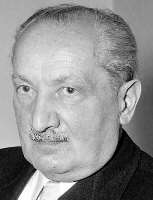

M.H.
People have problems with Martin Heidegger. And with good reason. Of course he was a member of the Nazi Party, which is the culmination of his ass-headedness. Martin had proven himself to be an asshole however, long before this. 


Hanna Arendt
For example, after praising his mentor Edmund Husserl's work, he completely contradicted it and abused it, turning Husserl's phenomenological project on its head. Of course for someone so smart, Husserl wasn't too bright. He's the one who published Being and Time without realizing Heidegger was lambasting his ideas. He had a number of affairs including with Hanna Arendt, a Jew...yeah...like I said...he was a real jerk. Not for sexing it up with a Jewess, but doing so while becoming a Nazi. 
Hitler und M. H.
He was elected the Rector of the University of Freiburg and his first act as Rector was to eliminate all democratic structures, including those that had elected him Rector. (Sounds like a good Nazi, yes?) 


And yet, very few philosophers have influenced  so many branches of philosophy: existentialism, hermeneutics, deconstructionism, postmodernism, phenomenology. And there is little doubt that of the 20th century philosophical tomes, none is as deep and as rich (or as difficult) as Heidegger's Being and Time. (Sartre & Foucault not withstanding.) So lets look at some of Being and Time


While I am not going to explicitly examine the following, it is important to recognize that for Heidegger (1962) as he elucidated in Being and Time, Dasein (the human being) is always in the world. Dasein exists in, along with and is a natural part of it and cannot be separated from it. Dasein is always there, thrown into an existing in the world. Dasein always exists in this context of ‘worldliness.’ This is important, because Dasein therefore cannot get behind, or go beyond his temporal existence in the world and this placement in the world means that Dasein must determine how to exist in, alongside and with it. Dasein relates to the world through care (Sorge), through a defining relation, through the realization that this Being is its own Being, as therefore it has direct concern and responsibility for this Being. This is one of the major breaks between Heidegger and Husserl, the latter wanting to bracket the existence of the world (and hence care) through the epoché.


In Being and Time, there is a tension set up almost from the start between two possible, mutually exclusive modes of Being in which Dasein might exist. These modes are authenticity (eigentlich sein) and inauthenticity (uneigentlich sein). In the ontology of Being and Time, these two possible modes of existence belong to the essential constitution of Dasein. Dasein must choose these modes of existence. In choosing to be authentic, Dasein chooses itself and wins itself. In inauthenticity, Dasein chooses the public interpretations of the self, takes on the conceptions of the ‘they’ and hence loses itself. It is important to note, however, that these two modes of existence are not directly dichotomous, nor oppositional (p. 67-69). They are not an either/or. Dasein does not choose to be authentic once, and then will forever be authentic. Rather, Dasein must choose again and again whether to be authentic or inauthentic, because these possibilities belong to its essential constitution. The need to choose is constant.


Kierkegaard
{Let me clarify with an example from Christianity. Strict Calvinists believe in the doctrine of “once saved, always saved,” that is, once you have made the decision for Christ, you are sealed and cannot ever not be saved. On the other hand, the Armenians conception of salvation is that salvation is worked out through ‘fear and trembling,’ and in order to be saved, one must make the choice to ‘be’ a Christian at each instant. Of course Heidegger was not discussing salvation in Being and Time, but the allegory helps to illuminate Dasein’s need to choose the authentic or inauthentic constantly. By the way, in case you did not notice - Fear and Trembling - is the title of one of Kierkegaard's books. Heidegger stole a lot of ideas from Kierkegaard, btw.}

It is important to recognize the constant need to choose because the possibility of authenticity and inauthenticity are constitutions of Dasein, living inauthentically in no way makes Dasein less Dasein. There is no lower degree of being. However, there are distinctions between living the authentic life and living inauthentically, and like Kierkegaard, Heidegger’s conception includes the ‘they.’ What is the ‘they?’ As Heidegger notes, “The ‘they’ is an existentiale; and as a primordial phenomenon, it belongs to Dasein’s positive consititution…” (p. 167). The ‘they’ and ‘they-self’ comprise Dasein in its everydayness. Because Dasein is always in the world, this being-in necessarily signifies being-with others. This being-with is a necessary component of Dasein’s existential everydayness. While Dasein cannot escape this everydayness, it is in this being-with-others where the possibility of inauthenticity lies.
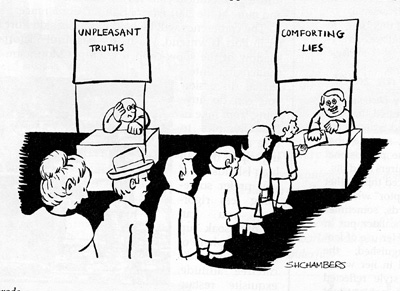

In this being-with-others, Dasein can live in fallenness (Verfallen), which connotes deterioration or a crumbling (Golumb, 1995). Rather than existing on our own terms, with our own defining relation, we accept and incorporate the meanings, which are given to us from the outside. “The Self of everyday Dasein is the they-self, which we distinguish from the authentic Self – that is from the self which has been taken hold of in its own way” (p. 167). We accept the definitions and the responsibilities of the ‘they.’ From this description of the they-self, Dasein has the possibility of laying aside its care, its defining relation and accepting conventional wisdom as its own.


To Dasein’s state of being belongs falling. Proximally and for the most part Dasein is lost in its “world.” Its understanding, as a projection of possibilities of Being, has diverted itself thither. Its absorption in the “they” signifies that it is dominated by the way things are publicly interpreted (p. 264).


Dasein comes to believe given unexamined meanings as important and significant to it, when they in actuality are not. This acceptance of the inauthenticity of the “they-self,” and the laying aside of Dasein’s care is to live in falleness.


In Being and Time, Heidegger examines communication as it relates to inauthenticity and fallenness. In particular, he examines idle talk. Futher in the same passage where he describes falleness, Heidegger continues, “That which has been uncovered and disclosed stands in a mode in which it is disguised and closed off by idle talk, curiosity, and ambiguity” (p. 264). No longer is Dasein concerned with care, its own-most being, nor its defining relation. Rather, in fallenness those are to some extent hidden, as the face of a friend at a masquerade ball – you know who it is, even if you cannot see his face.


In everydayness, Dasein is confronted with the possibility of maintaining authenticity or losing it through discourse, because,


this discoursing has lost its primary relationship-of-Being towards the entity talked about, or has never achieved such a relationship, it does not communicate in such a way as to let this entity be appropriated in a primordial manner, but communicates rather by following the route of gossiping and passing the word along. What is said-in-the-talk as such, spreads in wider circles and takes on an authoritative character (p. 212).


In everydayness the pre-conceived and uncritically accepted conventional wisdom, Dasein loses itself. Dasien, by accepting the rules and roles of society’s conventionality, is a leveling down of one’s defining relation. “Every kind of priority gets noiselessly suppressed. Overnight, everything that is primordial gets glossed over as something that has been well known” (p. 165).


The “they” however, as an existentiale, is not some amorphous third person, the herd, or the crowd. In fact, despite the term’s third-person implication, the “they” is in fact intricate to being Dasein. Rather, the “they-self” is an act, a way of being Dasein, accomplished by Dasein’s accommodation of the interpretations of the self and the world, through idle talk, curiosity, novelty and ambiguity. “If Dasein is familiar with itself as they-self, this means that at the same time the “they” itself prescribes that way of interpreting the world and Being-in-the-world which lies closest” (p. 167). Living in the “they” then, is not the fault of some third party, but is Dasein’s responsibility. If Dasein projects itself into the future based upon the internalized categories supplied by the “they,” it is by default self-limiting – Verfallen. 
The trick is for Dasein to live as an individual and in the everydayness of Verfallen (Guignon, 1984).  


Of course given all this great thinking...how was he able to join the most malevolent political party ever? Perhaps Martin had the most pronounced version of cognitive dissonance ever.  


And since this is the last of the philosophy books series, here are the links to the previous nine for your perusal.


Number 9: Ion by Aristotle
Number 8: Care of the Self by Foucault
Number 7: The Ethics of Authenticity by Charles Taylor
Number 6: I & Thou by Martin Buber
Number 5: The Communist Manifesto by Marx & Engels
Number 4: The Reasons of Love by Henry Frankfurt
Number 3: Purity of Heart Is to Will One Thing by Soren Kierkegaard
Number 2: The Rebel - Albert Camus
Number 1: The Theory of Moral Sentiments - Adam Smith





Sunday, October 30, 2011

10 Philosophy Books 4 Your Perusal (Pt 9): Ion

“Socrates Is an Ass!”
As Represented by Plato (ARP) in Ion

Yeah. We are going old school this time. Very old school. While most people choose things like The Republic, or Artistotle's Ethics when talking about the ancient Greeks, I chose Ion. Why? Because its funny, rude, obnoxious, and delightful. 

This little dialogue seems a simple conversation between Socrates (ARP) the philosopher and Ion the rhapsodic performer. As usual, Socrates (ARP) uses lots of sarcasm and irony in this dialogue, which he quickly expresses. Although this may seem a rather insipid conversation, to the initiated it is chock full of interesting little tidbits.

What’s the General Gist?

Ion suggests not only is he a good reciter of poetry but is also an exegete who can interpret and explain what a poem is about. The central question in the Ion is one of privilege and qualification. Who is qualified to be an interpreter of the privileged language of the past? Who can correctly interpret Homer or any of the other poets? For example, when the performer recites Homer’s description of being a general, how is it that Ion can know what it is to be a good or bad general. Can he judge good “doctoring?”

Ion is denied this role, because he relies on inspiration, rather than knowledge (episteme) and practical skill (tekhne). If one possesses a particular skill, one can judge and critique it, because, one understands and can explain all aspects of that skill, including good and/or bad manifestation of it. Doctors can critique doctors. Generals can critique generals. Socrates (ARP) says that Ion cannot even judge poetry, for he has no poetic skill himself.

Dear God,
Go Get an Exorcist


Socrates (ARP) proposes that since Ion’s rhapsodic performances are not based on knowledge or skill, then he must be possessed or inspired. Then Socrates (ARP) goes off on the magnetic ring example. Despite its silliness, the magnetic ring example helps sharpen how audiences are affected by poetry/performance. As the last link on this chain of inspiration, we are capable of being deeply affected by poetry. We “spectators” at the recital also lose our minds, to some degree, weeping or laughing as we enter into the narrated scene, seemingly forgetting our real selves and lives. Socrates (ARP) has a divide in mind between reason and inspiration. This philosopher v. artist fight has been going on ever since.
Oh, yes!
“Let’s Get Ready to Rumble!!!”

“Go to Your Respective Corners…and Come Out Swinging"


Reason
Nous - sound mind/faculty of reason
Phren - wit
Episteme - knowledge
Tekne - skill (including communicative)


Inspiration
Ho nous meketi en autoi - out of one's mind
Ekphron - witless
Entheos - possessed/inspired
Theia dunamis - divine power


Associated with reason are philosophers, doctors, generals, painters, and those who can show critical communicative abilities of explanation, examination and judgment. Associated with inspiration are poets, rhapsodes, and anyone else who cannot give an account of how they do what they do. Reason, skill, intellect and understanding are pitted against “unreflective,” inspired activity. These are mutually exclusive territories.

“Making Your Republic Safe”

Erase the Word

Persecute the Performers

Banish the Poets


A couple of interesting connections for fodder:
As laid out in Phaedrus,
Socrates (ARP) regards the written word as inferior to the spoken 
– so why is he so anti-performer?

Poets are banished from The Republic.
In Protagoras poets are considered the original sophists.
In Phaedrus poets are “sacred, but mad.”
Remember, Socrates (ARP) likely wanted some “divine” Ionic nookie too.
He was always on a booty call.

Sunday, October 2, 2011

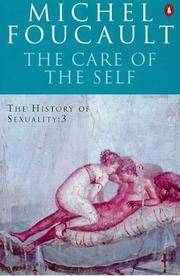
10 Philosophy Books 4 Your Perusal (Pt 8): The Care of the Self


Michelle Foucault


The History of Sexuality, Vol. 3: The Care of the Self 

Ethics. Identity. Selfhood. Self-Discipline. Discourse. That’s how you could sum up the latter part of Foucault’s project, if of course you could sum up Foucault's opus. However, like any good philosopher's works, you just can't sum it up. It is always being put to new and different uses. (Which reminds me of the old quote: "The history of philosophy is just one long footnote to Plato.")

Plus, reading Foucault can sometimes make your head do this.

Anyway, once interested in the genealogy of society, madness, and order, Foucault moved on to the development of the subject, a.k.a. the person, a.k.a. the human individual. It is in The History of Sexuality, Vol. 3: The Care of the Self that Foucault seriously delves into how discourses make us and how we use discourses to make our “selves.” 

Foucault contended that technologies of the self must be comprehended as inextricably connected to his notion of governmentality: the guiding rationales individuals and social structures use to regulate and police norms of thought and behavior. Foucault endeavored to show how the modern sovereign state and the modern autonomous individual co-determine each other’s emergence.

While Foucault was particularly interested in sexuality and the discourses surrounding sexuality and sexual identity his work has been influential in psychology, theology, gender studies, organizational communication. We will talk about some of those later. First, however, some of Michel.

“As a context, we must understand that there are four major types of these "technologies," each a matrix of practical reason: (1) technologies of production, which permit us to produce, transform, or manipulate things; (2) technologies of sign systems, which permit us to use signs, meanings, symbols, or signification; (3) technologies of power, which determine the conduct of individuals and submit them to certain ends or domination, an objectivizing of the subject; (4) technologies of the self, which permit individuals to effect by their own means or with the help of others a certain number of operations on their own bodies and souls, thoughts, conduct, and way of being, so as to transform I themselves in order to attain a certain state of happiness, purity, wisdom, perfection, or immortality.” (1988)

Foucault’s opus indicates the importance of, and interrelationships between, identity, power and knowledge. For Foucault power does not reside is a particular person or institution, but is engendered instead in discourses, practices, and procedures of everyday life and becomes apparent when it is exercised. Power is everywhere in social relations, and is exercised at all levels of an organization and society through various discourses and processes. Human beings are made subjects – or socially constructed – through various disciplinary discourses. The control of the self is a form of control through the discourses of power/knowledge.

As Foucault (1993) noted, in order to study power and the individual one must examine governmentality, the contact points of the “techniques of domination and techniques of the self” (p. 203). Governing people…is not a way to force people to do what the governor wants; it is always a versatile equilibrium, with complementarity and conflicts between techniques which assure coercion and processes through which the self is constructed or modified by himself (p. 203-204). Discipline therefore is not simply imposed from the outside, nor is it always complete, otherwise there would be no place for reflexivity. For Foucault, governmentality is not negative, but productive. It socially constructs subjects, reality, objects and rituals of truth.

While subjects are constructed through discursive processes, they are never powerless, but are active participants in creating the identities they desire by relying on various discourses. They can rebel and resist. (Remember Camus?) Individuals have the ability through these technologies of the self to reflect upon, shape, govern, and be responsible for their selves within these discourses and resources of power, to transfigure themselves to achieve a condition “of happiness, purity, wisdom, perfection, or immortality."

I am an organizational communication scholar and I've been heartily influenced by Foucault. Given the dynamic complexity of interrelated power relations, organizational scholars turned to the concept of struggle, an ongoing, interactive, unpredictable, definition-creating activity that moves beyond the static power/resistance model of domination. Similarly, because power resides in networks of relationships, subjects freely call upon differing discourses in order to enact strategic games, and therefore, play games of identity. In organizations these issues of identity transcend personal, organizational and occupational lines. 

Here are some of my favorite Foucault works and those who have made use of Foucault: 


Michel Foucault's "History of Madness" in English, is the complete version of the English translation called "Madness and Civilization", which since it was abridged, produced some serious misinterpretations. Foucault shows how the idea of "madness" from the Middle Ages through the Renaissance and the Enlightenment to the present, has undergone several transformations of meaning.  It is excellent...

....and it might make your head do this.


Friday, September 23, 2011

10 Philosophy Books or Your Perusal (Part 6): I and Thou


Martin Buber
I-Thou

Traditional Western philosophy concerns itself with overcoming the subject-object dichotomy. According to this Western tradition there are two primary focuses. There is the subject, the “I” which perceives, and there is everything else, objects “out there in the world” which are perceived. Western philosophy as a whole is a centuries long attempt to answer the epistemological question, “How do we really know about things out there?” There have been many different answers attempted, but the basic conclusion of philosophers like Locke, Descartes & Kant is that we cannot really ever know “things in themselves.”

As in all cases, there have been exceptions to the rule. There have been undercurrents in the Western philosophical tradition that don’t attempt to primarily answer the epistemological questions. This lineage of philosophers have been called existentialists, but a better and more defining term would be to call the ‘philosophers of being.’ Rather than the concern about how we know things, these philosophers are primarily concerned with our being-in-the-world. The way in which we live our lives and what gives our lives meaning. This tradition includes Kierkegaard, Nietzche, Dostoevsky, Heidegger, and Jaspers among others. These philosophers questioned what we are rather than merely what we know. Buber in particular stressed the “what we are” position via relationships in his concept of I-Thou.

"The primary words are not isolated words, but combined words. 
The one primary word is the combination I-Thou 
The other primary word is the combination I-It."

If that sounds poetic, it is, but here's a brief idea of what he means by the I-It. The primary word I-It orients the relationship of the speaker to the world in particular ways. The world is perceives as the object in the standard subject-object mode as it has throughout most of Western philosophy. I-It orients the world as something to be experienced. I perceive some thing, sense some thing, feel some thing. The world is seen as experience. The I in I-it sees the world full of utility, useful to me. 

Remember we relate to people in I-it relations most of the time. The check-out guy at the grocery store, the Honda mechanic, the fellow who fixes your computer. We live in I-it most of the time. Buber calls this the social realm of human relationship. He appreciates that we must live in the social realm to accomplish our day to day activities. He also stresses however, that there is a second orientation of the I, the I of the I-Thou. Pure objectivity is the most perfectly developed I-It relation.

Compared to the I-It relationship, the I-Thou has no object, but is relationship. It is spoken only with one’s full being. I-Thou is not subject-object oriented, but is experiential. It is characterized by a turning toward the other in mutuality, directness, being fully present to one another, partner to partner. Dialogue is both the creation and the manifestation of the I-Thou. Dialogue emerges between individuals when they are simultaneously and mutually willing to be oriented toward each other in fullness and openness. There is therefore a direct correlation between the quality of human communication and the quality of human life. How we communicate affects who we are and who we are to become.

Meeting one another in openness does not mean being a wimp or losing one’s sense of self. While collaboration and co-construction are certainly a priori parts of the I-Thou relation, mutuality not only allows, but respects and accepts difference. Notice that Buber’s concept here is not about psychological traits or states, but is about relationship. Meaning is found in the relationship in what Buber called the ‘in-between,’ and the interhuman as we live together. The between is more than each of us individually, but it is also more than two of us put together. This is Buber’s ‘narrow ridge,’ which is based on the dual concern for the self and the other, which rejects either-or, all or nothing positions. A ‘narrow ridge’ philosophy assumes a genuine responsibility for not only me, but you as well, despite our differences. 

One of the reasons that I personally like I and Thou is because it says a lot about communication. In that there are a a number of communicative distinctions of in I-Thou relationships. For one, communication is ‘existential.’ Communication happens in the here and now, and the communicative partners speak and listen from a common space, the ‘in between,’ the ‘narrow ridge.’ The first task of communication is to create this space for the relationship. (There are connections here, to Walter Ong's theory of orality.) Dialogic communication is emergent, spontaneous and improvisational. It is not seeming, nor strategic. Dialogic partners are open to surprise, with each other and in themselves. Discovery. Self-realization is a by-product of dialogue, not the object of it. 

Dialogic communication recognizes strangeness. Partners recognize each other as different and unfamiliar, and that others act in unpredictable ways. Dialogic communication is oriented toward collaboration, including embracing differences and conflict. Yet is still confirms the other and the other’s point of view.

Dialogic communication partners are vulnerable. Partners are open to being changed, an open to being persuaded. Dialogic communication is based completely on mutuality. Speaker and listener are interdependent. They call both the self and the other into being through their talk. Communicative partners change their existence via the existence of the relationship itself. Dialogic communication understands both the past from which it comes and the future which it is creating. Dialogic communication assumes that partners are acting authentically, mutually and in genuine ways toward each other, and presupposes trust in the communicative relationship.

While I have issues about the way Buber read and interpreted Kierkegaard - which I wrote about in my piece Kierkegaard and Dialogue: The Communication of Capability - I still find I-Thou one of the most poetic uplifting texts I’ve ever read. 

Saturday, September 17, 2011

10 Philosophy Books For Your Perusal (Part 4)


Finally....in case you were wondering...someone who is still alive!


Harry G. Frankfurt 

The Reasons of Love 

I follow up Kierkegaard’s work with this one.  Similar to SK, Frankfurt argues the key to a fulfilled life is to pursue wholeheartedly what one cares about, that love is the most authoritative form of caring, and that the purest form of love is, in a complicated way, self-love.


(Note: This is actually one of the themes SK talks about in another book called Works of Love wherein he argues that we do not do what the Bible says when it tells us to “Love our neighbor as ourselves,” because too many of us do NOT love ourselves.)

Frankfurt argues that the purest form of love is self-love. This sounds perverse, but self-love--as distinct from self-indulgence--is at heart a disinterested concern for whatever it is that the person loves. Harry Frankfurt writes it is through care (Heidegger would have use the word Sorge) that we infuse the world with meaning. This is based upon Frankfurt’s argument in his essay The Importance of What We Care About, found in the collection The Importance of What We Care About, which also contains his most popular work On Bullshit.

"When a person makes something important to himself, accordingly, the situation resembles an instance of divine agape at least in a certain respect."

Caring presents us with stable ambitions and concerns; it shapes the framework of aims and interests within which we lead our lives. The most basic and essential question for a person to raise about the conduct of his or her life is not what he or she should care about but what, in fact, he or she cannot help caring about. The most important form of caring, Frankfurt writes, is love, a nonvoluntary, disinterested concern for the flourishing of what is loved.


Love is so important because meaningful practical reasoning must be grounded in ends that we do not seek only to attain other ends, and because it is in loving that we become bound to final ends desired for their own sakes. The most elementary form of self-love is nothing more than the desire of a person to love. Insofar as this is true, self-love is simply a commitment to finding meaning in our lives.

Love. Philosophy. Wisdom.


Friday, September 16, 2011

10 Philosophy Books For Your Perusal (Part 3)


The third book was something of a challenge for me because picking one text by this author is a hell of a challenge. There is literally NO field that he has not impacted in some manner. Psychology: The Sickness Unto Death. Sociology: Two Ages. Philosophy: Either/Or. Literature: Prefaces. Theology: Works of Love. Critical Theory: Attack Upon Christendom. However, given my predilection for critical theory and the workplace and employees and organizational communication, my choice came down to:

Soren Kierkegaard


“Alas, it is horrible to see a man rush toward his own destruction.”

Keeping up with the Joneses. Abusing employees. Fear. Getting things done. Accomplishments. Stress. Pressure. Life. In an age of popular books on self-improvement that list habits and prescriptions of do's and dont's, (7 Habits; First Things First; Getting Things Done: The Art of Stress-Free Productivity) or pithy nonsensical tomes that are nihilistically oriented (Eat, Pray, Love; The New Mood Therapy; The Secret) here is a work that questions human motivation and will. 

In one whole section with a relentless persistence SK makes refrain of the question:

"Do you live as an individual?"

SK believed the crowd, the public, to be a hiding-place in which the individual may abdicate his true quest for inward authenticity and responsibility. The crowd is a sink of cowardice in which individuals are relieved of individual responsibility and will commit acts they would never dare to do alone. This recalibration of man from the public is a central theme of Purity of Heart Is to Will One Thing.

What is the good and how do we do the good? In a sustained argument, Kierkegaard takes on the philosophy of utilitarianism, which says the best choice is the one that least to be best outcomes for the most people.  Can people be used as a means to an end (even a supposed good end)? If you are doing good merely for self-aggrandizement, are you really doing the good? If you do good only half-heartedly, are you really doing the good? Are you doing the good if you are acting out of fear or to avoid punishment?


SK left us a challenging examination of the heart and mind, from which ensue all of the popular habits and prescriptions. What is single-mindedness? How is it formed, and what does it look like? How are our motivations and ambitions conflicted? How do we throw off the things the public wants to be our own? Do you know what is your calling, what is your vocation, and have you accepted it? This book is not only one of the easiest of SK's tomes to read, but one that will - if you take it seriously - change your life.

Thursday, September 15, 2011

10 Philosophy Books For Your Perusal (Part 2)

Ok...so Adam Smith was the first post in the series. That was back in February. I've been a little bit busy. Got a new job, moved to a new state. That kind of stuff. The rest of this list will not take quite as long to arrive on my page. Promise. So, without anymore delay, here is #2:


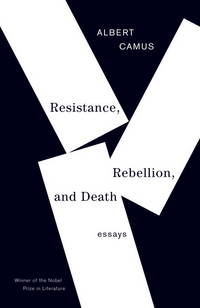
Albert Camus - The Rebel

“What is a rebel? A man who says no, but whose refusal does not imply a renunciation. He is also a man who says yes, from the moment he makes his first gesture of rebellion.”


So begins Albert Camus’ essay The Rebel. What does it mean to be a rebel? Is rebellion merely a rejection, a renunciation? Not according to Camus. A rebel is a person who affirms the existence of a line that he will not cross. In doing so, this person also affirms his life and existence, that his personal existence has some positive value. The twentieth century was proving that history is a slaughter-bench, drenched with disease, injustice, and especially man-made death. One of Camus' points in The Rebel is to demonstrate the existential problems of man cannot be assuaged by political solutions. The Rebel offers an analysis of how, after 150 years of nihilism, metaphysical revolt has given way to state sponsored terror.

When we rebel, it is because we have decided that a human society has some unquestionable value. Camus emphasized that such defiance is and should be fundamentally social and communal. Life is fundamentally lived with others. Absurdity enters existence not simply because one's private needs go unmet, but because so many conditions exist that destroy family and friends, waste our shared experience, and rob human relationships of significance. The rebel is triggered by individual suffering and the suppression of another: “I revolt, therefore we are.”


The Rebel is Camus’ best, most sustained philosophical work. In it he insists the rebellious and protesting man is what is best in him, not the docile and quiescent. Camus explains how, in both philosophy and politics, the reigning attitude of individualistic nihilism leads to dictatorship (fascism and/or communism). Camus systematically strips bare those who have used Hegel, Nietzsche, Marx, de Sade, et al as justification for abuse of power. It is a book that should be read by people who wish to see the inborn impulse of rebellion inspired by a new spirit of action—by those who understand "that rebellion cannot exist without a strange form of love." 


We will get to stange forms of love when we get to the next book on the list. Kierkiegaard's Purity of Heart Is to Will One Thing.

Wednesday, February 2, 2011

10 Philosophy Books For Your Perusal (Part 1)

I’m going to give everyone my list of 10 books of philosophy that have really enlightened my thinking about life and how to live it. Granted these blurbs aren’t supposed to be full summaries, but will hopefully prod everyone into questioning some of the things about ourselves and in society that go unquestioned.  I've included links on the titles to free versions of the texts, when possible. Enjoy.

Number One:


“In general, if any branch of trade, or any division of labour, be advantageous to the public, the freer and more general the competition, it will always be the more so.”


Economists quote him. Business students read him. People from Milton Friedman to Karl Marx, to Ronald Reagan have used him. Yet, Adam Smith is best known for only half his philosophy. So, first on the list, believe it or not, is that paragon of economics, Adam Smith. Smith is much maligned and worshipped. Both attitudes are born of a severe ignorance by both his enthusiasts and critics. The reason? There is a complete lack of knowledge of Smith’s moral philosophy. The Wealth of Nations didn't come out of the blue. To truly understand Smith's economic masterpiece one must understand its moral foundation. Without Smith's essential prequel the famous (or infamous) Wealth of Nations is easily misconstrued, perverted, or disallowed.

It is not the love of our neighbour, it is not the love of mankind, which upon many occasions prompts us to the practice of those divine virtues. It is a stronger love, a more powerful affection, which generally takes place upon such occasions; the love of what is honourable and noble, of the grandeur, and dignity, and superiority of our own characters.

Borrowing the idea from Hutcheson, Smith appropriately deposits the premise of his economics in a seedbed of moral philosophy -- the rights and wrongs, the whys and why-nots of human behavior and relationships. He demonstrates our moral ideas and actions are a product of our nature as social creatures. It argues that sociology, psychology, and communication are better guides to moral action than straightforward reason. It identifies the basic sentiments of empathy, prudence, and justice needed for society to survive, and explains the additional beneficent, actions that enable it to flourish. Concern for one’s own interest and concern for the public interest - the common good - are inseparable. Benevolence is essential and to the advantage of the individual. That is not what we hear about today.

Smith's capitalism is far from a heartless, cruel, greed-motivated, love-of-profits-at-any-cost approach to the marketplace, when seen in the context of his moral philosophy. The Theory of Moral Sentiments corrects the impression that Smith was a laissez-faire capitalist. In fact, his moral philosophy a priori critiques the objectivist, self-interested capitalism of Ayn Rand. In fact, although Smith was in theory against regulations and government interference in the marketplace, he was NOT blind to the fact that unadulterated self-interest needed to be regulated when undue burdens and unfair practices abound. 

Smith was, in fact, very critical of businessmen. Indeed, the viewpoints expressed in Moral Sentiments make it clear that the popular conception of Smith as first and foremost a money-making, capitalistic economist concerned with wealth does not mesh well with his own philosophy.