To all you qualitative researchers out there: keep writing.
I don't generally get personal on this blog, but I've been overwhelmed lately by the good people in academe. Here at the end of my first year on the tenure-track seems a good time to say thank you.
Many of you know my story about trying to find a full-time tenure-track academic position, which started in 2007 when I was ABD and ended in 2011 when I got hired at ETSU. I offer my thanks, my gratitude, my heartfelt love for those of you you sent me good karma, happy vibes and thoughts, as well as prayers.
What I was most astounded by, however, wasn't the support from people that know me. No. Once I published the piece about my experience "I Know I'm Unlovable": Desperation, Dislocation, Despair, and Discourse on the Academic Job Hunt" in Qualitative Inquiry (an excellent journal in its own right) I was overwhelmed by the response.
Hundreds of people contacted me about it. Hundreds! I had no idea that was going to happen. After all, it's "merely" a personal narrative piece.
Total strangers started emailing me about how the piece spoke to them. People started Tweeting me about it to say "Thanks - this needed to be written." They tweeted about it to other people...and they too Tweeted me. People started FaceBook messaging me about how they are going to have all their graduate students read it. People told me it spoke to them, that I was brave to tell one of the stories that is often silenced and whispered in academia, but rarely spoken about out loud.
Brave? It wasn't brave. While I won't say that writing that piece saved my life, it did help preserve my sanity. For those of you who doubt my sanity, well, I guess it preserved my functional insanity. Brave? No. Necessary? Yes.
The point is that I was overcome by the response to the piece. So many people reached out to say how it touched them. A few said they cried when they read it, because it matched their own experience. For some it was the confusion and the anger that resonated with them. For some it provided a catharsis - by simply knowing there are other people out here suffering through the same things they are.
Here's the lesson, if a lesson can be taken from this. To all you qualitative researchers out there: keep writing. Keep on writing. See, your stories are important. You don't know how important your stories are unless you tell them. You don't know what an impact your story can have on someone, unless you actually write it. You don't know how big your personal community is - or your particular experience is - unless you write about it. Write your story. It is important.
I had no idea that my little piece would create the stir it did. I'm glad it did.
So I just wanted to say thank you.
Andrew
Showing posts with label Identity. Show all posts
Showing posts with label Identity. Show all posts
Wednesday, April 18, 2012


Sunday, October 2, 2011
10 Philosophy Books 4 Your Perusal (Pt 8): The Care of the Self
Michelle Foucault

The History of Sexuality, Vol. 3: The Care of the Self
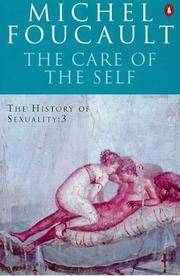
Ethics.
Identity. Selfhood. Self-Discipline. Discourse. That’s how you could sum up the
latter part of Foucault’s project, if of course you could sum up Foucault's opus. However, like any good philosopher's works, you just can't sum it up. It is always being put to new and different uses. (Which reminds me of the old quote: "The history of philosophy is just one long footnote to Plato.")
Plus, reading Foucault can sometimes make your head do this.

Anyway, once interested
in the genealogy of society, madness, and order, Foucault moved on to the
development of the subject, a.k.a. the person, a.k.a. the human individual. It
is in The History of Sexuality, Vol. 3: The Care of the Self that Foucault seriously delves into how discourses make
us and how we use discourses to make our “selves.”
Foucault contended
that technologies of the self must be comprehended as inextricably connected to
his notion of governmentality:
the guiding rationales individuals and social structures use to regulate and
police norms of thought and behavior. Foucault endeavored to show how the
modern sovereign state and the modern autonomous individual co-determine each
other’s emergence.
While Foucault
was particularly interested in sexuality and the discourses surrounding
sexuality and sexual identity his work has been influential in psychology,
theology, gender studies, organizational communication. We will talk about some
of those later. First, however, some of Michel.

“As a context,
we must understand that there are four major types of these
"technologies," each a matrix of practical reason: (1) technologies
of production, which permit us to produce, transform, or manipulate things; (2)
technologies of sign systems, which permit us to use signs, meanings, symbols, or
signification; (3) technologies of power, which determine the conduct of
individuals and submit them to certain ends or domination, an objectivizing of
the subject; (4) technologies of the self, which permit individuals to effect
by their own means or with the help of others a certain number of operations on
their own bodies and souls, thoughts, conduct, and way of being, so as to
transform I themselves in order to attain a certain state of happiness, purity,
wisdom, perfection, or immortality.” (1988)
Foucault’s opus
indicates the importance of, and interrelationships between, identity, power
and knowledge. For Foucault power does not reside is a particular person or
institution, but is engendered instead in discourses, practices, and procedures
of everyday life and becomes apparent when it is exercised. Power is everywhere
in social relations, and is exercised at all levels of an organization and
society through various discourses and processes. Human beings are made
subjects – or socially constructed – through various disciplinary discourses.
The control of the self is a form of control through the discourses of
power/knowledge.

As Foucault
(1993) noted, in order to study power and the individual one must examine
governmentality, the contact points of the “techniques of domination and
techniques of the self” (p. 203). Governing people…is not a way to force people
to do what the governor wants; it is always a versatile equilibrium, with
complementarity and conflicts between techniques which assure coercion and
processes through which the self is constructed or modified by himself (p.
203-204). Discipline therefore is not simply imposed from the outside, nor is
it always complete, otherwise there would be no place for reflexivity. For
Foucault, governmentality is not negative, but productive. It socially
constructs subjects, reality, objects and rituals of truth.
 While subjects
are constructed through discursive processes, they are never powerless, but are
active participants in creating the identities they desire by relying on
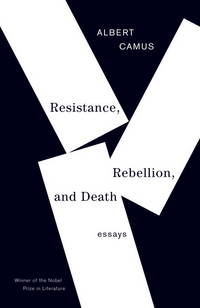
various discourses. They can rebel and resist. (Remember Camus?) Individuals have the ability through these
technologies of the self to reflect upon, shape, govern, and be responsible for
their selves within these discourses and resources of power, to transfigure
themselves to achieve a condition “of happiness, purity, wisdom, perfection, or
immortality."
While subjects
are constructed through discursive processes, they are never powerless, but are
active participants in creating the identities they desire by relying on
various discourses. They can rebel and resist. (Remember Camus?) Individuals have the ability through these
technologies of the self to reflect upon, shape, govern, and be responsible for
their selves within these discourses and resources of power, to transfigure
themselves to achieve a condition “of happiness, purity, wisdom, perfection, or
immortality."
I am an organizational communication scholar and I've been heartily influenced by Foucault. Given the
dynamic complexity of interrelated power relations, organizational scholars
turned to the concept of struggle, an ongoing, interactive, unpredictable,
definition-creating activity that moves beyond the static power/resistance
model of domination. Similarly, because power resides in networks of
relationships, subjects freely call upon differing discourses in order to enact
strategic games, and therefore, play games of identity. In organizations these
issues of identity transcend personal, organizational and occupational lines.
Here are some of my favorite Foucault works and those who have made use of Foucault:
Herrmann, A. F. (2008). Narratives and sensemaking in the new corporate university: the socialization of first year communication faculty. Unpublished dissertation, University of South Florida, Tampa, FL.

Michel Foucault's "History of Madness" in English, is the complete version of the English translation called "Madness and Civilization", which since it was abridged, produced some serious misinterpretations. Foucault shows how the idea of "madness" from the Middle Ages through the Renaissance and the Enlightenment to the present, has undergone several transformations of meaning. It is excellent...
....and it might make your head do this.

Friday, September 23, 2011
10 Philosophy Books or Your Perusal (Part 6): I and Thou
Martin Buber
I-Thou

Traditional Western philosophy concerns itself with
overcoming the subject-object dichotomy. According to this Western tradition
there are two primary focuses. There is the subject, the “I” which perceives,
and there is everything else, objects “out there in the world” which are
perceived. Western philosophy as a whole is a centuries long attempt to answer
the epistemological question, “How do we really know about things out there?”
There have been many different answers attempted, but the basic conclusion of
philosophers like Locke, Descartes & Kant is that we cannot really ever
know “things in themselves.”
As in all cases, there have been exceptions to the rule.
There have been undercurrents in the Western philosophical tradition that don’t
attempt to primarily answer the epistemological questions. This lineage of
philosophers have been called existentialists, but a better and more defining
term would be to call the ‘philosophers of being.’ Rather than the concern
about how we know things, these philosophers are primarily concerned with our
being-in-the-world. The way in which we live our lives and what gives our lives
meaning. This tradition includes Kierkegaard, Nietzche, Dostoevsky, Heidegger, and Jaspers among others. These philosophers questioned what we are rather than merely what we
know. Buber in particular stressed the “what we are” position via relationships
in his concept of I-Thou.
"The primary words are not isolated words, but combined
words.
The one primary word is the combination I-Thou
The other primary word is the combination I-It."

If that sounds poetic, it is, but here's a brief idea of what he means by the I-It. The primary word I-It orients the
relationship of the speaker to the world in particular ways. The world is
perceives as the object in the standard subject-object mode as it has
throughout most of Western philosophy. I-It orients the world as something to
be experienced. I perceive some thing, sense some thing, feel some thing. The
world is seen as experience. The I in I-it sees the world full of utility,
useful to me.
Remember we relate to people in I-it relations most of the time.
The check-out guy at the grocery store, the Honda mechanic, the fellow who
fixes your computer. We live in I-it most of the time. Buber calls this the
social realm of human relationship. He appreciates that we must live in the
social realm to accomplish our day to day activities. He also stresses however,
that there is a second orientation of the I, the I of the I-Thou. Pure objectivity is
the most perfectly developed I-It relation.
Compared to the I-It relationship, the I-Thou has no object, but is relationship. It is spoken
only with one’s full being. I-Thou is not subject-object oriented, but is
experiential. It is characterized by a turning toward the other in mutuality,
directness, being fully present to one another, partner to partner. Dialogue is
both the creation and the manifestation of the I-Thou. Dialogue emerges between
individuals when they are simultaneously and mutually willing to be oriented
toward each other in fullness and openness. There is therefore a direct
correlation between the quality of human communication and the quality of human
life. How we communicate affects who we are and who we are to become.
Meeting one another in openness does not mean being a
wimp or losing one’s sense of self. While collaboration and co-construction are
certainly a priori parts of the I-Thou relation, mutuality not only allows, but
respects and accepts difference. Notice that Buber’s concept here is not about
psychological traits or states, but is about relationship. Meaning is found in
the relationship in what Buber called the ‘in-between,’ and the interhuman as
we live together. The between is more than each of us individually, but it is
also more than two of us put together. This is Buber’s ‘narrow ridge,’ which is
based on the dual concern for the self and the other, which rejects either-or,
all or nothing positions. A ‘narrow ridge’ philosophy assumes a genuine
responsibility for not only me, but you as well, despite our differences.
 One of the reasons that I personally like I and Thou is because it says a lot about communication. In that there are a a number of communicative distinctions of in I-Thou relationships. For one, communication is ‘existential.’
Communication happens in the here and now, and the communicative partners speak
and listen from a common space, the ‘in between,’ the ‘narrow ridge.’ The first
task of communication is to create this space for the relationship. (There are connections here, to Walter Ong's theory of orality.) Dialogic communication is
emergent, spontaneous and improvisational. It is not seeming, nor strategic.
Dialogic partners are open to surprise, with each other and in themselves.
Discovery. Self-realization is a by-product of dialogue, not the object of it.
One of the reasons that I personally like I and Thou is because it says a lot about communication. In that there are a a number of communicative distinctions of in I-Thou relationships. For one, communication is ‘existential.’
Communication happens in the here and now, and the communicative partners speak
and listen from a common space, the ‘in between,’ the ‘narrow ridge.’ The first
task of communication is to create this space for the relationship. (There are connections here, to Walter Ong's theory of orality.) Dialogic communication is
emergent, spontaneous and improvisational. It is not seeming, nor strategic.
Dialogic partners are open to surprise, with each other and in themselves.
Discovery. Self-realization is a by-product of dialogue, not the object of it.
Dialogic communication recognizes
strangeness. Partners recognize each other as different and unfamiliar, and
that others act in unpredictable ways. Dialogic communication is oriented
toward collaboration, including embracing differences and conflict. Yet is
still confirms the other and the other’s point of view.
Dialogic communication partners
are vulnerable. Partners are open to being changed, an open to being persuaded. Dialogic communication is based
completely on mutuality. Speaker and listener are interdependent. They call
both the self and the other into being through their talk. Communicative
partners change their existence via the existence of the relationship itself. Dialogic communication understands
both the past from which it comes and the future which it is creating. Dialogic communication assumes
that partners are acting authentically, mutually and in genuine ways toward
each other, and presupposes trust in the communicative relationship.
Saturday, September 17, 2011
10 Philosophy Books For Your Perusal (Part 4)
Finally....in case you were wondering...someone who is still alive!

Harry G. Frankfurt
The Reasons of Love
I follow up Kierkegaard’s work with this one. Similar to SK, Frankfurt argues the key
to a fulfilled life is to pursue wholeheartedly what one cares about, that love
is the most authoritative form of caring, and that the purest form of love is,
in a complicated way, self-love.

(Note: This is actually one of the themes SK talks about in another book called Works of Love wherein he argues that we do not do what the Bible says when it tells us to “Love our neighbor as ourselves,” because too many of us do NOT love ourselves.)
Frankfurt argues
that the purest form of love is self-love. This sounds perverse, but
self-love--as distinct from self-indulgence--is at heart a disinterested
concern for whatever it is that the person loves. Harry Frankfurt writes it is
through care (Heidegger would have use the word Sorge) that we infuse the
world with meaning. This is based upon Frankfurt’s argument in his essay The
Importance of What We Care About, found in the collection The Importance of What We Care About, which also contains his most popular work On Bullshit.
"When a person makes something important to himself, accordingly, the situation resembles an instance of divine agape at least in a certain respect."
"When a person makes something important to himself, accordingly, the situation resembles an instance of divine agape at least in a certain respect."
Caring presents us with stable ambitions and
concerns; it shapes the framework of aims and interests within which we lead
our lives. The most basic and essential question for a person to raise about
the conduct of his or her life is not what he or she should care about but what,
in fact, he or she cannot help caring about. The most important form of caring,
Frankfurt writes, is love, a nonvoluntary, disinterested concern for the
flourishing of what is loved.

Love is so important because meaningful practical
reasoning must be grounded in ends that we do not seek only to attain other
ends, and because it is in loving that we become bound to final ends desired
for their own sakes. The most elementary form of self-love is nothing more than
the desire of a person to love. Insofar as this is true, self-love is simply a
commitment to finding meaning in our lives.
Love. Philosophy. Wisdom.
Love. Philosophy. Wisdom.
Friday, September 16, 2011
10 Philosophy Books For Your Perusal (Part 3)

The third book was something of a challenge for me because picking one text by this author is a hell of a challenge. There is literally NO field that he has not impacted in some manner. Psychology: The Sickness Unto Death. Sociology: Two Ages. Philosophy: Either/Or. Literature: Prefaces. Theology: Works of Love. Critical Theory: Attack Upon Christendom. However, given my predilection for critical theory and the workplace and employees and organizational communication, my choice came down to:
Soren Kierkegaard

“Alas, it is horrible to see a man rush toward his own
destruction.”
Keeping up with the Joneses. Abusing employees. Fear.
Getting things done. Accomplishments. Stress. Pressure. Life. In an age of
popular books on self-improvement that list habits and prescriptions of do's
and dont's, (7 Habits; First Things First; Getting Things Done: The Art of
Stress-Free Productivity) or pithy nonsensical tomes that are nihilistically
oriented (Eat, Pray, Love; The New Mood Therapy; The Secret) here is a work
that questions human motivation and will.
In one whole section with a
relentless persistence SK makes refrain of the question:
"Do you live as
an individual?"
SK believed the crowd, the public, to be a hiding-place in
which the individual may abdicate his true quest for inward authenticity and
responsibility. The crowd is a sink of cowardice in which individuals are
relieved of individual responsibility and will commit acts they would never
dare to do alone. This recalibration of man from the public is a central theme
of Purity of Heart Is to Will One Thing.
What is the good and how do we do the good? In a sustained
argument, Kierkegaard takes on the philosophy of utilitarianism, which says the
best choice is the one that least to be best outcomes for the most people. Can people be used as a means to an end
(even a supposed good end)? If you are doing good merely for self-aggrandizement,
are you really doing the good? If you do good only half-heartedly, are you
really doing the good? Are you doing the good if you are acting out of fear or
to avoid punishment?

Wednesday, February 2, 2011
Modernism, Postmodernism, and the Christian Church

There have been many attacks on what is perceived as the infiltration of postmodernity (pomo) into the Christian church, particularly the Emergent church. Here are some of them:
Knowing Right From Wrong, A Christian Response To Postmodern “Tolerance”
Pomo and the Emergent Church
As is usual, I look at things just a tad bit differently. I believe the failure is not so much with pomo thinking, but with modernism. Modernism was a huge failure. The rationalists like Descartes and Spinoza left us with nothing but skepticism. The Empiracists: thinkers like Hume and Berkeley left us with nothing but our senses: with no thing human but a summation of our experiences. Idealism - like Hegel's - led to the false promises of Fascism and Marxism, and their terrible impositions, communism and Nazism. Existentialism led to more questions about the nature of the self (which is both being and nothing). Absurdism made questions irrelevant, because there are no answers. The more we learn through science, the more speculative it becomes: dark matter, quarks, string theory. And industrialism led to the wonderful efficiency of the Holocaust, Vietnam, slavery, etc. Individualism itself is a product of modernism, and therefore the philosophy of relativism – what’s good and true and beautiful for me is what I say it is – is also a product of the modern outlook.
The main idea of modernity was progress, which was tripped up when so much 'progress' turned out to be no progress at all. This is not to say that modernism was all wrong, or that there were no successes. There's Kierkegaard, computers, the American Republic, etc., but over all the modernist project failed.
Even Christianity got caught up in the idea of ‘progress.’ Searching for the ultimate answer through state churches, and the rationality of apologetics. Also, looking for the ultimate truth of God through rationalistic and empirical methods. On one side of the equation, the religious ideas of this time are not about the ‘mystery’ of God or the ‘ineffable’ of the spiritual. More often than not they are about putting God in a box: “This is God. This is what He wants. This is what you do.” What else are all these damn (yes damn) Christian self-help books, but the application of the rational to our own selves in regard to God? Nihilism anyone? On the other side of the equation is the rationalistic interpretation of the gospel for justice, change and liberation: all summed up nicely in the phrase ‘social gospel.’ Nothing wrong with justice, change and liberation, but getting "heaven here on Earth" is a bit preposterous. Both of these attempts and modern Christianity were a failure as well.
These authors are wrongs about a number of items (beyond the fact that they do not understand the differences between modernism and pomo). The self-centeredness and individualism and narcissism are part of the modern age, not pomo. In fact, they are arguing from a modernist perspective. Yes, there are certain things that we need to believe to be Christians, but there is a lot more to Christianity than “Hell Insurance,” as suggested.
There is much more to being a Christian than “being saved and going to heaven.” If not would we have to work our salvation with fear and trembling? Would we have to run the race? Would we have to put on the armor of God? Imagine if you or I believed only the things we believed when we first got saved. We’d always remain what Paul called babes. God makes us hunger for more, because to be a Christian is to be in a relationship – with Him and with others. God uses His absence (ok, it isn’t REALLY His absence, bit sometimes it feels like it) and doubt to prick us to press deeper into His kind of life. Does this sound like a life preoccupied with merely the destination? Was your marriage a destination…or a beginning? Is parenthood a destination or a continued relationship?
Does the Emergent Church have it all right? No more than the modern church did. Pomo and Christianity are more compatible than Christianity and modernism. In fact Pomo is more akin to ancient and medieval biblical thought (Aquinas, St. Benedict, Anselm, Francis of Assisi, Eckhart) than most of the religious tomes written in the modern period. (Exceptions of course include Kierkegaard, CS Lewis, Bonhoffer, etc.) Like Premodern Christianity, Pomo allows the mystery, the questioning, the ineffable, the things that cannot be answered here on Earth to go unanswered. That is part of the journey. That is part of relationships. That is what makes living the Christian life worth living. Just saying.
Tuesday, September 14, 2010
Nightmares and Dreamscapes*
Sometimes you have to break out Freud, Jung or Lacan to figure out what the heck your brain-body is trying to tell you about what is bothering you about your life.
(I make no distinction between the mind and the body during dream states. That doesn’t mean that I am a monist. I am most certainly not. I believe in I have a soul, am a spirit, believe in God, etc. I also believe that the body remembers things as well. It stores emotions, activities and such. What I mean is I believe the body and soul are more intimately connected in sleep than in waking life. There is not an überconsciousness to get in the way. )
Sometimes you can have a great dream about sharing a bed with someone special. Sometimes you dream you are flying or falling. Some dreams are absolutely bizarre and you have no idea what they are about at all. As the fragments hit your awakening brain all you can think is “What the hell was that?” Sometimes you have nightmares that scare the hell out of you, like waking up and all life suddenly was like this shit.

Not me. Not lately, anyway. I know exactly what my dreams are about. I dreamt twice the other night. They are different dreams, but have the same theme. Here goes:
Dream #1:
I am sitting in an office. Across from me behind a large desk is am man. I think he was a black man, but I am not quite sure since the room is somewhat dark. He says to me, “Ok, so we are offering to pay you nineteen thousand dollars per year if you take this job.”
“Nineteen? You will have to make to twenty, if you really want me to take it.”
“Twenty it is then,”
We stand up and shake on it both of us getting exactly what we want. I leave the office and walk outside. It is a sunny day and I am smiling and whistling, pleased with myself. And I stop in my tracks…
…because I realize he didn’t say nineteen thousand dollars. He said forty-nine thousand dollars. And I just took it for twenty.
And I woke up in a cold sweat.
----
Dream #2:
I am in a café of some sort, behind the counter, wearing an apron. It is my first day on the job. I am nervous.
“We are throwing you right up at the register on your first day. Its sink or swim Andrew,” says a guy in a black polo shirt, obviously the manager.
I walk over to the register. The keyboard on the register is about three feet by two feet, but all the buttons are half the size of a key on a regular keyboard. I cannot read what button is for what product.
Flash forward.
There’s an angry crowd around the register all yelling at me. Red faces. Yelling louder. The register makes no sense. I can’t figure it out. People are shaking their fists at me. Manager guy comes up next to me.
“You didn’t even last fifteen minutes. Get the fuck out of here.”
And I woke up again.
---
When I worked in IT I used to dream I was fixing computers and such. When I was working on my dissertation, I would dream I was researching or writing. As an unemployed person I am not dreaming about unemployment. I am dreaming that I will screw up my future employment. Fear of failure. I don’t need Freud or Jung or Lacan for this.
*Thanks SK for letting me borrow this title
Monday, September 13, 2010
On Having the “Six Million Dollar Man Syndrome”
I’ll admit it. I feel like I am moving in slow motion, even when I am chugging along at a rapid pace. I call it the “Six Million Dollar Man Syndrome” (SMDMS).
You remember the show “Six Million Dollar Man.” Astronaut Steve Austin (played by Lee Majors of Lee and Farrah fame) crashes and they replace his damaged parts with bionic appendages. In the show whenever Steve Austin ran using those bionic limbs, he was usually presented in slow-motion, accompanied by an electronic grinding-like sound effect. Slow-mo to give the appearance of speed.

That’s how I feel. I feel like I am moving as fast as I can, but I am not getting anywhere. I am a half step behind. I am misplacing things, after I know where I put them. I am forgetting things. I am sleeping, but getting no rest. When I am awake, I am half asleep. When I am sleeping, I am half awake. I go to my blog, but with nothing to say. I find myself standing in a room, with no idea what I am supposed to be doing in that room. I start to work on my book and am just blank. I start to read a magazine; I’ve lost interest a paragraph in.
This is not me. And I am not sure where I went.
Tomorrow I’ll tell you about the two nightmares I had last night. Sometimes the mind hides things and you have to figure out what dreams mean. Sometimes dreams are just right up front and there’s no interpretation needed.
Tuesday, September 7, 2010
Where I'm Not Doctor H (A Letter to Christian Friends)
HI there my church people!
You know, once upon a time believers used to be THE most important intellectuals. Believers were the philosophers, the theologians, the scientists, and the sociologists. Here is a short list of fantastic Christians who used their brains to accomplish God’s work:
Soren Kierkegaard, the (grand) father of psychiatry and existentialism
Michael Faraday, physicist
JRR Tolkien, Lord of the Rings
Fyodor Dostoyevsky, author of The Brothers K, The Idiot, Crime & Punishment
Leo Tolstoy, author of War and Peace
Gregor Mendel, founder of modern genetics
John Wallis, cryptographer who helped develop calculus
John Ray, botanist
C.S. Lewis, Chronicles of Narnia
T.S. Eliot, Poet
Of course this list does not include all brilliant religious writers: Augustine, Aquinas, Anselm, Jerome, Gregory of Nyssa, Luther, Calvin, John Knox, and Jacobus Arminius. The writers of the Bible were all literate. St. Paul was, in fact, an intellectual.
God didn’t give me George Clooney or Brad Pitt looks. He did not load me up with the athletic ability of a Michael Phelps or a Serena Williams. He did not don me with the skills of oratory like Barak Obama or Winston Churchill. He did not bestow upon me a voice like Bono or Sting. He didn’t hand me the musical ability of an Andy Summers, Jimmy Page, Kevin Max or either of the White siblings.
No God didn’t bless me with any of these things. What He blessed me with was a sharp mind and the ability to use it. He gave me the brains to get my Ph.D. And I did. Yet I feel so uncomfortable that I don’t want to tell anyone in church that I am Dr. Herrmann. We have a “Check Your Brain at the Door” policy. Smart people are somehow not to be trusted. I don’t know why this is. We shouldn’t be afraid. We should be up to the intellectual challenge.
If you will let me that is.
Wednesday, September 1, 2010
“My soul…kinda stings”: Spike's Vampiric Redemption
(Please note: This is a work in progress...)

First, let me tell you a little bit about Spike. Before he became a vampire, his name was William Pratt. Interstingly, while many scholars have spoken about Spike’s name, none that I have seen specifically addresses his last name Pratt: which is a British euphemism for a jerk, to put it nicely. He was born in 1870s Britain. He was a struggling poet, often mocked by his peers who called him "William the Bloody" behind his back because his poetry was so "bloody awful." He was sired by his soon-to-be long time lover Drucilla. He got his nickname from his use of railroad spikes when torturing people. Fast forward through all the evil and nasty things he did as a vampire with fellow vamps Darla, Drucilla and Angelus.
In season four Spike is captured by a group called “The Initiative.” They embed a microchip in his brain, rendering him powerless to hurt humans. Obviously for a vampire, this is a horrifying experience. The dilemma is that Spike finds himself on the side of good (or at least unable to be pure vampiric evil) not because he wants to be, but because he has no other choice. Here is the first connection between what happens to Spike and Foucauldian power. The power is suggestive of Bentham’s ideal prison, The Panopticon. The Panopticon included a tower at the center that provided through a two-way mirror an unobstructed view of all the prisoners.
The power of the panopticon is external. Someone is watching you. Guards, wardens, etc., have power over prisoners, so prisoners behave. However, the panopticon was brilliant in another way. Since prisoners realized there was always the possibility they were being watched, they regulated themselves, rendering the exercise of power by others unnecessary. It was no longer necessary to use external power to discipline the prisoner, rather the prisoner now disciplined himself through self-surveillance, self-discipline, self-monitoring, exerting power of his own identity and actions. Foucault calls these activities “the technologies of the self.”
Foucault said his goal was “to create a history of the different modes by which in our culture human beings are made subjects.” Human beings are made subjects – or socially constructed – through various disciplinary discourses. For example, an individual may be constituted and see herself as a sinner or a saint through religious discourses. Through the discourses of science, and the means by which humans began to be studied – through surveillance, observation, measurement and documentation – the individual is constructed in a particular way, and in fact becomes a subject.
At this point, in Spike’s case panoptic power impacts his identity through the microchip that is put in his head, which renders him harmless as a vampire. Naturally enough there are many references to impotence here by Buffy and the rest of her “Scooby Gang.” His interaction with the Scoobies shows how the chip caused them to think of him differently. In response, he takes his first steps on the road to redemption. He is forced to find a new identity in order to gain attention and remain relevant. He is forced into the role of (ambiguous) good guy. Although he relishes that he can beat the hell out of demons and such, he hates what the chip has turned him into. He cannot be a monster. He cannot be a man either. He’s ambiguous, a shadow, liminal.
Late in Season four in the appropriately titled episode “The Yoko Factor” (4020), Spike rebels against the Scoobies, reverting to a more overtly antagonistic role in teaming with Adam: a part human, part machine, part demon Frankenstein. However, Spike's mischief is just that, an impotent churning in frustration at being neither demon nor human, neither fit for real villainy nor acceptable for heroism in the group. His siding with the Scoobies made him a permanent outcast in demon society. Now he is an outsider with the Scoobies. Spike is truly a vampire in no man's land, at home nowhere.
Caught between his origin as a vampire, and his desired destination of humanity, yet welcome in neither place, Spike has become marginalized. The situation is most poignant for the vampire as having been bred of humanity, he can see himself dispossessed of the defiling traits he now bears and yet know he will not regain his full humanity. Spike is the poster-boy for vampire marginality. He has exhibited the full range of motivations and inner turmoil of an individual assaulted with a stigma, dealing with it and thriving, only to be stripped of that modicum of acceptability by the government installed chip, yet barred from return to his former life as a human by the stigma of soulessness.
This frustration can lead to self-hatred and self-derogation: a potent elixir for the brewing of hate and violence. Which is where Spike eventually goes. But first, it must be noted even with the chip in his head Spike is making progress toward humanity. While the chip keeps him from harming humans, it is NOT forcing him to do good deeds, or help the Slayer. Spike, meet the power of the “technologies of the self.”
Discipline is not simply imposed from the outside; nor is it always complete. If it were there would be no place for reflexivity. For Foucault, governmentality is not necessarily negative, but productive. It socially constructs subjects, reality, objects and rituals of truth (1978a). While individuals are constructed and they are subjugated through power relations, they are never powerless. Power relations run through every field, “because there is freedom everywhere” (Foucault, 1987b). Subjects are not deprived of "agency or the capacity to change; in fact, [being a subject] makes them all the more active by extending their reach to include what was assumed to be so obviously necessary, so natural, so taken-for-granted, that it was inaccessible: their subjectivity, their identity, their sexuality, their bodies" (Deacon, 2003, p. 280).
Individuals have the ability through these technologies of the self to reflect upon, shape, govern, and be responsible for their selves within these discourses and resources of power, to transfigure themselves to achieve a definite condition “of happiness, purity, wisdom, perfection, or immortality” (Foucault, 1994, p. 225). In other words, Spike reflect upon himself and ask, “What type of being do I want to be?” “What must I do to become the being I want to be?” This disciplining of the self is enterprising, a continual project of self-construction and creation that can be extrapolated to explain Spike is trying to become a man.
Rose (1998) observes the "enterprising self will make an enterprise of its life, seek to maximize its own human capital, project itself a future, and seek to shape itself in order to become that which it wishes to be. The enterprising self is thus both an active self and a calculating self, a self that calculates about itself and that acts upon itself in order to better itself" (p. 154).
Much like in Dostoevki’s character of Raskolnikov, Spike is coming to recognize within himself the potential for goodness and to set himself on the path to salvation. He has comassion for Joyce – Buffy’s mother – who has a terminal illness. Throughout season five he protects Dawn, Buffy’s little sister, who is the key that keeps the hell dimensions doors closed. If opened hell would literally invade our planet. A bad thing! He fights and is tortured by the nearly omnipotent demigod Glory to protect the secret. He does it because to do otherwise would "destroy her [Buffy]. I couldn’t live her being in that much pain" ("Intervention," 5018). When asked why he, a vampire without soul, is protecting Dawn, Spike’s answer is simply "I made a promise to a lady." He assists people who have been hurt by the troll Olaf. In season six when Buffy is brought back from the dead, it is Spike who realizes she clawed her way out of her coffin. He – being the only one who had to do that – shows utter empathy and sadness. And being ‘undead’ herself, Spike can now kill Buffy – but doesn’t. Spike feels deep remorse and compassion for Buffy and Dawn when their mother dies.
Oh yeah! He also fell in love with Buffy along the way and they’ve been having violent but consensual sex.
Buffy ends the relationship and Spike is heartbroken. He tells Buffy: “I know you’ll never love me; I know I’m a monster, but you treat me like a man,” and for that he is grateful. This is what is most important to Spike—not being treated like a vampire, which is what the undead should desire. Being a man—being human— is his goal, whether he has fully accepted that or not. Spike has expelled his vampire nature as the intruder, has sacrificed that self to save his soul and recreate the unity of the community, as evil becomes good. Spike’s ability to love gives him at least a piece of moral agency, and his ability to suffer makes us sympathize with him. The audience is on his side long before he gains a soul. Spike is desperate to win back Buffy.
Although Spike is making these decisions, though he is learning to discipline himself – he is still at heart a vampire – not a man. He still has that chip in his head, so he is not completely free to choose his path. Until…the facticity that he is not a man nor a real vampire, leads to his tortuous self-loathing…he tries to rape Buffy in a terrifying scene. Spike’s relationship with Buffy up to this point was based on consent and trust, which is why so many fans found this scene of attempted rape jarring and out of context. We forgot he was evil. We have been rooting for him. Still, we must recognize his evil by having him respond to his rejection by Buffy as a demon would, by trying to rape her. This is his turning point.
Spike’s action results in feelings of tremendous remorse, which spur him on to repentance and taking a definite step towards redemption. He realizes the immorality of his actions, in spite of his lacking the guidance which could be provided by a soul. Spike ultimately concludes that in order to live with himself after what he has done to Buffy he must accept that he is a monster, because only a monster could do what he tried to. (2002: 59). Of note, all the evil that Spike has done, he feels no regret for his any of his previous actions, except his attempted rape of Buffy.
After the attempted rape, Spike laments that the chip has confused the natural order of things when he complains:
Everything always used to be so clear. Slayer. Vampire. Vampire kills Slayer. Sucks her dry. Picks his teeth with her bones. It’s always been like that. I’ve tasted the life of two Slayers. But with Buffy . . . It isn’t supposed to be this way. It’s the chip. Steel and wires and silicone. It won’t let me be a monster and I can’t be a man. I’m nothing. (‘Seeing Red’, 6:19)
Now here’s where things get ambiguous. Spike leaves Sunnydale for a remote location in Africa, where we - the audience - are led to believe that he intends to get his chip removed and become his old evil self. However, (as we find out later) Spike undergoes “Demon Trials,” a series of brutal mental, emotional and physical tests, to prove his worthiness to the demon shaman.
“Bitch thinks she’s better than me. Ever since I got this bleeding chip in my head, things ain’t been right. Everything’s gone to hell.”
“Do your worst. When I win, I want what I came here for. Bitch is going to see a change.”
“Make me what I was so Buffy can get what she deserves.”
But this is ambiguous and has been read in different ways by scholars and by audiences. One reading has Spike going to the shaman to get the chip removed so he can kill Buffy. Plausible. Another has Spike going to the shaman to get the chip removed to he can again be a full-fledged monster. These readings are all based on the idea that Spike hates Buffy and hates his situation.
Yet there is a third reading that is overlooked. “Bitch,” “bastard,” “I’ll show you!” are not all phrases of hate, but those also of the angry and disillusioned spurned lover. Most scholars read Spike’s statement “Make me what I was so Buffy can get what she deserves” a testimony that he wants to be a straight up vampire again. But couldn’t it also be that he wants to be not just Spike, or William the Bloody, but William Pratt, the romantic soulful poet he once was? Spike loves Buffy as deeply as an evil vampire can. He wants Buffy. He desires Buffy. He wants to earn Buffy’s love. He wants to show Buffy that he is worthy. It isn’t Spike’s hate that drives him to the shaman. It is his love. It his love that wants to drive out the monster, the one that wants not only to be treated like a man, but to be a man, to be the kind of man Buffy deserves. My reading is that Spike loves Buffy, but hates his situation.
Although Spike has been disciplining himself through seasons 4-6, here is the ultimate switch from the external power over, to the power within. He wants redemption on his own terms. He wants to be good for its own sake not because of the chip. Hence the trip to Africa and the demon trials. Spike wants his redemption, wants his soul back, wants to be a vampire with a soul and undergoes the most horrific ordeals to get it back, including all the guilt, shame and horror – all the emotional despair – at the things he has done as a soulless vampire. (This makes him different than Angel, who got his soul back via a gypsy curse…Spike EARNED his soul back.)
This sea change in Spike’s moral orientation altered his agency to the extent that he was as likely to approach choices from a perspective that was basically good as from one that was basically evil. In light of this transformation it only seems to follow that Spike would be rewarded with a soul since he had practically begot one through sheer force of will. And, of course, at the moment he finally passes across the threshold completely, he becomes ensouled in the final episode of BtVS’ sixth season.
..to be continued.
Based upon:
Herrmann, A. F. (2010). “My soul…kind of stings”: Spike’s discourses of vampiric redemption. Paper presented at the Central States Communication Association Convention, Cincinnati, OH.

First, let me tell you a little bit about Spike. Before he became a vampire, his name was William Pratt. Interstingly, while many scholars have spoken about Spike’s name, none that I have seen specifically addresses his last name Pratt: which is a British euphemism for a jerk, to put it nicely. He was born in 1870s Britain. He was a struggling poet, often mocked by his peers who called him "William the Bloody" behind his back because his poetry was so "bloody awful." He was sired by his soon-to-be long time lover Drucilla. He got his nickname from his use of railroad spikes when torturing people. Fast forward through all the evil and nasty things he did as a vampire with fellow vamps Darla, Drucilla and Angelus.
In season four Spike is captured by a group called “The Initiative.” They embed a microchip in his brain, rendering him powerless to hurt humans. Obviously for a vampire, this is a horrifying experience. The dilemma is that Spike finds himself on the side of good (or at least unable to be pure vampiric evil) not because he wants to be, but because he has no other choice. Here is the first connection between what happens to Spike and Foucauldian power. The power is suggestive of Bentham’s ideal prison, The Panopticon. The Panopticon included a tower at the center that provided through a two-way mirror an unobstructed view of all the prisoners.
The power of the panopticon is external. Someone is watching you. Guards, wardens, etc., have power over prisoners, so prisoners behave. However, the panopticon was brilliant in another way. Since prisoners realized there was always the possibility they were being watched, they regulated themselves, rendering the exercise of power by others unnecessary. It was no longer necessary to use external power to discipline the prisoner, rather the prisoner now disciplined himself through self-surveillance, self-discipline, self-monitoring, exerting power of his own identity and actions. Foucault calls these activities “the technologies of the self.”
Foucault said his goal was “to create a history of the different modes by which in our culture human beings are made subjects.” Human beings are made subjects – or socially constructed – through various disciplinary discourses. For example, an individual may be constituted and see herself as a sinner or a saint through religious discourses. Through the discourses of science, and the means by which humans began to be studied – through surveillance, observation, measurement and documentation – the individual is constructed in a particular way, and in fact becomes a subject.
At this point, in Spike’s case panoptic power impacts his identity through the microchip that is put in his head, which renders him harmless as a vampire. Naturally enough there are many references to impotence here by Buffy and the rest of her “Scooby Gang.” His interaction with the Scoobies shows how the chip caused them to think of him differently. In response, he takes his first steps on the road to redemption. He is forced to find a new identity in order to gain attention and remain relevant. He is forced into the role of (ambiguous) good guy. Although he relishes that he can beat the hell out of demons and such, he hates what the chip has turned him into. He cannot be a monster. He cannot be a man either. He’s ambiguous, a shadow, liminal.
Late in Season four in the appropriately titled episode “The Yoko Factor” (4020), Spike rebels against the Scoobies, reverting to a more overtly antagonistic role in teaming with Adam: a part human, part machine, part demon Frankenstein. However, Spike's mischief is just that, an impotent churning in frustration at being neither demon nor human, neither fit for real villainy nor acceptable for heroism in the group. His siding with the Scoobies made him a permanent outcast in demon society. Now he is an outsider with the Scoobies. Spike is truly a vampire in no man's land, at home nowhere.
Caught between his origin as a vampire, and his desired destination of humanity, yet welcome in neither place, Spike has become marginalized. The situation is most poignant for the vampire as having been bred of humanity, he can see himself dispossessed of the defiling traits he now bears and yet know he will not regain his full humanity. Spike is the poster-boy for vampire marginality. He has exhibited the full range of motivations and inner turmoil of an individual assaulted with a stigma, dealing with it and thriving, only to be stripped of that modicum of acceptability by the government installed chip, yet barred from return to his former life as a human by the stigma of soulessness.
This frustration can lead to self-hatred and self-derogation: a potent elixir for the brewing of hate and violence. Which is where Spike eventually goes. But first, it must be noted even with the chip in his head Spike is making progress toward humanity. While the chip keeps him from harming humans, it is NOT forcing him to do good deeds, or help the Slayer. Spike, meet the power of the “technologies of the self.”
Discipline is not simply imposed from the outside; nor is it always complete. If it were there would be no place for reflexivity. For Foucault, governmentality is not necessarily negative, but productive. It socially constructs subjects, reality, objects and rituals of truth (1978a). While individuals are constructed and they are subjugated through power relations, they are never powerless. Power relations run through every field, “because there is freedom everywhere” (Foucault, 1987b). Subjects are not deprived of "agency or the capacity to change; in fact, [being a subject] makes them all the more active by extending their reach to include what was assumed to be so obviously necessary, so natural, so taken-for-granted, that it was inaccessible: their subjectivity, their identity, their sexuality, their bodies" (Deacon, 2003, p. 280).
Individuals have the ability through these technologies of the self to reflect upon, shape, govern, and be responsible for their selves within these discourses and resources of power, to transfigure themselves to achieve a definite condition “of happiness, purity, wisdom, perfection, or immortality” (Foucault, 1994, p. 225). In other words, Spike reflect upon himself and ask, “What type of being do I want to be?” “What must I do to become the being I want to be?” This disciplining of the self is enterprising, a continual project of self-construction and creation that can be extrapolated to explain Spike is trying to become a man.
Rose (1998) observes the "enterprising self will make an enterprise of its life, seek to maximize its own human capital, project itself a future, and seek to shape itself in order to become that which it wishes to be. The enterprising self is thus both an active self and a calculating self, a self that calculates about itself and that acts upon itself in order to better itself" (p. 154).
Much like in Dostoevki’s character of Raskolnikov, Spike is coming to recognize within himself the potential for goodness and to set himself on the path to salvation. He has comassion for Joyce – Buffy’s mother – who has a terminal illness. Throughout season five he protects Dawn, Buffy’s little sister, who is the key that keeps the hell dimensions doors closed. If opened hell would literally invade our planet. A bad thing! He fights and is tortured by the nearly omnipotent demigod Glory to protect the secret. He does it because to do otherwise would "destroy her [Buffy]. I couldn’t live her being in that much pain" ("Intervention," 5018). When asked why he, a vampire without soul, is protecting Dawn, Spike’s answer is simply "I made a promise to a lady." He assists people who have been hurt by the troll Olaf. In season six when Buffy is brought back from the dead, it is Spike who realizes she clawed her way out of her coffin. He – being the only one who had to do that – shows utter empathy and sadness. And being ‘undead’ herself, Spike can now kill Buffy – but doesn’t. Spike feels deep remorse and compassion for Buffy and Dawn when their mother dies.
Oh yeah! He also fell in love with Buffy along the way and they’ve been having violent but consensual sex.
Buffy ends the relationship and Spike is heartbroken. He tells Buffy: “I know you’ll never love me; I know I’m a monster, but you treat me like a man,” and for that he is grateful. This is what is most important to Spike—not being treated like a vampire, which is what the undead should desire. Being a man—being human— is his goal, whether he has fully accepted that or not. Spike has expelled his vampire nature as the intruder, has sacrificed that self to save his soul and recreate the unity of the community, as evil becomes good. Spike’s ability to love gives him at least a piece of moral agency, and his ability to suffer makes us sympathize with him. The audience is on his side long before he gains a soul. Spike is desperate to win back Buffy.
Although Spike is making these decisions, though he is learning to discipline himself – he is still at heart a vampire – not a man. He still has that chip in his head, so he is not completely free to choose his path. Until…the facticity that he is not a man nor a real vampire, leads to his tortuous self-loathing…he tries to rape Buffy in a terrifying scene. Spike’s relationship with Buffy up to this point was based on consent and trust, which is why so many fans found this scene of attempted rape jarring and out of context. We forgot he was evil. We have been rooting for him. Still, we must recognize his evil by having him respond to his rejection by Buffy as a demon would, by trying to rape her. This is his turning point.
Spike’s action results in feelings of tremendous remorse, which spur him on to repentance and taking a definite step towards redemption. He realizes the immorality of his actions, in spite of his lacking the guidance which could be provided by a soul. Spike ultimately concludes that in order to live with himself after what he has done to Buffy he must accept that he is a monster, because only a monster could do what he tried to. (2002: 59). Of note, all the evil that Spike has done, he feels no regret for his any of his previous actions, except his attempted rape of Buffy.
After the attempted rape, Spike laments that the chip has confused the natural order of things when he complains:
Everything always used to be so clear. Slayer. Vampire. Vampire kills Slayer. Sucks her dry. Picks his teeth with her bones. It’s always been like that. I’ve tasted the life of two Slayers. But with Buffy . . . It isn’t supposed to be this way. It’s the chip. Steel and wires and silicone. It won’t let me be a monster and I can’t be a man. I’m nothing. (‘Seeing Red’, 6:19)
Now here’s where things get ambiguous. Spike leaves Sunnydale for a remote location in Africa, where we - the audience - are led to believe that he intends to get his chip removed and become his old evil self. However, (as we find out later) Spike undergoes “Demon Trials,” a series of brutal mental, emotional and physical tests, to prove his worthiness to the demon shaman.
“Bitch thinks she’s better than me. Ever since I got this bleeding chip in my head, things ain’t been right. Everything’s gone to hell.”
“Do your worst. When I win, I want what I came here for. Bitch is going to see a change.”
“Make me what I was so Buffy can get what she deserves.”
But this is ambiguous and has been read in different ways by scholars and by audiences. One reading has Spike going to the shaman to get the chip removed so he can kill Buffy. Plausible. Another has Spike going to the shaman to get the chip removed to he can again be a full-fledged monster. These readings are all based on the idea that Spike hates Buffy and hates his situation.
Yet there is a third reading that is overlooked. “Bitch,” “bastard,” “I’ll show you!” are not all phrases of hate, but those also of the angry and disillusioned spurned lover. Most scholars read Spike’s statement “Make me what I was so Buffy can get what she deserves” a testimony that he wants to be a straight up vampire again. But couldn’t it also be that he wants to be not just Spike, or William the Bloody, but William Pratt, the romantic soulful poet he once was? Spike loves Buffy as deeply as an evil vampire can. He wants Buffy. He desires Buffy. He wants to earn Buffy’s love. He wants to show Buffy that he is worthy. It isn’t Spike’s hate that drives him to the shaman. It is his love. It his love that wants to drive out the monster, the one that wants not only to be treated like a man, but to be a man, to be the kind of man Buffy deserves. My reading is that Spike loves Buffy, but hates his situation.
Although Spike has been disciplining himself through seasons 4-6, here is the ultimate switch from the external power over, to the power within. He wants redemption on his own terms. He wants to be good for its own sake not because of the chip. Hence the trip to Africa and the demon trials. Spike wants his redemption, wants his soul back, wants to be a vampire with a soul and undergoes the most horrific ordeals to get it back, including all the guilt, shame and horror – all the emotional despair – at the things he has done as a soulless vampire. (This makes him different than Angel, who got his soul back via a gypsy curse…Spike EARNED his soul back.)
This sea change in Spike’s moral orientation altered his agency to the extent that he was as likely to approach choices from a perspective that was basically good as from one that was basically evil. In light of this transformation it only seems to follow that Spike would be rewarded with a soul since he had practically begot one through sheer force of will. And, of course, at the moment he finally passes across the threshold completely, he becomes ensouled in the final episode of BtVS’ sixth season.
..to be continued.
Based upon:
Herrmann, A. F. (2010). “My soul…kind of stings”: Spike’s discourses of vampiric redemption. Paper presented at the Central States Communication Association Convention, Cincinnati, OH.
Subscribe to:
Posts (Atom)