Showing posts with label culture. Show all posts

Wednesday, July 25, 2012

Why The MBA Is Relatively Useless


I realize that I am about to review a book that is a few years old, and one that has come under a lot of criticism by others in what I call the “academic business profession” and in business circles. The reason for this is likely because Henry Mintzberg – the books author – says that a paradigm shift is needed in the way we educate managers. Paradigm shifts, weather in science, philosophy, or communication are always controversial and always attacked, because they challenge the status quo and entrenched interests. Since there has been so little change in the way MBAs are taught over the decades, it is no surprise that some people suggest Mintzberg lost his marbles.
Mintzberg’s basic problem with management education is that it is completely separate from the actual running of a business. Students are generally given a case study to analyze and come up with a solution to the case study’s company’s problem. What should an organization do with a factory that is no longer productive? What should a company do with a particular asset class?  How does a company deal with shrinking profit margins? What does a manager do with such and such employee? These case studies are about 25 pages long – and from the reading the student is supposed to come up with some solution and make a decision. That’s it. That’s what most management professors think management is – and hence what most MBA students think being a manager is.
"The trouble with “management” education is that it is business education, and leaves a distorted impression of management. Management is a practice that has to blend a good deal of craft (experience) with a certain amount of art (insight) and some science (analysis)" (p. 1)
Of course the problem is that this way of teaching management is sterile and void of any actual context. Organizations are – depending on how you want to look at them – intricate systems wherein sensemaking must happen ala Weick, or continuing cultures created and sustained by communication, practices, and performances, or places where power is both sought, fought, and transgressed. (Most organizational communication scholars will tell you it’s a combination of all these.) 

From a cultural perspective – all organizations are different cultures. Think of the differences between Apple and Microsoft. Or Starbucks and McDonalds. Or Coke and Pepsi. Or a Pentecostal church and a Southern Bapitst church. There are, in fact, as many different organizational cultures as there are organizations. As organizational communication scholars have been arguing for thirty or so years, you cannot understand an organizational culture, without studying that culture in-depth: generally through one of he many varieties of ethnographic research. 
Think about this for a moment. MBA students sit in a classroom and ‘study’ an organization on paper and are supposed to come up with a solution to some sort of organizational dilemma. This type of teaching is well-adapted to get students to do only one thing: do case studies in a classroom. Much like k-12 standardized testing, there’s no ‘there’ there. What they learn by analyzing a case study is about a useful in the real world of managing as filling in the little dots on a standardized test are to successfully going on a date. They are supposed to make a contextless decision. This is Mintsberg’s basic critique.
"An education that overemphasizes the science encourages a style of managing I call “calculating” or, if the graduates believe themselves to be artists, as in- creasing numbers now do, a related style I call “heroic.” Enough of them, enough of that. We don’t need heroes in positions of influence any more than technocrats" (p. 1).
However, businesses aren’t like that. Not at all. They are not static, but constantly on the move. They have different systems, different cultures, different values, different employees, etc., etc. etc. Hence the MBA as taught looks nothing like – and doesn’t prepare people – to actually be managers. Supposedly these MBAs with no experience can walk into an organization and just start making major decisions and taking over.
That’s somewhat crazy if you think about it. You would never let a medical student who’s only done ‘the book learnin’ perform open-heart surgery on you. However, this is exactly what MBA students are taught to think and how business teacher teach them to think. Someone without experience is not going to be trusted to make big decisions: like closing a factory or dismantling a department.
"Put differently, trying to teach management to someone who has never managed is like trying to teach psychology to someone who has never met another human being" (p. 9)
A real manager spends copious amount of time on the floor of the factory, talking with the many people that work in various departments – having conversations with both internal and external clients and customers. He might even check out other factories in his own organization to find out why those particular ones run well, while this one does not. He may check out competitor’s businesses to see how they are run differently. In other words, a real manager gets a deep cultural and organizationally significant education and understanding of the business before he makes any decision.
This is the opposite of what MBA programs teach. No ‘book learnin’ via case study is going to help. It’s like teaching. I may have an idea of how I want to teach a class – maybe a technique that’s dialogical – but the demands of, the size of, and the culture of a particular class may determine that this technique does not work. If that technique is the only one I have in my toolbox, my class is going to be a complete disaster. Embedded adaptation is key.
"In the larger organizations especially, success depends not on what the managers themselves do, as allocators of resources and makers of decisions, so much as on what they help others to do" (p. 9)
Mintzberg correctly points out that making decisions is a really small part of a manager’s job. What he doesn’t mention enough for my taste – and this is my communication bias talking here – is, well, communication. Communication takes up the better part of any manager’s job. Getting to know people, watching their performances (not performance appraisals, mind you, but the way in which people work), the stories and narratives people tell and listen too, the people who are considered heroes in the organization, as well as those considered outcasts. Managing, at its heart is all communication, and learning-on-the job, and then using what one has learned to make decisions than must be made.
To develop a reflective turn of mind, the participants focus on them- selves, their work, and their world, to appreciate how they think, act, and manage; how they cope with the stresses of being a manager; and how they learn from experience to become more discerning—more “critical” in the constructive sense of this word” (p. 300).

So what does Mintzberg suggest? Well, here’s where he gets a lot of push back. Management education should be restricted to practicing managers. The classroom should leverage the managers’ experience. Managers have to be exposed to theories so they can learn to be thoughtful and express themselves. Thoughtful reflection is necessary. Learning is not doing. Learning is reflecting on doing. Move beyond reflection in the classroom to learning from the impact on the organization.    

However, if you consider the art and practice of managing, Mintzberg is on the right track. Which is why I think this would be a great read for #commnerds studying organizational communication. After all, culture and power and performance is what we actually study.


Thursday, July 19, 2012

Marissa Mayer and the Continued Idea of the False Choice

Marissa Mayer is a powerful and successful woman who worked at Google – one of the original Googleheads, in fact – and accepted the opportunity to fix and run Yahoo! and is having a child.

The media has gone crazy over this. Forbes. The Washington PostThe Sun-Times...and...et al. As is typical, it is all the same focus when they realize a woman has attained some sort of position of power. They did it with Carly Fiorena and Hillary Clinton, and even Sarah Palin. (Mind you, I wouldn’t put Sarah with these other women in any other list. There’s no contest there.) More on Fiorena, below.

Can she do the job? Is she a bad example for "our children?" Should women hate her? Why isn’t she taking a full maternity leave? If she can have it all, why can't you? Is she a bad mother-to-be? Should parents hate her? Blah, blah, blah.

I’m waiting for TMZ to start asking questions about the size of her breasts, how much she craves chocolate, and her favorite movie. 

There is really only one thing worth thinking about in regard to her maternity leave decision: Due to her economic position, she can do it all, because she has the opportunity to do it all.

It is true that the educationally and economically disadvantaged do not have the choice to go right back to work. Hell, not merely just the disadvantaged, but most of the advantaged as well: white-middle class people. In most cases, a mother has no choice but to go back to work. Someone has to work to keep the lights on and given that wages have stagnated for 20-plus years, that someone is often BOTH parents. (Not mentioned in most of the news articles, mind you.)

Mayer gets to choose to be a new parent and be Yahoo!’s new CEO. She gets both. Why? Because she gets to choose. In the terms of capability economics she has the freedom to realize her well-being, the kind of life she is effectually able to lead, who can decide what she is able to be and able to do. She gets to choose what is her “functioning.”

Don’t lose me here; this is actually quite simple.

This capability approach to economics deals directly with the situation and the reactions to the Mayer case. To quote directly from the Stanford Encyclopedia of Philosophy:

“Take the following functionings: (1) to hold a job, which will require me to spend many hours on working and commuting, but will generate the income needed to properly feed myself and my family; (2) to care for my children at home and give them all the attention, care and supervision they need. In a piecemeal analysis, both (1) and (2) are opportunities open to me, but they are not both together open to me. The point about the capability approach is precisely that we must take a comprehensive or holistic approach, and ask which sets of capabilities are open to me, that is: can I simultaneously provide for my family and properly care for and supervise my children? Or am I rather forced to make some hard, perhaps even tragic choices between two functionings which both reflect basic needs and basic moral duties?"

In 99% of the cases wherein people are in this situation, they are stuck. Why? Option 2 – for most people is not available. They truly do not have a choice. Not limited choice. No choice. From a holistic viewpoint, they have only one possible functioning. (Which is why when looked at separately, it appears there is a choice, even if there isn’t one.)

Ms. Mayer is not stuck in an either/or situation. She has a both/and situation. She has more ability, more freedom, more possibilities for the realization of her potentiality than the average person because of her economic status. Why does she have this advantage?

That’s called having good health insurance and health care and child care through having excellent employment and educational opportunities in her life - and taking those opportunities and making the most of them – and succeeding economically. That is the kind of opportunity making our country should provide every one. This is how a society opens up and creates and allows for its citizens to become more capable, to be more free, to have more functionings.

Whether or not others’ think she is being a bad parent and horrible mother-to-be by not taking a full maternity leave, or continuing at work - and all that other nonsense - is a sideshow to the real issue. The media is making it appear that every woman and every family has this work-maternity choice. And in this debate one simple fact is overlooked: most do NOT have this choice at all. Period. (And of course none of this would be an issue if she had a penis! Gender bias? You bet!)

She’s getting a lot of snuff for the facticity of being a woman. This media barrage very much reminds me of what happened to Carly Fiorena at Hewlett-Packard. They lambasted her in the media. It was brutal. Every move she made was under heightened scrutiny. She was heartily dissed for buying Compaq and making a number of other moves people thought were short-sighted and bad for business. Then they ousted her in 2005. In fact, they still are giving her hell, years later. 

Of course everyone discounts the historical fact that she took over just as the internet bubble was going to pop – and she got HP through that period – and the economic turmoil that followed the 9-11 attacks, as well. Turns out her moves were the right ones, but she got no credit for them. Rather, the guy who succeeded her got all the credit.

Perspective is everything and here too the media is not doing due diligence. There’s a misconception that Yahoo! is failing, but in reality it is still growing, despite all the missteps by its former management teams. It just hasn't been growing fast enough for Wall Street and much of the financial media, especially when compared to Google, Apple, Amazon, and Facebook, with whom it is always compared. Then again, compared to those, everyone looks like a laggard. Yahoo! has $2B in cash on hand, with only $130M in debt, with a profit margin of 22%. Pretty good baseline numbers for any company. 

I expect to see Mayer dump a bunch of unprofitable stuff and go on a buying spree to acquire new technologies. Most importantly, I expect to see her shake the Yahoo management tree and watch the rotten fruit fall off the limbs. I think she has the chops to change the organizational culture - not an easy task, of course - and get Yahoo! out of its doldrums.

If a man was hired the focus would be only on the finances of Yahoo! and the moves that he would make. Bias? You bet.

I wish Ms. Mayer good luck as both a CEO and a parent.

Saturday, February 18, 2012

My New Course: Technology, Communication, and Culture


A new class that I've prepped for the summer. It is the first new class I've proposed and with the help of my chair, Dr. Amber Kinser (who I cannot thank enough for making sure this new faculty member knows what he's doing) this has been a pretty darn smooth process.

Now the only question will be if it 'makes.' If it makes, that would be the first step into getting into the Communication Department rotation. Here's hoping!

Sunday, October 30, 2011

10 Philosophy Books 4 Your Perusal (Pt 9): Ion

“Socrates Is an Ass!”
As Represented by Plato (ARP) in Ion

Yeah. We are going old school this time. Very old school. While most people choose things like The Republic, or Artistotle's Ethics when talking about the ancient Greeks, I chose Ion. Why? Because its funny, rude, obnoxious, and delightful. 

This little dialogue seems a simple conversation between Socrates (ARP) the philosopher and Ion the rhapsodic performer. As usual, Socrates (ARP) uses lots of sarcasm and irony in this dialogue, which he quickly expresses. Although this may seem a rather insipid conversation, to the initiated it is chock full of interesting little tidbits.

What’s the General Gist?

Ion suggests not only is he a good reciter of poetry but is also an exegete who can interpret and explain what a poem is about. The central question in the Ion is one of privilege and qualification. Who is qualified to be an interpreter of the privileged language of the past? Who can correctly interpret Homer or any of the other poets? For example, when the performer recites Homer’s description of being a general, how is it that Ion can know what it is to be a good or bad general. Can he judge good “doctoring?”

Ion is denied this role, because he relies on inspiration, rather than knowledge (episteme) and practical skill (tekhne). If one possesses a particular skill, one can judge and critique it, because, one understands and can explain all aspects of that skill, including good and/or bad manifestation of it. Doctors can critique doctors. Generals can critique generals. Socrates (ARP) says that Ion cannot even judge poetry, for he has no poetic skill himself.

Dear God,
Go Get an Exorcist


Socrates (ARP) proposes that since Ion’s rhapsodic performances are not based on knowledge or skill, then he must be possessed or inspired. Then Socrates (ARP) goes off on the magnetic ring example. Despite its silliness, the magnetic ring example helps sharpen how audiences are affected by poetry/performance. As the last link on this chain of inspiration, we are capable of being deeply affected by poetry. We “spectators” at the recital also lose our minds, to some degree, weeping or laughing as we enter into the narrated scene, seemingly forgetting our real selves and lives. Socrates (ARP) has a divide in mind between reason and inspiration. This philosopher v. artist fight has been going on ever since.
Oh, yes!
“Let’s Get Ready to Rumble!!!”

“Go to Your Respective Corners…and Come Out Swinging"


Reason
Nous - sound mind/faculty of reason
Phren - wit
Episteme - knowledge
Tekne - skill (including communicative)


Inspiration
Ho nous meketi en autoi - out of one's mind
Ekphron - witless
Entheos - possessed/inspired
Theia dunamis - divine power


Associated with reason are philosophers, doctors, generals, painters, and those who can show critical communicative abilities of explanation, examination and judgment. Associated with inspiration are poets, rhapsodes, and anyone else who cannot give an account of how they do what they do. Reason, skill, intellect and understanding are pitted against “unreflective,” inspired activity. These are mutually exclusive territories.

“Making Your Republic Safe”

Erase the Word

Persecute the Performers

Banish the Poets


A couple of interesting connections for fodder:
As laid out in Phaedrus,
Socrates (ARP) regards the written word as inferior to the spoken 
– so why is he so anti-performer?

Poets are banished from The Republic.
In Protagoras poets are considered the original sophists.
In Phaedrus poets are “sacred, but mad.”
Remember, Socrates (ARP) likely wanted some “divine” Ionic nookie too.
He was always on a booty call.

Sunday, October 2, 2011

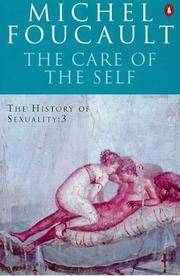
10 Philosophy Books 4 Your Perusal (Pt 8): The Care of the Self


Michelle Foucault


The History of Sexuality, Vol. 3: The Care of the Self 

Ethics. Identity. Selfhood. Self-Discipline. Discourse. That’s how you could sum up the latter part of Foucault’s project, if of course you could sum up Foucault's opus. However, like any good philosopher's works, you just can't sum it up. It is always being put to new and different uses. (Which reminds me of the old quote: "The history of philosophy is just one long footnote to Plato.")

Plus, reading Foucault can sometimes make your head do this.

Anyway, once interested in the genealogy of society, madness, and order, Foucault moved on to the development of the subject, a.k.a. the person, a.k.a. the human individual. It is in The History of Sexuality, Vol. 3: The Care of the Self that Foucault seriously delves into how discourses make us and how we use discourses to make our “selves.” 

Foucault contended that technologies of the self must be comprehended as inextricably connected to his notion of governmentality: the guiding rationales individuals and social structures use to regulate and police norms of thought and behavior. Foucault endeavored to show how the modern sovereign state and the modern autonomous individual co-determine each other’s emergence.

While Foucault was particularly interested in sexuality and the discourses surrounding sexuality and sexual identity his work has been influential in psychology, theology, gender studies, organizational communication. We will talk about some of those later. First, however, some of Michel.

“As a context, we must understand that there are four major types of these "technologies," each a matrix of practical reason: (1) technologies of production, which permit us to produce, transform, or manipulate things; (2) technologies of sign systems, which permit us to use signs, meanings, symbols, or signification; (3) technologies of power, which determine the conduct of individuals and submit them to certain ends or domination, an objectivizing of the subject; (4) technologies of the self, which permit individuals to effect by their own means or with the help of others a certain number of operations on their own bodies and souls, thoughts, conduct, and way of being, so as to transform I themselves in order to attain a certain state of happiness, purity, wisdom, perfection, or immortality.” (1988)

Foucault’s opus indicates the importance of, and interrelationships between, identity, power and knowledge. For Foucault power does not reside is a particular person or institution, but is engendered instead in discourses, practices, and procedures of everyday life and becomes apparent when it is exercised. Power is everywhere in social relations, and is exercised at all levels of an organization and society through various discourses and processes. Human beings are made subjects – or socially constructed – through various disciplinary discourses. The control of the self is a form of control through the discourses of power/knowledge.

As Foucault (1993) noted, in order to study power and the individual one must examine governmentality, the contact points of the “techniques of domination and techniques of the self” (p. 203). Governing people…is not a way to force people to do what the governor wants; it is always a versatile equilibrium, with complementarity and conflicts between techniques which assure coercion and processes through which the self is constructed or modified by himself (p. 203-204). Discipline therefore is not simply imposed from the outside, nor is it always complete, otherwise there would be no place for reflexivity. For Foucault, governmentality is not negative, but productive. It socially constructs subjects, reality, objects and rituals of truth.

While subjects are constructed through discursive processes, they are never powerless, but are active participants in creating the identities they desire by relying on various discourses. They can rebel and resist. (Remember Camus?) Individuals have the ability through these technologies of the self to reflect upon, shape, govern, and be responsible for their selves within these discourses and resources of power, to transfigure themselves to achieve a condition “of happiness, purity, wisdom, perfection, or immortality."

I am an organizational communication scholar and I've been heartily influenced by Foucault. Given the dynamic complexity of interrelated power relations, organizational scholars turned to the concept of struggle, an ongoing, interactive, unpredictable, definition-creating activity that moves beyond the static power/resistance model of domination. Similarly, because power resides in networks of relationships, subjects freely call upon differing discourses in order to enact strategic games, and therefore, play games of identity. In organizations these issues of identity transcend personal, organizational and occupational lines. 

Here are some of my favorite Foucault works and those who have made use of Foucault: 


Michel Foucault's "History of Madness" in English, is the complete version of the English translation called "Madness and Civilization", which since it was abridged, produced some serious misinterpretations. Foucault shows how the idea of "madness" from the Middle Ages through the Renaissance and the Enlightenment to the present, has undergone several transformations of meaning.  It is excellent...

....and it might make your head do this.


Friday, September 16, 2011

10 Philosophy Books For Your Perusal (Part 3)


The third book was something of a challenge for me because picking one text by this author is a hell of a challenge. There is literally NO field that he has not impacted in some manner. Psychology: The Sickness Unto Death. Sociology: Two Ages. Philosophy: Either/Or. Literature: Prefaces. Theology: Works of Love. Critical Theory: Attack Upon Christendom. However, given my predilection for critical theory and the workplace and employees and organizational communication, my choice came down to:

Soren Kierkegaard


“Alas, it is horrible to see a man rush toward his own destruction.”

Keeping up with the Joneses. Abusing employees. Fear. Getting things done. Accomplishments. Stress. Pressure. Life. In an age of popular books on self-improvement that list habits and prescriptions of do's and dont's, (7 Habits; First Things First; Getting Things Done: The Art of Stress-Free Productivity) or pithy nonsensical tomes that are nihilistically oriented (Eat, Pray, Love; The New Mood Therapy; The Secret) here is a work that questions human motivation and will. 

In one whole section with a relentless persistence SK makes refrain of the question:

"Do you live as an individual?"

SK believed the crowd, the public, to be a hiding-place in which the individual may abdicate his true quest for inward authenticity and responsibility. The crowd is a sink of cowardice in which individuals are relieved of individual responsibility and will commit acts they would never dare to do alone. This recalibration of man from the public is a central theme of Purity of Heart Is to Will One Thing.

What is the good and how do we do the good? In a sustained argument, Kierkegaard takes on the philosophy of utilitarianism, which says the best choice is the one that least to be best outcomes for the most people.  Can people be used as a means to an end (even a supposed good end)? If you are doing good merely for self-aggrandizement, are you really doing the good? If you do good only half-heartedly, are you really doing the good? Are you doing the good if you are acting out of fear or to avoid punishment?


SK left us a challenging examination of the heart and mind, from which ensue all of the popular habits and prescriptions. What is single-mindedness? How is it formed, and what does it look like? How are our motivations and ambitions conflicted? How do we throw off the things the public wants to be our own? Do you know what is your calling, what is your vocation, and have you accepted it? This book is not only one of the easiest of SK's tomes to read, but one that will - if you take it seriously - change your life.

Thursday, September 15, 2011

10 Philosophy Books For Your Perusal (Part 2)

Ok...so Adam Smith was the first post in the series. That was back in February. I've been a little bit busy. Got a new job, moved to a new state. That kind of stuff. The rest of this list will not take quite as long to arrive on my page. Promise. So, without anymore delay, here is #2:


Albert Camus - The Rebel

“What is a rebel? A man who says no, but whose refusal does not imply a renunciation. He is also a man who says yes, from the moment he makes his first gesture of rebellion.”


So begins Albert Camus’ essay The Rebel. What does it mean to be a rebel? Is rebellion merely a rejection, a renunciation? Not according to Camus. A rebel is a person who affirms the existence of a line that he will not cross. In doing so, this person also affirms his life and existence, that his personal existence has some positive value. The twentieth century was proving that history is a slaughter-bench, drenched with disease, injustice, and especially man-made death. One of Camus' points in The Rebel is to demonstrate the existential problems of man cannot be assuaged by political solutions. The Rebel offers an analysis of how, after 150 years of nihilism, metaphysical revolt has given way to state sponsored terror.

When we rebel, it is because we have decided that a human society has some unquestionable value. Camus emphasized that such defiance is and should be fundamentally social and communal. Life is fundamentally lived with others. Absurdity enters existence not simply because one's private needs go unmet, but because so many conditions exist that destroy family and friends, waste our shared experience, and rob human relationships of significance. The rebel is triggered by individual suffering and the suppression of another: “I revolt, therefore we are.”


The Rebel is Camus’ best, most sustained philosophical work. In it he insists the rebellious and protesting man is what is best in him, not the docile and quiescent. Camus explains how, in both philosophy and politics, the reigning attitude of individualistic nihilism leads to dictatorship (fascism and/or communism). Camus systematically strips bare those who have used Hegel, Nietzsche, Marx, de Sade, et al as justification for abuse of power. It is a book that should be read by people who wish to see the inborn impulse of rebellion inspired by a new spirit of action—by those who understand "that rebellion cannot exist without a strange form of love." 


We will get to stange forms of love when we get to the next book on the list. Kierkiegaard's Purity of Heart Is to Will One Thing.

Wednesday, February 2, 2011

Modernism, Postmodernism, and the Christian Church


There have been many attacks on what is perceived as the infiltration of postmodernity (pomo) into the Christian church, particularly the Emergent church. Here are some of them:

The Postmodern Crackup

Knowing Right From Wrong, A Christian Response To Postmodern “Tolerance”

Pomo and the Emergent Church


As is usual, I look at things just a tad bit differently. I believe the failure is not so much with pomo thinking, but with modernism. Modernism was a huge failure. The rationalists like Descartes and Spinoza left us with nothing but skepticism.  The Empiracists: thinkers like Hume and Berkeley left us with nothing but our senses: with no thing human but a summation of our experiences. Idealism - like Hegel's - led to the false promises of Fascism and Marxism, and their terrible impositions, communism and Nazism. Existentialism led to more questions about the nature of the self (which is both being and nothing). Absurdism made questions irrelevant, because there are no answers. The more we learn through science, the more speculative it becomes: dark matter, quarks, string theory. And industrialism led to the wonderful efficiency of the Holocaust, Vietnam, slavery, etc. Individualism itself is a product of modernism, and therefore the philosophy of relativism – what’s good and true and beautiful for me is what I say it is – is also a product of the modern outlook.

The main idea of modernity was progress, which was tripped up when so much 'progress' turned out to be no progress at all. This is not to say that modernism was all wrong, or that there were no successes. There's Kierkegaard, computers, the American Republic, etc., but over all the modernist project failed.

Even Christianity got caught up in the idea of ‘progress.’ Searching for the ultimate answer through state churches, and the rationality of apologetics. Also, looking for the ultimate truth of God through rationalistic and empirical methods. On one side of the equation, the religious ideas of this time are not about the ‘mystery’ of God or the ‘ineffable’ of the spiritual. More often than not they are about putting God in a box: “This is God. This is what He wants. This is what you do.” What else are all these damn (yes damn) Christian self-help books, but the application of the rational to our own selves in regard to God? Nihilism anyone? On the other side of the equation is the rationalistic interpretation of the gospel for justice, change and liberation: all summed up nicely in the phrase ‘social gospel.’ Nothing wrong with justice, change and liberation, but getting "heaven here on Earth" is a bit preposterous. Both of these attempts and modern Christianity were a failure as well. 

These authors are wrongs about a number of items (beyond the fact that they do not understand the differences between modernism and pomo). The self-centeredness and individualism and narcissism are part of the modern age, not pomo. In fact, they are arguing from a modernist perspective. Yes, there are certain things that we need to believe to be Christians, but there is a lot more to Christianity than “Hell Insurance,” as suggested.

There is much more to being a Christian than “being saved and going to heaven.” If not would we have to work our salvation with fear and trembling? Would we have to run the race? Would we have to put on the armor of God? Imagine if you or I believed only the things we believed when we first got saved. We’d always remain what Paul called babes.  God makes us hunger for more, because to be a Christian is to be in a relationship – with Him and with others. God uses His absence (ok, it isn’t REALLY His absence, bit sometimes it feels like it) and doubt to prick us to press deeper into His kind of life. Does this sound like a life preoccupied with merely the destination? Was your marriage a destination…or a beginning? Is parenthood a destination or a continued relationship?

Does the Emergent Church have it all right? No more than the modern church did. Pomo and Christianity are more compatible than Christianity and modernism. In fact Pomo is more akin to ancient and medieval biblical thought (Aquinas, St. Benedict, Anselm, Francis of Assisi, Eckhart) than most of the religious tomes written in the modern period. (Exceptions of course include Kierkegaard, CS Lewis, Bonhoffer, etc.) Like Premodern Christianity, Pomo allows the mystery, the questioning, the ineffable, the things that cannot be answered here on Earth to go unanswered. That is part of the journey. That is part of relationships.  That is what makes living the Christian life worth living.  Just saying.

Friday, September 24, 2010

Thoughts on Twitterville by Shel Israel


Good little book here. While there is much to learn, this is not a How-To book.
So I’ve only started using Twitter with abandon over the two weeks or so. Sure, I opened an account a few years ago, but was too busy working on my dissertation and then getting settled in at Mizzou to spend any time playing with it. At that point I saw no need to use it. After all, I was busy condensing my life. I closed my Yahoo account. I ended my relationship with MySpace. I figured Facebook and LinkedIn would be enough for me. I was wrong.
There’s something about Twitter that has captured my imagination. I cannot pinpoint it, but I like the ‘real-timeyness’ of it, as compared to FaceBook and LinkedIn. While all are communites of a sort, there’s a difference. LinkedIn I use for my professional persona, looking for places that might need my skills talents and abilities. It is business first. FaceBook no longer seems to be the small community it once was. It is akin to a megalopolis or megaregion: there’s a hugeness to it now. Twitter is somewhere in-between the two.

Perhaps that is why “Twitterville” as a name fits so well. It takes a village to raise a child and there are village idiots running around out looking for other village idiots. Twitter fits between the seriousness of the one endeavor and silliness of the second.  
Twitterville covers the history of Twitter. Yes. Ho-hum. More than that, it is a compilation loaded with stories, exemplars and parables. If narratives and stories are one of the most important ways we make sense of our world, than Israel does a great job of ‘making sense’ of Twitter, removing some of the ambiguity and equivocality. Karl E. Weick is just as applicable online as off.
He delves wonderfully into Twitter culture. That’s not an easy thing when looking at a village as broad and loosely connected as Twitter is. He shows clients or customers contacting businesses with complaints and bravos and how those businesses reacted. (Most of the time: FAST!)
He gives due warning about trolls and spammers and scammers and other undesirable PITAs you may come across and what to do about them.
There are tips for both organizational and personal branding scattered throughout the book. So, if you are someone longing to make yourself into a brand, there’s a lot here to discover and become motivated. And it's a heck of a good read too. That alone makes it a pleasure and makes it stand out amongst boring business books.


You could become the next Miss Destructo!


Wednesday, September 15, 2010

Indeed R2-D2 Is in Star Trek

It used to be that "seeing was believing." Given the millions of ways images can be manipulated, I find myself more skeptical about what I see all the time. Some things are just over the top.


However not all images are so blatant. Take this one for example.


The altered image on the left was part of George Bush’s political campaign in 2004. He is digitally taken out by copying and pasting existing soldiers over the podium. Later, campaign managers would admit to the altering of the image. 


In another famous disappearing act, you'll below note that Trotsky disappeared from this famous photo with Lenin.


Of course, it isn't always about making people disappear. Sometimes they pop up out of nowhere, like the black student did in this brochure for the University of Wisconsin - Madison. Diversity is so important, they had to make a black guy up!


Of course we all know that women can never be slender enough for some advertisers, so we end up with this disgusting image:


Some manipulation is more subtle. For example, the slimming down of Katie Couric:


Or how they fixed this woman's teeth:


(Foucault would have a lot to say about how these lead women to distorted images of the self and how they then attempt to discipline themselves. That, however, is best left up to others.)


However, after doing my own research and looking at the film over and over again in fast mo, slow mo, regular mo and pause mo, it is true. R2-D2 is indeed in Star Trek. I didn't believe the picture when I first saw it, but indeed, the folks at Lucas' Industrial Light and magic put that little robot in there.


R2-D2 RULES!

Tuesday, September 7, 2010

Where I'm Not Doctor H (A Letter to Christian Friends)


HI there my church people!

You know, once upon a time believers used to be THE most important intellectuals. Believers were the philosophers, the theologians, the scientists, and the sociologists. Here is a short list of fantastic Christians who used their brains to accomplish God’s work:

Soren Kierkegaard, the (grand) father of psychiatry and existentialism
Michael Faraday, physicist
JRR Tolkien, Lord of the Rings
Fyodor Dostoyevsky, author of The Brothers K, The Idiot, Crime & Punishment
Leo Tolstoy, author of War and Peace
Friedrich Schleiermachertheologian and philosopher
Blaise Pascal, mathematician, physicist, and religious philosopher
Gregor Mendel, founder of modern genetics
John Wallis, cryptographer who helped develop calculus
John Ray, botanist
C.S. Lewis, Chronicles of Narnia
Arthur Compton, Nobel Prize winning physicist.

Of course this list does not include all brilliant religious writers: Augustine, Aquinas, Anselm, Jerome, Gregory of Nyssa, Luther, Calvin, John Knox, and Jacobus Arminius. The writers of the Bible were all literate. St. Paul was, in fact, an intellectual.

God didn’t give me George Clooney or Brad Pitt looks. He did not load me up with the athletic ability of a Michael Phelps or a Serena Williams. He did not don me with the skills of oratory like Barak Obama or Winston Churchill. He did not bestow upon me a voice like Bono or Sting. He didn’t hand me the musical ability of an Andy Summers, Jimmy Page, Kevin Max or either of the White siblings.

No God didn’t bless me with any of these things. What He blessed me with was a sharp mind and the ability to use it. He gave me the brains to get my Ph.D. And I did. Yet I feel so uncomfortable that I don’t want to tell anyone in church that I am Dr. Herrmann. We have a “Check Your Brain at the Door” policy. Smart people are somehow not to be trusted. I don’t know why this is. We shouldn’t be afraid. We should be up to the intellectual challenge.

All I know is that God gave me my mind and I intend to use it. In church. 


If you will let me that is.