Showing posts with label existentialism. Show all posts

Thursday, December 22, 2011

What Soren Kierkegard Might Think of Americans


In his book Two Ages, which is superficially a review of a Thomasine Gyllembourg novel with the same name, Kierkegaard examines the political and social dissimilarities between the Romantic period and the modern period. 

‘The present age is essentially reasoning, reflective, passionless, fickly flaring up in enthusiasm and shrewdly resting in indolence’’ (Kierkegaard, 1846/1978, p. 64).

In particular, Kierkegaard critiques such communicative activities as chatter, everyday talk, the press, and the commodification of discourse. Each of these activities is involved in the process Kierkegaard calls leveling. Kierkegaard presents an understanding of how communication activities can create—and individuals can put on—a culturally accepted, but objective, socially constructed definition of self. According to Kierkegaard, this process of leveling leads to objectivity and personal irresponsibility.

Leveling takes individuals out of themselves and makes them part of the public, which for Kierkegaard is an abstraction. Through the continual comparison of selves to others, we create and develop secondhand needs, desires, and definitions of selfhood—of who and what we are to be (Kierkegaard, 1847/1993). 

‘‘The trend today is in the direction of mathematical equality, so that in all classes about so-and-so many uniformly make one individual’’ (Kierkegaard, 1846/1978, p. 85). 

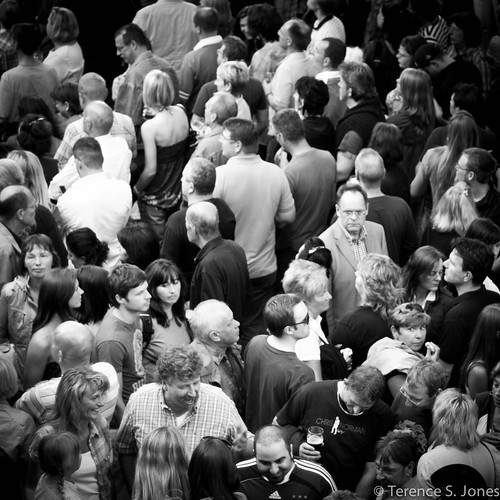
Kierkegaard is charging that unreflective communicative processes create a homogeneous abstraction—the public—where all socialized persons become interchangeable and where no one lives as an individual. Thus, one becomes a mere representation of a type, or a follower of an ideology, a part of the crowd.

Through leveling, the individual accepts society’s monological definitions of one’s self. Kierkegaard claims that rather than enabling people to take personal responsibility for their lives, the modern way of life makes it difficult to be anything other than conformists. The individual: 

‘‘forgets himself, forgets his name (in the divine understanding of it), does not dare to believe in himself, finds it too venture- some a thing to be himself, far easier and safer to be like the others, to become an imitation, a number in a crowd’’ (Kierkegaard, 1849/1980, pp. 166–167). 
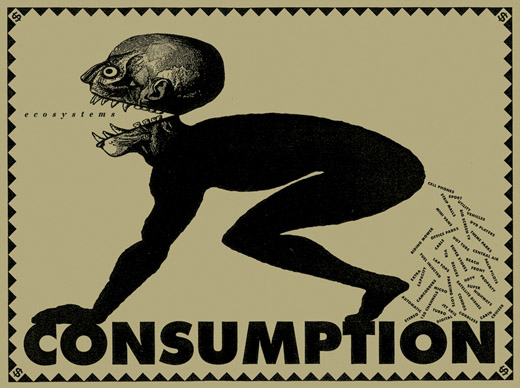
According to Kierkegaard, most people in modernity merely reflect the norms and attitudes of the social world into which they happen to be thrown. In the modern age, individual feelings of self-worth and personal identity are based upon the socially accepted criteria of comparative worth. One distinctive modern day dilemma, the constant comparison with our neighbor’s material goods called ‘‘keeping up with the Joneses,’’ can be viewed as one example of leveling.

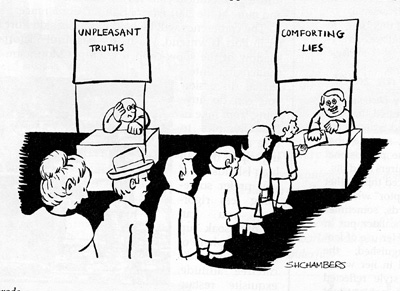
Looking at the Joneses is merely an expression of what our culture tells us we are supposed to have. When we don’t “have” what our culture determines what we are supposed to have the discourses become the discourses of lack. Rather than finding fulfillment, these discourses press upon us. “I should have…” “I want…” I need…” 

We find ourselves frustrated, incomplete, unsatisfied. We are looking not at inner growth, or inner strength, but outside of ourselves. Again we find lack.  Rather than questioning the concept of conspicuous consumption and the critically looking at the entire operation of these discourses imposed upon us by society, we turn inward and against ourselves. 

As Kierkegaard wrote, 

"The human being compares himself with others; the one generation compares itself with the other and thus the heaped-up pile of comparisons overwhelms a person. As the ingenuity and busyness increase, there comes to be more and more in each generation who slavishly work a whole lifetime far down in the low underground regions of comparison" (Kierkegaard, 1847/1993, p. 189)

What would Kierkegaard think? I’m not certain, but I think he’d be shocked that we spend so much time and effort and resources and money on things that don’t really matter. Remember the person who dies with the most toys is still – in the end – dead.


Saturday, November 12, 2011

10 Philosophy Books 4 Your Perusal (Pt 10): Heidegger's Being and Time

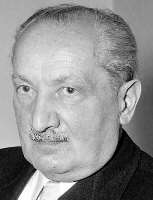
Martin Heidegger: Being and Time


M.H.
People have problems with Martin Heidegger. And with good reason. Of course he was a member of the Nazi Party, which is the culmination of his ass-headedness. Martin had proven himself to be an asshole however, long before this. 


Hanna Arendt
For example, after praising his mentor Edmund Husserl's work, he completely contradicted it and abused it, turning Husserl's phenomenological project on its head. Of course for someone so smart, Husserl wasn't too bright. He's the one who published Being and Time without realizing Heidegger was lambasting his ideas. He had a number of affairs including with Hanna Arendt, a Jew...yeah...like I said...he was a real jerk. Not for sexing it up with a Jewess, but doing so while becoming a Nazi. 
Hitler und M. H.
He was elected the Rector of the University of Freiburg and his first act as Rector was to eliminate all democratic structures, including those that had elected him Rector. (Sounds like a good Nazi, yes?) 


And yet, very few philosophers have influenced  so many branches of philosophy: existentialism, hermeneutics, deconstructionism, postmodernism, phenomenology. And there is little doubt that of the 20th century philosophical tomes, none is as deep and as rich (or as difficult) as Heidegger's Being and Time. (Sartre & Foucault not withstanding.) So lets look at some of Being and Time


While I am not going to explicitly examine the following, it is important to recognize that for Heidegger (1962) as he elucidated in Being and Time, Dasein (the human being) is always in the world. Dasein exists in, along with and is a natural part of it and cannot be separated from it. Dasein is always there, thrown into an existing in the world. Dasein always exists in this context of ‘worldliness.’ This is important, because Dasein therefore cannot get behind, or go beyond his temporal existence in the world and this placement in the world means that Dasein must determine how to exist in, alongside and with it. Dasein relates to the world through care (Sorge), through a defining relation, through the realization that this Being is its own Being, as therefore it has direct concern and responsibility for this Being. This is one of the major breaks between Heidegger and Husserl, the latter wanting to bracket the existence of the world (and hence care) through the epoché.


In Being and Time, there is a tension set up almost from the start between two possible, mutually exclusive modes of Being in which Dasein might exist. These modes are authenticity (eigentlich sein) and inauthenticity (uneigentlich sein). In the ontology of Being and Time, these two possible modes of existence belong to the essential constitution of Dasein. Dasein must choose these modes of existence. In choosing to be authentic, Dasein chooses itself and wins itself. In inauthenticity, Dasein chooses the public interpretations of the self, takes on the conceptions of the ‘they’ and hence loses itself. It is important to note, however, that these two modes of existence are not directly dichotomous, nor oppositional (p. 67-69). They are not an either/or. Dasein does not choose to be authentic once, and then will forever be authentic. Rather, Dasein must choose again and again whether to be authentic or inauthentic, because these possibilities belong to its essential constitution. The need to choose is constant.


Kierkegaard
{Let me clarify with an example from Christianity. Strict Calvinists believe in the doctrine of “once saved, always saved,” that is, once you have made the decision for Christ, you are sealed and cannot ever not be saved. On the other hand, the Armenians conception of salvation is that salvation is worked out through ‘fear and trembling,’ and in order to be saved, one must make the choice to ‘be’ a Christian at each instant. Of course Heidegger was not discussing salvation in Being and Time, but the allegory helps to illuminate Dasein’s need to choose the authentic or inauthentic constantly. By the way, in case you did not notice - Fear and Trembling - is the title of one of Kierkegaard's books. Heidegger stole a lot of ideas from Kierkegaard, btw.}

It is important to recognize the constant need to choose because the possibility of authenticity and inauthenticity are constitutions of Dasein, living inauthentically in no way makes Dasein less Dasein. There is no lower degree of being. However, there are distinctions between living the authentic life and living inauthentically, and like Kierkegaard, Heidegger’s conception includes the ‘they.’ What is the ‘they?’ As Heidegger notes, “The ‘they’ is an existentiale; and as a primordial phenomenon, it belongs to Dasein’s positive consititution…” (p. 167). The ‘they’ and ‘they-self’ comprise Dasein in its everydayness. Because Dasein is always in the world, this being-in necessarily signifies being-with others. This being-with is a necessary component of Dasein’s existential everydayness. While Dasein cannot escape this everydayness, it is in this being-with-others where the possibility of inauthenticity lies.


In this being-with-others, Dasein can live in fallenness (Verfallen), which connotes deterioration or a crumbling (Golumb, 1995). Rather than existing on our own terms, with our own defining relation, we accept and incorporate the meanings, which are given to us from the outside. “The Self of everyday Dasein is the they-self, which we distinguish from the authentic Self – that is from the self which has been taken hold of in its own way” (p. 167). We accept the definitions and the responsibilities of the ‘they.’ From this description of the they-self, Dasein has the possibility of laying aside its care, its defining relation and accepting conventional wisdom as its own.


To Dasein’s state of being belongs falling. Proximally and for the most part Dasein is lost in its “world.” Its understanding, as a projection of possibilities of Being, has diverted itself thither. Its absorption in the “they” signifies that it is dominated by the way things are publicly interpreted (p. 264).


Dasein comes to believe given unexamined meanings as important and significant to it, when they in actuality are not. This acceptance of the inauthenticity of the “they-self,” and the laying aside of Dasein’s care is to live in falleness.


In Being and Time, Heidegger examines communication as it relates to inauthenticity and fallenness. In particular, he examines idle talk. Futher in the same passage where he describes falleness, Heidegger continues, “That which has been uncovered and disclosed stands in a mode in which it is disguised and closed off by idle talk, curiosity, and ambiguity” (p. 264). No longer is Dasein concerned with care, its own-most being, nor its defining relation. Rather, in fallenness those are to some extent hidden, as the face of a friend at a masquerade ball – you know who it is, even if you cannot see his face.


In everydayness, Dasein is confronted with the possibility of maintaining authenticity or losing it through discourse, because,


this discoursing has lost its primary relationship-of-Being towards the entity talked about, or has never achieved such a relationship, it does not communicate in such a way as to let this entity be appropriated in a primordial manner, but communicates rather by following the route of gossiping and passing the word along. What is said-in-the-talk as such, spreads in wider circles and takes on an authoritative character (p. 212).


In everydayness the pre-conceived and uncritically accepted conventional wisdom, Dasein loses itself. Dasien, by accepting the rules and roles of society’s conventionality, is a leveling down of one’s defining relation. “Every kind of priority gets noiselessly suppressed. Overnight, everything that is primordial gets glossed over as something that has been well known” (p. 165).


The “they” however, as an existentiale, is not some amorphous third person, the herd, or the crowd. In fact, despite the term’s third-person implication, the “they” is in fact intricate to being Dasein. Rather, the “they-self” is an act, a way of being Dasein, accomplished by Dasein’s accommodation of the interpretations of the self and the world, through idle talk, curiosity, novelty and ambiguity. “If Dasein is familiar with itself as they-self, this means that at the same time the “they” itself prescribes that way of interpreting the world and Being-in-the-world which lies closest” (p. 167). Living in the “they” then, is not the fault of some third party, but is Dasein’s responsibility. If Dasein projects itself into the future based upon the internalized categories supplied by the “they,” it is by default self-limiting – Verfallen. 
The trick is for Dasein to live as an individual and in the everydayness of Verfallen (Guignon, 1984).  


Of course given all this great thinking...how was he able to join the most malevolent political party ever? Perhaps Martin had the most pronounced version of cognitive dissonance ever.  


And since this is the last of the philosophy books series, here are the links to the previous nine for your perusal.


Number 9: Ion by Aristotle
Number 8: Care of the Self by Foucault
Number 7: The Ethics of Authenticity by Charles Taylor
Number 6: I & Thou by Martin Buber
Number 5: The Communist Manifesto by Marx & Engels
Number 4: The Reasons of Love by Henry Frankfurt
Number 3: Purity of Heart Is to Will One Thing by Soren Kierkegaard
Number 2: The Rebel - Albert Camus
Number 1: The Theory of Moral Sentiments - Adam Smith


Friday, September 23, 2011

10 Philosophy Books or Your Perusal (Part 6): I and Thou


Martin Buber
I-Thou

Traditional Western philosophy concerns itself with overcoming the subject-object dichotomy. According to this Western tradition there are two primary focuses. There is the subject, the “I” which perceives, and there is everything else, objects “out there in the world” which are perceived. Western philosophy as a whole is a centuries long attempt to answer the epistemological question, “How do we really know about things out there?” There have been many different answers attempted, but the basic conclusion of philosophers like Locke, Descartes & Kant is that we cannot really ever know “things in themselves.”

As in all cases, there have been exceptions to the rule. There have been undercurrents in the Western philosophical tradition that don’t attempt to primarily answer the epistemological questions. This lineage of philosophers have been called existentialists, but a better and more defining term would be to call the ‘philosophers of being.’ Rather than the concern about how we know things, these philosophers are primarily concerned with our being-in-the-world. The way in which we live our lives and what gives our lives meaning. This tradition includes Kierkegaard, Nietzche, Dostoevsky, Heidegger, and Jaspers among others. These philosophers questioned what we are rather than merely what we know. Buber in particular stressed the “what we are” position via relationships in his concept of I-Thou.

"The primary words are not isolated words, but combined words. 
The one primary word is the combination I-Thou 
The other primary word is the combination I-It."

If that sounds poetic, it is, but here's a brief idea of what he means by the I-It. The primary word I-It orients the relationship of the speaker to the world in particular ways. The world is perceives as the object in the standard subject-object mode as it has throughout most of Western philosophy. I-It orients the world as something to be experienced. I perceive some thing, sense some thing, feel some thing. The world is seen as experience. The I in I-it sees the world full of utility, useful to me. 

Remember we relate to people in I-it relations most of the time. The check-out guy at the grocery store, the Honda mechanic, the fellow who fixes your computer. We live in I-it most of the time. Buber calls this the social realm of human relationship. He appreciates that we must live in the social realm to accomplish our day to day activities. He also stresses however, that there is a second orientation of the I, the I of the I-Thou. Pure objectivity is the most perfectly developed I-It relation.

Compared to the I-It relationship, the I-Thou has no object, but is relationship. It is spoken only with one’s full being. I-Thou is not subject-object oriented, but is experiential. It is characterized by a turning toward the other in mutuality, directness, being fully present to one another, partner to partner. Dialogue is both the creation and the manifestation of the I-Thou. Dialogue emerges between individuals when they are simultaneously and mutually willing to be oriented toward each other in fullness and openness. There is therefore a direct correlation between the quality of human communication and the quality of human life. How we communicate affects who we are and who we are to become.

Meeting one another in openness does not mean being a wimp or losing one’s sense of self. While collaboration and co-construction are certainly a priori parts of the I-Thou relation, mutuality not only allows, but respects and accepts difference. Notice that Buber’s concept here is not about psychological traits or states, but is about relationship. Meaning is found in the relationship in what Buber called the ‘in-between,’ and the interhuman as we live together. The between is more than each of us individually, but it is also more than two of us put together. This is Buber’s ‘narrow ridge,’ which is based on the dual concern for the self and the other, which rejects either-or, all or nothing positions. A ‘narrow ridge’ philosophy assumes a genuine responsibility for not only me, but you as well, despite our differences. 

One of the reasons that I personally like I and Thou is because it says a lot about communication. In that there are a a number of communicative distinctions of in I-Thou relationships. For one, communication is ‘existential.’ Communication happens in the here and now, and the communicative partners speak and listen from a common space, the ‘in between,’ the ‘narrow ridge.’ The first task of communication is to create this space for the relationship. (There are connections here, to Walter Ong's theory of orality.) Dialogic communication is emergent, spontaneous and improvisational. It is not seeming, nor strategic. Dialogic partners are open to surprise, with each other and in themselves. Discovery. Self-realization is a by-product of dialogue, not the object of it. 

Dialogic communication recognizes strangeness. Partners recognize each other as different and unfamiliar, and that others act in unpredictable ways. Dialogic communication is oriented toward collaboration, including embracing differences and conflict. Yet is still confirms the other and the other’s point of view.

Dialogic communication partners are vulnerable. Partners are open to being changed, an open to being persuaded. Dialogic communication is based completely on mutuality. Speaker and listener are interdependent. They call both the self and the other into being through their talk. Communicative partners change their existence via the existence of the relationship itself. Dialogic communication understands both the past from which it comes and the future which it is creating. Dialogic communication assumes that partners are acting authentically, mutually and in genuine ways toward each other, and presupposes trust in the communicative relationship.

While I have issues about the way Buber read and interpreted Kierkegaard - which I wrote about in my piece Kierkegaard and Dialogue: The Communication of Capability - I still find I-Thou one of the most poetic uplifting texts I’ve ever read.