(Please note: This is a work in progress...)
First, let me tell you a little bit about Spike. Before he became a vampire, his name was William Pratt. Interstingly, while many scholars have spoken about Spike’s name, none that I have seen specifically addresses his last name Pratt: which is a British euphemism for a jerk, to put it nicely. He was born in 1870s Britain. He was a struggling poet, often mocked by his peers who called him "William the Bloody" behind his back because his poetry was so "bloody awful." He was sired by his soon-to-be long time lover Drucilla. He got his nickname from his use of railroad spikes when torturing people. Fast forward through all the evil and nasty things he did as a vampire with fellow vamps Darla, Drucilla and Angelus.
In season four Spike is captured by a group called “The Initiative.” They embed a microchip in his brain, rendering him powerless to hurt humans. Obviously for a vampire, this is a horrifying experience. The dilemma is that Spike finds himself on the side of good (or at least unable to be pure vampiric evil) not because he wants to be, but because he has no other choice. Here is the first connection between what happens to Spike and Foucauldian power. The power is suggestive of Bentham’s ideal prison, The Panopticon. The Panopticon included a tower at the center that provided through a two-way mirror an unobstructed view of all the prisoners.
The power of the panopticon is external. Someone is watching you. Guards, wardens, etc., have power over prisoners, so prisoners behave. However, the panopticon was brilliant in another way. Since prisoners realized there was always the possibility they were being watched, they regulated themselves, rendering the exercise of power by others unnecessary. It was no longer necessary to use external power to discipline the prisoner, rather the prisoner now disciplined himself through self-surveillance, self-discipline, self-monitoring, exerting power of his own identity and actions. Foucault calls these activities “the technologies of the self.”
Foucault said his goal was “to create a history of the different modes by which in our culture human beings are made subjects.” Human beings are made subjects – or socially constructed – through various disciplinary discourses. For example, an individual may be constituted and see herself as a sinner or a saint through religious discourses. Through the discourses of science, and the means by which humans began to be studied – through surveillance, observation, measurement and documentation – the individual is constructed in a particular way, and in fact becomes a subject.
At this point, in Spike’s case panoptic power impacts his identity through the microchip that is put in his head, which renders him harmless as a vampire. Naturally enough there are many references to impotence here by Buffy and the rest of her “Scooby Gang.” His interaction with the Scoobies shows how the chip caused them to think of him differently. In response, he takes his first steps on the road to redemption. He is forced to find a new identity in order to gain attention and remain relevant. He is forced into the role of (ambiguous) good guy. Although he relishes that he can beat the hell out of demons and such, he hates what the chip has turned him into. He cannot be a monster. He cannot be a man either. He’s ambiguous, a shadow, liminal.
Late in Season four in the appropriately titled episode “The Yoko Factor” (4020), Spike rebels against the Scoobies, reverting to a more overtly antagonistic role in teaming with Adam: a part human, part machine, part demon Frankenstein. However, Spike's mischief is just that, an impotent churning in frustration at being neither demon nor human, neither fit for real villainy nor acceptable for heroism in the group. His siding with the Scoobies made him a permanent outcast in demon society. Now he is an outsider with the Scoobies. Spike is truly a vampire in no man's land, at home nowhere.
Caught between his origin as a vampire, and his desired destination of humanity, yet welcome in neither place, Spike has become marginalized. The situation is most poignant for the vampire as having been bred of humanity, he can see himself dispossessed of the defiling traits he now bears and yet know he will not regain his full humanity. Spike is the poster-boy for vampire marginality. He has exhibited the full range of motivations and inner turmoil of an individual assaulted with a stigma, dealing with it and thriving, only to be stripped of that modicum of acceptability by the government installed chip, yet barred from return to his former life as a human by the stigma of soulessness.
This frustration can lead to self-hatred and self-derogation: a potent elixir for the brewing of hate and violence. Which is where Spike eventually goes. But first, it must be noted even with the chip in his head Spike is making progress toward humanity. While the chip keeps him from harming humans, it is NOT forcing him to do good deeds, or help the Slayer. Spike, meet the power of the “technologies of the self.”
Discipline is not simply imposed from the outside; nor is it always complete. If it were there would be no place for reflexivity. For Foucault, governmentality is not necessarily negative, but productive. It socially constructs subjects, reality, objects and rituals of truth (1978a). While individuals are constructed and they are subjugated through power relations, they are never powerless. Power relations run through every field, “because there is freedom everywhere” (Foucault, 1987b). Subjects are not deprived of "agency or the capacity to change; in fact, [being a subject] makes them all the more active by extending their reach to include what was assumed to be so obviously necessary, so natural, so taken-for-granted, that it was inaccessible: their subjectivity, their identity, their sexuality, their bodies" (Deacon, 2003, p. 280).
Individuals have the ability through these technologies of the self to reflect upon, shape, govern, and be responsible for their selves within these discourses and resources of power, to transfigure themselves to achieve a definite condition “of happiness, purity, wisdom, perfection, or immortality” (Foucault, 1994, p. 225). In other words, Spike reflect upon himself and ask, “What type of being do I want to be?” “What must I do to become the being I want to be?” This disciplining of the self is enterprising, a continual project of self-construction and creation that can be extrapolated to explain Spike is trying to become a man.
Rose (1998) observes the "enterprising self will make an enterprise of its life, seek to maximize its own human capital, project itself a future, and seek to shape itself in order to become that which it wishes to be. The enterprising self is thus both an active self and a calculating self, a self that calculates about itself and that acts upon itself in order to better itself" (p. 154).
Much like in Dostoevki’s character of Raskolnikov, Spike is coming to recognize within himself the potential for goodness and to set himself on the path to salvation. He has comassion for Joyce – Buffy’s mother – who has a terminal illness. Throughout season five he protects Dawn, Buffy’s little sister, who is the key that keeps the hell dimensions doors closed. If opened hell would literally invade our planet. A bad thing! He fights and is tortured by the nearly omnipotent demigod Glory to protect the secret. He does it because to do otherwise would "destroy her [Buffy]. I couldn’t live her being in that much pain" ("Intervention," 5018). When asked why he, a vampire without soul, is protecting Dawn, Spike’s answer is simply "I made a promise to a lady." He assists people who have been hurt by the troll Olaf. In season six when Buffy is brought back from the dead, it is Spike who realizes she clawed her way out of her coffin. He – being the only one who had to do that – shows utter empathy and sadness. And being ‘undead’ herself, Spike can now kill Buffy – but doesn’t. Spike feels deep remorse and compassion for Buffy and Dawn when their mother dies.
Oh yeah! He also fell in love with Buffy along the way and they’ve been having violent but consensual sex.
Buffy ends the relationship and Spike is heartbroken. He tells Buffy: “I know you’ll never love me; I know I’m a monster, but you treat me like a man,” and for that he is grateful. This is what is most important to Spike—not being treated like a vampire, which is what the undead should desire. Being a man—being human— is his goal, whether he has fully accepted that or not. Spike has expelled his vampire nature as the intruder, has sacrificed that self to save his soul and recreate the unity of the community, as evil becomes good. Spike’s ability to love gives him at least a piece of moral agency, and his ability to suffer makes us sympathize with him. The audience is on his side long before he gains a soul. Spike is desperate to win back Buffy.
Although Spike is making these decisions, though he is learning to discipline himself – he is still at heart a vampire – not a man. He still has that chip in his head, so he is not completely free to choose his path. Until…the facticity that he is not a man nor a real vampire, leads to his tortuous self-loathing…he tries to rape Buffy in a terrifying scene. Spike’s relationship with Buffy up to this point was based on consent and trust, which is why so many fans found this scene of attempted rape jarring and out of context. We forgot he was evil. We have been rooting for him. Still, we must recognize his evil by having him respond to his rejection by Buffy as a demon would, by trying to rape her. This is his turning point.
Spike’s action results in feelings of tremendous remorse, which spur him on to repentance and taking a definite step towards redemption. He realizes the immorality of his actions, in spite of his lacking the guidance which could be provided by a soul. Spike ultimately concludes that in order to live with himself after what he has done to Buffy he must accept that he is a monster, because only a monster could do what he tried to. (2002: 59). Of note, all the evil that Spike has done, he feels no regret for his any of his previous actions, except his attempted rape of Buffy.
After the attempted rape, Spike laments that the chip has confused the natural order of things when he complains:
Everything always used to be so clear. Slayer. Vampire. Vampire kills Slayer. Sucks her dry. Picks his teeth with her bones. It’s always been like that. I’ve tasted the life of two Slayers. But with Buffy . . . It isn’t supposed to be this way. It’s the chip. Steel and wires and silicone. It won’t let me be a monster and I can’t be a man. I’m nothing. (‘Seeing Red’, 6:19)
Now here’s where things get ambiguous. Spike leaves Sunnydale for a remote location in Africa, where we - the audience - are led to believe that he intends to get his chip removed and become his old evil self. However, (as we find out later) Spike undergoes “Demon Trials,” a series of brutal mental, emotional and physical tests, to prove his worthiness to the demon shaman.
“Bitch thinks she’s better than me. Ever since I got this bleeding chip in my head, things ain’t been right. Everything’s gone to hell.”
“Do your worst. When I win, I want what I came here for. Bitch is going to see a change.”
“Make me what I was so Buffy can get what she deserves.”
But this is ambiguous and has been read in different ways by scholars and by audiences. One reading has Spike going to the shaman to get the chip removed so he can kill Buffy. Plausible. Another has Spike going to the shaman to get the chip removed to he can again be a full-fledged monster. These readings are all based on the idea that Spike hates Buffy and hates his situation.
Yet there is a third reading that is overlooked. “Bitch,” “bastard,” “I’ll show you!” are not all phrases of hate, but those also of the angry and disillusioned spurned lover. Most scholars read Spike’s statement “Make me what I was so Buffy can get what she deserves” a testimony that he wants to be a straight up vampire again. But couldn’t it also be that he wants to be not just Spike, or William the Bloody, but William Pratt, the romantic soulful poet he once was? Spike loves Buffy as deeply as an evil vampire can. He wants Buffy. He desires Buffy. He wants to earn Buffy’s love. He wants to show Buffy that he is worthy. It isn’t Spike’s hate that drives him to the shaman. It is his love. It his love that wants to drive out the monster, the one that wants not only to be treated like a man, but to be a man, to be the kind of man Buffy deserves. My reading is that Spike loves Buffy, but hates his situation.
Although Spike has been disciplining himself through seasons 4-6, here is the ultimate switch from the external power over, to the power within. He wants redemption on his own terms. He wants to be good for its own sake not because of the chip. Hence the trip to Africa and the demon trials. Spike wants his redemption, wants his soul back, wants to be a vampire with a soul and undergoes the most horrific ordeals to get it back, including all the guilt, shame and horror – all the emotional despair – at the things he has done as a soulless vampire. (This makes him different than Angel, who got his soul back via a gypsy curse…Spike EARNED his soul back.)
This sea change in Spike’s moral orientation altered his agency to the extent that he was as likely to approach choices from a perspective that was basically good as from one that was basically evil. In light of this transformation it only seems to follow that Spike would be rewarded with a soul since he had practically begot one through sheer force of will. And, of course, at the moment he finally passes across the threshold completely, he becomes ensouled in the final episode of BtVS’ sixth season.
..to be continued.
Based upon:
Herrmann, A. F. (2010). “My soul…kind of stings”: Spike’s discourses of vampiric redemption. Paper presented at the
Central States Communication Association Convention, Cincinnati, OH.

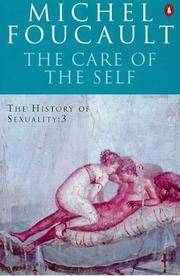


 While subjects
are constructed through discursive processes, they are never powerless, but are
active participants in creating the identities they desire by relying on
various discourses. They can rebel and resist. (Remember Camus?) Individuals have the ability through these
technologies of the self to reflect upon, shape, govern, and be responsible for
their selves within these discourses and resources of power, to transfigure
themselves to achieve a condition “of happiness, purity, wisdom, perfection, or
immortality."
While subjects
are constructed through discursive processes, they are never powerless, but are
active participants in creating the identities they desire by relying on
various discourses. They can rebel and resist. (Remember Camus?) Individuals have the ability through these
technologies of the self to reflect upon, shape, govern, and be responsible for
their selves within these discourses and resources of power, to transfigure
themselves to achieve a condition “of happiness, purity, wisdom, perfection, or
immortality."


