Sunday, October 30, 2011

10 Philosophy Books 4 Your Perusal (Pt 9): Ion

“Socrates Is an Ass!”
As Represented by Plato (ARP) in Ion

Yeah. We are going old school this time. Very old school. While most people choose things like The Republic, or Artistotle's Ethics when talking about the ancient Greeks, I chose Ion. Why? Because its funny, rude, obnoxious, and delightful. 

This little dialogue seems a simple conversation between Socrates (ARP) the philosopher and Ion the rhapsodic performer. As usual, Socrates (ARP) uses lots of sarcasm and irony in this dialogue, which he quickly expresses. Although this may seem a rather insipid conversation, to the initiated it is chock full of interesting little tidbits.

What’s the General Gist?

Ion suggests not only is he a good reciter of poetry but is also an exegete who can interpret and explain what a poem is about. The central question in the Ion is one of privilege and qualification. Who is qualified to be an interpreter of the privileged language of the past? Who can correctly interpret Homer or any of the other poets? For example, when the performer recites Homer’s description of being a general, how is it that Ion can know what it is to be a good or bad general. Can he judge good “doctoring?”

Ion is denied this role, because he relies on inspiration, rather than knowledge (episteme) and practical skill (tekhne). If one possesses a particular skill, one can judge and critique it, because, one understands and can explain all aspects of that skill, including good and/or bad manifestation of it. Doctors can critique doctors. Generals can critique generals. Socrates (ARP) says that Ion cannot even judge poetry, for he has no poetic skill himself.

Dear God,
Go Get an Exorcist


Socrates (ARP) proposes that since Ion’s rhapsodic performances are not based on knowledge or skill, then he must be possessed or inspired. Then Socrates (ARP) goes off on the magnetic ring example. Despite its silliness, the magnetic ring example helps sharpen how audiences are affected by poetry/performance. As the last link on this chain of inspiration, we are capable of being deeply affected by poetry. We “spectators” at the recital also lose our minds, to some degree, weeping or laughing as we enter into the narrated scene, seemingly forgetting our real selves and lives. Socrates (ARP) has a divide in mind between reason and inspiration. This philosopher v. artist fight has been going on ever since.
Oh, yes!
“Let’s Get Ready to Rumble!!!”

“Go to Your Respective Corners…and Come Out Swinging"


Reason
Nous - sound mind/faculty of reason
Phren - wit
Episteme - knowledge
Tekne - skill (including communicative)



Inspiration
Ho nous meketi en autoi - out of one's mind
Ekphron - witless
Entheos - possessed/inspired
Theia dunamis - divine power


Associated with reason are philosophers, doctors, generals, painters, and those who can show critical communicative abilities of explanation, examination and judgment. Associated with inspiration are poets, rhapsodes, and anyone else who cannot give an account of how they do what they do. Reason, skill, intellect and understanding are pitted against “unreflective,” inspired activity. These are mutually exclusive territories.

“Making Your Republic Safe”

Erase the Word

Persecute the Performers
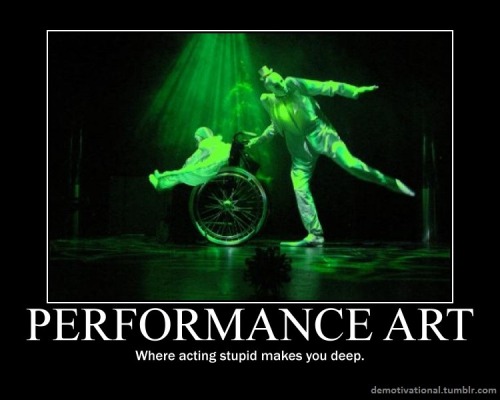
Banish the Poets


A couple of interesting connections for fodder:
As laid out in Phaedrus,
Socrates (ARP) regards the written word as inferior to the spoken 
– so why is he so anti-performer?

Poets are banished from The Republic.
In Protagoras poets are considered the original sophists.
In Phaedrus poets are “sacred, but mad.”
Remember, Socrates (ARP) likely wanted some “divine” Ionic nookie too.
He was always on a booty call.

Sunday, October 9, 2011

Your Bank Hates You: From Banks to Credit Unions


My First Experience with a Big Bank

What’s going on with the big banks today reminds me of what happened in the early 1990s. When I went to work for Leadership Directories, Inc. (Back then it was called Monitor Publishing, but eventually changed its name because Monitor is the name of the paper the Christian Scientists publish – which we had nothing to do with)… oh that was a heck of a digression.

Anywho, when I went to work in NYC in 1991, I opened an account at Manufacturer’s Hanover. “Manny Hanny” was a pretty big bank, but it was regional to New York City. Plus, being based in NYC as it was, I could get money out of a MAC anywhere in the city. 

For those who don’t know MAC stands for “Money Access Center,” the old northeast version of ATM. By the way, never call an ATM an “ATM Machine.” ATM stands for Automated Teller Machine, so if you say ATM Machine you are really saying Automated Teller Machine Machine. And that’s idiodic. Like saying PDF File. PDF stands for Portable Document File, so really you are saying Portable Document File File. You are using an RAS. Please stop. Try not to sound like a mentally-challenged platypus. But again, I digress…

So I could get money once I got to the city via the PATH train, or on the way home via a MAC machine. (“MAC machine” is, by the way, allowable since there is no redundancy.) Checking was free as long as there was a direct deposit from my place of work. Not a problem at all and I had that Manny Hanny account for about a year. I actually used to walk through this door to do my banking.


The Manny Hanny Golden Door on 34th St.


Then they merged with Chemical bank. Chemical was having trouble with bad real estate loans (sound familiar?) and Manny Hanny was having problems with international loans (Argentina and Mexico, in particular), so they decided to join forces. At the time it was the largest bank merger in American History.

At first it was no big deal. Until Chemical – as the new bank was called – decided to close 70 locations. That put a damper on where I could get money, when I could get money, and how I could get money. No big deal, just a little bit more planning and walking and waiting in lines. Until…

Chemical decided that they did not want to deal with piss ants like myself. They decided to up the amount you had to have in your account to about $1,500 or they were going to start charging. People who were living paycheck to paycheck, people just starting out, or just starting over, or just making ends meet…people like my friends and I, didn’t have that money just laying in a bank. And they wanted rid of us. We were a PITA to them. They didn’t make any money off our piddly little checking account balances. We cost them money, so they put up barriers that basically forced us all to move. I went to Pamrapo Savings & Loan in Hoboken. Right across from the PATH, so again easy to get money going in or out of the city. My friends also changed banks. 


My 2nd Experience with a Big Bank


Eventually, however, I found my way back to a big bank. The big bank: Bank of America. I was fairly happy with them. Until... first they wanted to charge me $40 just to have one of their credit cards. Say what? A $40 fee on a $2K card. Please. Then they started to take away the free checking. That was that. Buh-bye.

Does this sound familiar? It should.  Bank of America is jacking up debit card rates and Citi is changing all sorts of requirements for depositors. Its not just the nationals. Regions, First Tennessee, and Suntrust all jerking around their customers with fees. It appears that the banks have decided that we aren’t worth it. They don’t want to deal with the “loser” working class anymore. Fine. Or they want us to move to credit cards so they can make even more money off of us. Fine. Piss on them.

Take your money out. Find a credit union. You can start here. And here. And here too. Forget the big banks. We bailed them out. They took our money. Now they are using the money that we saved them with to charge us to use our own money. Eastman Credit Union is my new financial institution.


And the colonists thought King George was a nonrepresentative taxer! If Thomas Paine and Sam Adams, etc. could see what was going on now, they’d be right in the thick of #occupywallstreet, in their white powdered wigs, getting ready to burn down some buildings and start another revolution!

What ever happened to my old Manny Hanny? Chemical....


was bought by Chase...


...which merged with JPMorgan...
...and is now JPMorganChase. 


JPMorganChase is one of the biggest banks in the world, like BoA, Wells Fargo, and Citi. We bailed them all out. They are all  charging people to use their own money. Leave them. They don't love you. In fact, they are abusive, not only to you as a customer, but to our country as well. Leave them. GTFO.

Sunday, October 2, 2011

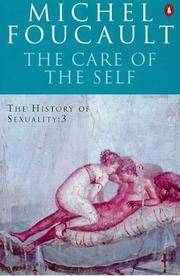
10 Philosophy Books 4 Your Perusal (Pt 8): The Care of the Self


Michelle Foucault


The History of Sexuality, Vol. 3: The Care of the Self 

Ethics. Identity. Selfhood. Self-Discipline. Discourse. That’s how you could sum up the latter part of Foucault’s project, if of course you could sum up Foucault's opus. However, like any good philosopher's works, you just can't sum it up. It is always being put to new and different uses. (Which reminds me of the old quote: "The history of philosophy is just one long footnote to Plato.")

Plus, reading Foucault can sometimes make your head do this.

Anyway, once interested in the genealogy of society, madness, and order, Foucault moved on to the development of the subject, a.k.a. the person, a.k.a. the human individual. It is in The History of Sexuality, Vol. 3: The Care of the Self that Foucault seriously delves into how discourses make us and how we use discourses to make our “selves.” 

Foucault contended that technologies of the self must be comprehended as inextricably connected to his notion of governmentality: the guiding rationales individuals and social structures use to regulate and police norms of thought and behavior. Foucault endeavored to show how the modern sovereign state and the modern autonomous individual co-determine each other’s emergence.

While Foucault was particularly interested in sexuality and the discourses surrounding sexuality and sexual identity his work has been influential in psychology, theology, gender studies, organizational communication. We will talk about some of those later. First, however, some of Michel.

“As a context, we must understand that there are four major types of these "technologies," each a matrix of practical reason: (1) technologies of production, which permit us to produce, transform, or manipulate things; (2) technologies of sign systems, which permit us to use signs, meanings, symbols, or signification; (3) technologies of power, which determine the conduct of individuals and submit them to certain ends or domination, an objectivizing of the subject; (4) technologies of the self, which permit individuals to effect by their own means or with the help of others a certain number of operations on their own bodies and souls, thoughts, conduct, and way of being, so as to transform I themselves in order to attain a certain state of happiness, purity, wisdom, perfection, or immortality.” (1988)

Foucault’s opus indicates the importance of, and interrelationships between, identity, power and knowledge. For Foucault power does not reside is a particular person or institution, but is engendered instead in discourses, practices, and procedures of everyday life and becomes apparent when it is exercised. Power is everywhere in social relations, and is exercised at all levels of an organization and society through various discourses and processes. Human beings are made subjects – or socially constructed – through various disciplinary discourses. The control of the self is a form of control through the discourses of power/knowledge.

As Foucault (1993) noted, in order to study power and the individual one must examine governmentality, the contact points of the “techniques of domination and techniques of the self” (p. 203). Governing people…is not a way to force people to do what the governor wants; it is always a versatile equilibrium, with complementarity and conflicts between techniques which assure coercion and processes through which the self is constructed or modified by himself (p. 203-204). Discipline therefore is not simply imposed from the outside, nor is it always complete, otherwise there would be no place for reflexivity. For Foucault, governmentality is not negative, but productive. It socially constructs subjects, reality, objects and rituals of truth.

While subjects are constructed through discursive processes, they are never powerless, but are active participants in creating the identities they desire by relying on various discourses. They can rebel and resist. (Remember Camus?) Individuals have the ability through these technologies of the self to reflect upon, shape, govern, and be responsible for their selves within these discourses and resources of power, to transfigure themselves to achieve a condition “of happiness, purity, wisdom, perfection, or immortality."

I am an organizational communication scholar and I've been heartily influenced by Foucault. Given the dynamic complexity of interrelated power relations, organizational scholars turned to the concept of struggle, an ongoing, interactive, unpredictable, definition-creating activity that moves beyond the static power/resistance model of domination. Similarly, because power resides in networks of relationships, subjects freely call upon differing discourses in order to enact strategic games, and therefore, play games of identity. In organizations these issues of identity transcend personal, organizational and occupational lines. 

Here are some of my favorite Foucault works and those who have made use of Foucault: 


Michel Foucault's "History of Madness" in English, is the complete version of the English translation called "Madness and Civilization", which since it was abridged, produced some serious misinterpretations. Foucault shows how the idea of "madness" from the Middle Ages through the Renaissance and the Enlightenment to the present, has undergone several transformations of meaning.  It is excellent...

....and it might make your head do this.


Sunday, September 25, 2011

10 Philosophy Books or Your Perusal (Part 7): The Ethics of Authenticity


The Ethics of Authenticity
Charles Taylor

Another philosopher that is alive. 

Charles Taylor is the Canadian on the list. Hence he is able to observe the culture of the United States from an outsider's position, while still having a Western perspective. From this vantage point, he can distance himself from the typical American debates about ethics and morality, including the typical rhetoric, loaded vocabulary, and narrow (and sometimes narrow-minded) categories. 


Taylor is apprehensive about three things in our American discussions and attitudes toward morality.

First, the American philosophy (mostly derived from Ayn Rand and her ilk) of radical individualism rejects most moral absolutes and corrodes meaningfulness in life. This radical individualism results in a selfish narcissistic focus that disparages true connectedness to others. Or as Buber might say, “Yo, man! There ain’t no room for the I-Thou.” 

Second, this individualism when practiced on a large scale - as in America - leads to the acceptance of utilitarian philosophy that the highest good is the maximizing of economic ends. Through this instrumental reasoning, people are nothing more than a means to an end. (Sound familiar? Kierkegaard wrote about that too at the dawn of the industrial age.) In a culture where people are nothing more than a means to an end, individuals serve no other purpose. Their feelings, families, hopes, dreams, and desires do not count and are not part of the equation for MY highest good.

Third, Taylor notes that organizations – particularly for-profit corporations – have embraced utilitarianism as their prime philosophy. Through communicative and rhetorical practices they are creating a highly functional and well-financed power-base that stands in the way of reform and the advancement of society as a whole.

Taylor rejects this philosophy. Rather Taylor underscores individual self-fulfillment and self-actualization. Rather than coming to a nihilistic or narcissistic ‘meaning of life” the passionate need to understand “who I am” steers me to find meaning outside of the self. Finding my uniqueness is a communicative and dialogical process that happens in relation with others. Identities are not created in isolation. Identity is shifting, negotiated, dynamic, relational, ongoing.  Other individuals are collaborators and partners in the creation and maintenance of my identity and we must recognize that without community our individuality would not exist. 

It is in community – and the responsibilities that come with community – that we find ourselves and overcome the meaninglessness of narcissistic individualism.

Friday, September 23, 2011

10 Philosophy Books or Your Perusal (Part 6): I and Thou


Martin Buber
I-Thou

Traditional Western philosophy concerns itself with overcoming the subject-object dichotomy. According to this Western tradition there are two primary focuses. There is the subject, the “I” which perceives, and there is everything else, objects “out there in the world” which are perceived. Western philosophy as a whole is a centuries long attempt to answer the epistemological question, “How do we really know about things out there?” There have been many different answers attempted, but the basic conclusion of philosophers like Locke, Descartes & Kant is that we cannot really ever know “things in themselves.”

As in all cases, there have been exceptions to the rule. There have been undercurrents in the Western philosophical tradition that don’t attempt to primarily answer the epistemological questions. This lineage of philosophers have been called existentialists, but a better and more defining term would be to call the ‘philosophers of being.’ Rather than the concern about how we know things, these philosophers are primarily concerned with our being-in-the-world. The way in which we live our lives and what gives our lives meaning. This tradition includes Kierkegaard, Nietzche, Dostoevsky, Heidegger, and Jaspers among others. These philosophers questioned what we are rather than merely what we know. Buber in particular stressed the “what we are” position via relationships in his concept of I-Thou.

"The primary words are not isolated words, but combined words. 
The one primary word is the combination I-Thou 
The other primary word is the combination I-It."

If that sounds poetic, it is, but here's a brief idea of what he means by the I-It. The primary word I-It orients the relationship of the speaker to the world in particular ways. The world is perceives as the object in the standard subject-object mode as it has throughout most of Western philosophy. I-It orients the world as something to be experienced. I perceive some thing, sense some thing, feel some thing. The world is seen as experience. The I in I-it sees the world full of utility, useful to me. 

Remember we relate to people in I-it relations most of the time. The check-out guy at the grocery store, the Honda mechanic, the fellow who fixes your computer. We live in I-it most of the time. Buber calls this the social realm of human relationship. He appreciates that we must live in the social realm to accomplish our day to day activities. He also stresses however, that there is a second orientation of the I, the I of the I-Thou. Pure objectivity is the most perfectly developed I-It relation.

Compared to the I-It relationship, the I-Thou has no object, but is relationship. It is spoken only with one’s full being. I-Thou is not subject-object oriented, but is experiential. It is characterized by a turning toward the other in mutuality, directness, being fully present to one another, partner to partner. Dialogue is both the creation and the manifestation of the I-Thou. Dialogue emerges between individuals when they are simultaneously and mutually willing to be oriented toward each other in fullness and openness. There is therefore a direct correlation between the quality of human communication and the quality of human life. How we communicate affects who we are and who we are to become.

Meeting one another in openness does not mean being a wimp or losing one’s sense of self. While collaboration and co-construction are certainly a priori parts of the I-Thou relation, mutuality not only allows, but respects and accepts difference. Notice that Buber’s concept here is not about psychological traits or states, but is about relationship. Meaning is found in the relationship in what Buber called the ‘in-between,’ and the interhuman as we live together. The between is more than each of us individually, but it is also more than two of us put together. This is Buber’s ‘narrow ridge,’ which is based on the dual concern for the self and the other, which rejects either-or, all or nothing positions. A ‘narrow ridge’ philosophy assumes a genuine responsibility for not only me, but you as well, despite our differences. 

One of the reasons that I personally like I and Thou is because it says a lot about communication. In that there are a a number of communicative distinctions of in I-Thou relationships. For one, communication is ‘existential.’ Communication happens in the here and now, and the communicative partners speak and listen from a common space, the ‘in between,’ the ‘narrow ridge.’ The first task of communication is to create this space for the relationship. (There are connections here, to Walter Ong's theory of orality.) Dialogic communication is emergent, spontaneous and improvisational. It is not seeming, nor strategic. Dialogic partners are open to surprise, with each other and in themselves. Discovery. Self-realization is a by-product of dialogue, not the object of it. 

Dialogic communication recognizes strangeness. Partners recognize each other as different and unfamiliar, and that others act in unpredictable ways. Dialogic communication is oriented toward collaboration, including embracing differences and conflict. Yet is still confirms the other and the other’s point of view.

Dialogic communication partners are vulnerable. Partners are open to being changed, an open to being persuaded. Dialogic communication is based completely on mutuality. Speaker and listener are interdependent. They call both the self and the other into being through their talk. Communicative partners change their existence via the existence of the relationship itself. Dialogic communication understands both the past from which it comes and the future which it is creating. Dialogic communication assumes that partners are acting authentically, mutually and in genuine ways toward each other, and presupposes trust in the communicative relationship.

While I have issues about the way Buber read and interpreted Kierkegaard - which I wrote about in my piece Kierkegaard and Dialogue: The Communication of Capability - I still find I-Thou one of the most poetic uplifting texts I’ve ever read. 

Monday, September 19, 2011

10 Philosophy Books For Your Perusal (Part 5)

The Communist Manifesto
A Road Map to History's Most Important Political Document


Why Marx? Why now? Why this when so many of your other books have had to do with religion or faith or ethics? Simple. While I love Kierkegaard, there is no economic or political philosophy called Kierkegaardiansism. And I do love some Camus, but again, there is no Camus-ism. Marx on the other hand, has been so influential in both politics and economics that he has his own brand. Marxism.

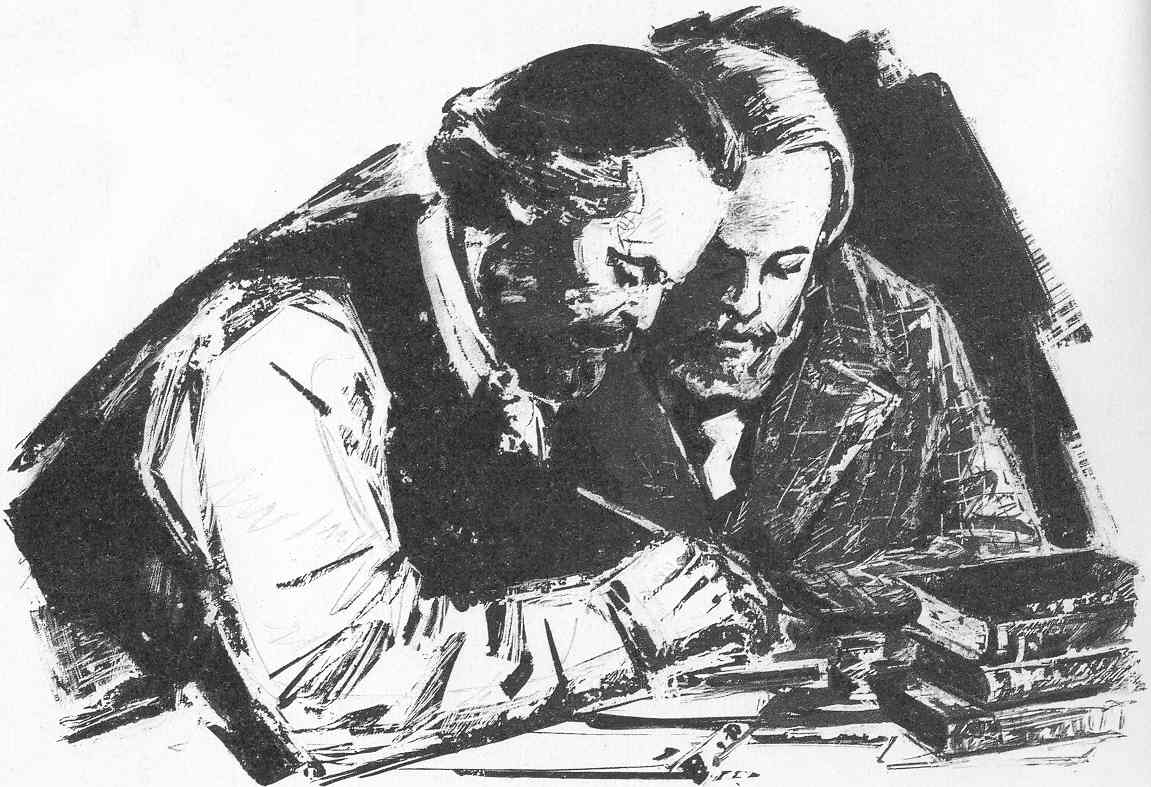
Marx & Engels


Listen, you "pinko commie" or "capitalist pig": everything you know (or think you know) about Marx is wrong. Of course there is no better time to study Marx than now, when capitalism is going through the throes of desperation with the market collapse, the housing bubble, the Euro crisis. Marx and Engels has a lot of things to say to us at the moment. 

Lets not kid ourselves. Just because the Socviet experiment failed, does not necessarily mean that Marx was wrong on everything. In fact, you will learn that Leninism and Stalinism were not at all what Marx intended. 


If you're new or “sort of but not really” familiar with Marx and Engels , I suggest you get this book. Once you start reading the simplified explanations and extra examples, you will attain an understanding that surpasses whatever you knew before. When I began reading this version, it kind of irritated me. Big pages, all that. I kept thinking, “This is The Communist Manifesto, not a Douglass Copeland novel!” However, the editor places important information and notes that help to explain the Manifesto.

Particularly important are the various definitions. Hey, we live in a different time under different circumstances than Marx, so it makes sense that we need some context and contextual cues to help us find out what he is saying. Better yet, the notes and explanations are right there, no need to flip back and forth to an index.  Plus there's a great introduction, a Howard Zinn afterward and a Q&A section at the end for the simpletons who try to dismiss Marx & Engels as idiots and their ideas as ridiculous. 

I am a good capitalist, but there is something wrong with capitalism. Marx and Engels remain the best critics of our imperfect economic system, that - as everyone should be able to admit thanks to recent events - in still in need of vast improvements.


Sunday, September 18, 2011

Speech Com/Com Studies Career and Job Titles

Whenever I see 'lists' of career choices for Speech/Communication Studies undergraduates, I always laugh at their ridiculousness. Speechwriter. Novelist.  DJ. Actor. Actress. That is a very idealized list and always irritates me. How many of us are going to be this guy?


Yeah. 
None of us. 


He is Bob Costas. 


I am not. 


You are not.


Or this guy?

Sorry, there's only one Letterman.


Just 
like 
there 
is
only 
one......


David Boreanaz
aka
Angel
aka
Special 
Agent
Seeley
Booth.


So let's get real. 

Sure you could become a famous actor or broadcaster or DJ or talk show host, but it is much more likely you are going to have a successful career doing something else. Like working in investor relations, or as a crisis communication specialist, or a human resources manager, or a recruiter, or any number of awesome career options. 

I worked in publishing, graphic design, advertising, and information technology. I got these jobs why? Not because I was the most brilliant, but because I could communicate. For example I did not get my technology position only because of my tech skills, but because I could make technological information understandable to non-technologists. 


I could communicate about technology.


Communication has also helped me change careers...important in this ever-changing world of globalization, where this year's job is next year's place on the unemployment line

Given the goofiness of "the famous people/famous careers" list that proliferates for Speech/Communication Studies, here's what I did. I went online and did a search via LinkedIn on individuals who studied Speech and/or Communication Studies as undergraduates. From the data I collected, I created this Wordle that presents the most commonly found career/job titles.


The original link to the Wordle site (and the ability to see it larger) where I created this cloud is here.


So there it is. An updated and realistic look at 
Speech Communication/Communication Studies careers and jobs. 

Talk to the professors who will be teaching 
the classes that interest you.
Look into the classes you want to take. 


For ETSU Students:

Communication in Organizations
Interpersonal
Business & Professional 
Argumentation & Debate
Gender & Communication
Persuasion
Dynamics of Group Leadership

Speech Communication
Skills for Life